How to Apply Cold Galvanizing Compound to Steel Repairs
Reliable cold-galvanizing repair depends less on the colour of the finished surface than on what happened before and during application: contamination removal, exposed-steel preparation, environmental control, zinc re-dispersion, coat build and dry-film-thickness verification.
Technical basis: current manufacturer data, ASTM A780/A780M repair principles, recognised surface-preparation practice and practical coating inspection
Last technical review: 29 August 2026
Start With a Repair-Suitability Check
Cold galvanizing compound is normally considered when exposed steel or a damaged zinc coating needs a zinc-rich repair that can be applied in a workshop or at the installed location. Common examples include welds, cut edges, drilled areas, handling damage, fastener zones and local defects in fabricated or galvanized steel.
Before specifying the repair, establish:
- whether the substrate is bare carbon steel, weathered steel or galvanized steel;
- the cause, dimensions and depth of the damaged area;
- the governing project specification and acceptance standard;
- the exposure category, including coastal salts, industrial pollutants, immersion or elevated temperature;
- whether an existing coating remains sound and compatible;
- the required repair thickness, appearance and future topcoat; and
- whether access permits proper preparation, application and inspection.
A grey or silver coating should not be accepted simply because it resembles galvanized steel. The repair material, preparation method and measured film thickness must satisfy the project requirements.
Documents, Tools and Controls to Prepare
Use the current technical data sheet (TDS) and safety data sheet (SDS) for the selected compound. Site personnel should also have the approved coating specification, repair method statement and inspection form.
Depending on the work, the practical tool set may include degreasing materials, clean lint-free cloths, abrasive preparation equipment, dust removal equipment, suitable mixing tools, brushes or spray equipment, wet-film and dry-film gauges, environmental instruments and the personal protective equipment required by the SDS.
Do not rely on an old product sheet copied from an unrelated brand. Zinc percentage, density, film build, drying and application limits are product-specific.
Step 1: Inspect and Define the Repair Area
Mark the full affected area rather than coating only the most visible rust spot. On galvanized fabrication, examine adjacent zinc for undercutting, loose edges, welding damage and contamination. On previously painted steel, determine whether the remaining coating is sound or must be removed.
Record the component identification, location, approximate area, substrate condition and any inaccessible geometry. Photographs taken before preparation help create a defensible maintenance record.
Step 2: Remove Contamination and Unsound Material
Oil, grease, salts, dust, loose rust, mill scale, welding residue, loose zinc corrosion products and poorly bonded coating interfere with adhesion and electrical continuity. Remove them using the approved cleaning and preparation procedure.
Where galvanic protection is required, the zinc-rich film needs suitable contact with clean steel. Applying it over intact non-conductive paint does not create the same electrochemical path. Feather sound coating edges where the repair specification permits, and remove loose material until the boundary is firm.
After mechanical preparation, remove abrasive debris and dust. The surface should be clean, dry and stable before coating begins. In salt-prone coastal or industrial locations in Pakistan, soluble contamination deserves particular attention because it can remain invisible while accelerating early failure.
Step 3: Confirm Environmental Conditions
Measure and record ambient temperature, steel temperature, relative humidity and condensation risk before application and at suitable intervals during the job. A steel surface can be below the surrounding air temperature, so a surface that looks dry may still be at risk of condensation.
For ROVAL R, the current manufacturer data specifies an application temperature of approximately 5°C to 40°C, relative humidity below 85%, and a metal-substrate temperature below 50°C. These are product-specific values, not universal limits for every zinc-rich coating. Always use the latest TDS for the material actually being applied.
Pause work if rain, windborne dust, condensation or uncontrolled overspray can compromise the film.
Step 4: Re-Disperse the Zinc and Apply Controlled Coats
Zinc is dense and can settle during storage. Mix the material thoroughly until the settled solids are uniformly re-dispersed, following the manufacturer’s instructions. Incomplete mixing can produce an apparently acceptable coating whose zinc distribution and film properties are inconsistent.
Use the approved brush, roller or spray method. Work the first coat into prepared edges, weld profiles and difficult geometry without leaving misses, pinholes or heavy runs. Apply subsequent material only within the manufacturer’s stated conditions and recoat interval.
Stripe-coating edges, welds, bolts and sharp geometry may be required by the project specification because these areas commonly receive less effective film build than broad flat surfaces.
Step 5: Control Wet and Dry Film Thickness
Material consumption and visual appearance are not substitutes for thickness measurement. Use a wet-film gauge during application where appropriate, then verify dry film thickness (DFT) with a suitable calibrated instrument after the film has dried sufficiently.
The current ROVAL R data specifies a total dry film thickness of approximately 80 µm, normally applied as two coats of approximately 40 µm each. At 80 µm DFT, the stated theoretical coverage is approximately 2 m²/kg. A 2.5 kg pack therefore represents about 5 m² of theoretical coverage before allowance for surface profile, geometry, brush or spray loss, overspray and wastage.
Repairing Damaged Hot-Dip Galvanized Steel
ASTM A780/A780M recognises paints containing zinc dust as one category for repairing damaged and uncoated areas of hot-dip galvanized coatings, alongside zinc-based solders and sprayed zinc. The selected repair method still has to comply with the governing specification, maximum repair-area provisions and required thickness.
A practical repair sequence is:
- identify and document the damaged or uncoated area;
- remove contamination, loose zinc products and unsound edges;
- prepare exposed steel and the repair boundary to the approved standard;
- confirm environmental conditions and material condition;
- apply the zinc-rich compound in controlled coats;
- verify continuity, appearance and DFT; and
- record acceptance and any corrective work.
Cold-applied zinc-rich repair is not physically identical to a hot-dip galvanized coating. The two processes create different coating structures, even though both may use zinc for sacrificial protection.
Inspection and Acceptance Checklist
| Control point | What to verify | Typical evidence |
|---|---|---|
| Material | Correct product, batch, shelf condition and current TDS/SDS | Container and document record |
| Surface | Clean, dry, sound, and prepared to the approved requirement | Visual record and preparation log |
| Environment | Temperature, humidity and condensation risk within product limits | Timed instrument readings |
| Mixing | Settled zinc fully re-dispersed and material homogeneous | Application supervisor record |
| Application | Correct method, coat sequence, edge treatment and recoat control | Coating log |
| Film | Continuous appearance and acceptable DFT distribution | Calibrated gauge readings |
| Close-out | Defects corrected and repair accepted against the specification | Signed inspection report |
Diagnosing Common Repair Defects
| Observed problem | Likely checks | Corrective direction |
|---|---|---|
| Poor adhesion | Oil, salts, dust, condensation, unsound old coating or inadequate profile | Remove defective material, find the cause and re-prepare |
| Patchy colour or solids | Incomplete mixing or zinc settlement | Verify material condition and re-dispersion procedure |
| Low DFT | Application loss, missed geometry or incorrect wet-film control | Apply an approved additional coat after confirming recoat conditions |
| Cracking or heavy texture | Excessive film build, poor drying conditions or incompatible recoating | Follow manufacturer and specification repair instructions |
| Early rust staining | Pinholes, misses, contamination, insufficient DFT or untreated adjacent damage | Inspect the complete area and repair the underlying defect |
When a Different System May Be Required
Escalate the coating decision when the work involves continuous immersion, chemical exposure, service temperatures outside the product limits, fire-protection interfaces, incompatible topcoats, large structural defects or a specification that mandates another repair method. The coating does not correct loss of structural section, defective welding or an unresolved water trap.
Where a decorative or chemically resistant topcoat is required, confirm compatibility and recoat timing in writing. Do not assume that every coating can be placed over a zinc-rich film.
ROVAL R as a Verified Cold-Galvanizing Example
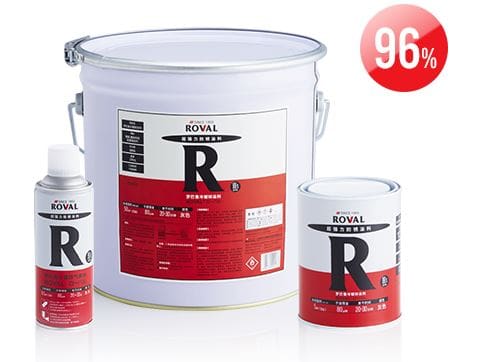
ROVAL R is a single-pack zinc-rich cold-galvanizing compound. Its current manufacturer data states 96% ± 1% zinc by weight in the dry film and a recommended total DFT of approximately 80 µm. These verified values are useful when evaluating the product for an approved repair specification, but they do not remove the need for project-specific engineering and inspection.
For commercial information, current documentation and technical support in Pakistan, use the dedicated product page rather than treating this educational guide as a quotation or stock page.
Frequently Asked Questions
Can cold galvanizing compound be applied over existing paint?
Not automatically. Galvanic protection requires a suitable conductive path to prepared steel. Existing coatings must be assessed for soundness and compatibility, and the approved project procedure should define what must be removed.
How many coats are required for a zinc-rich repair?
The answer is product- and specification-specific. Current ROVAL R data describes approximately 80 µm total DFT, normally built as two coats of about 40 µm each. Verify the current TDS before application.
Why must zinc-rich material be mixed thoroughly?
Zinc is dense and can settle. Complete re-dispersion is necessary for a homogeneous film and consistent zinc distribution; superficial stirring may leave settled solids in the container.
Is cold galvanizing the same as hot-dip galvanizing?
No. Cold galvanizing is an applied zinc-rich coating, while hot-dip galvanizing forms a metallurgically bonded zinc coating by immersion in molten zinc. Their structures and application processes differ.
How is dry film thickness verified?
After suitable drying, use a calibrated DFT gauge appropriate for the substrate and coating. Record representative readings across flat areas, edges, welds and difficult geometry according to the inspection plan.
Can the repair be used in coastal Pakistan?
It may be considered where the selected system, preparation and inspection satisfy the exposure and project requirements. Salt contamination, humidity and condensation control require particular attention in coastal environments.
Product Data and Technical Support in Pakistan
Review the verified ROVAL R product information, current technical documentation and enquiry route on the dedicated commercial page.
Technical References
- Current ROVAL R technical data sheet and safety data sheet.
- ASTM A780/A780M, repair of damaged and uncoated areas of hot-dip galvanized coatings.
- ISO 1461, hot-dip galvanized coatings on fabricated iron and steel articles.
- ISO 12944 series, corrosion protection of steel structures by protective paint systems.
This article provides general technical guidance. Final material selection, preparation, thickness, compatibility, safety controls and acceptance criteria must follow the current manufacturer documents and the governing project specification.
