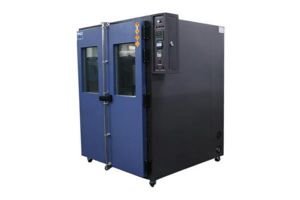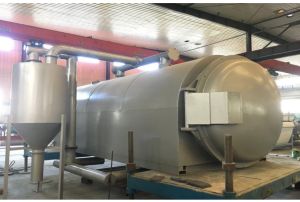


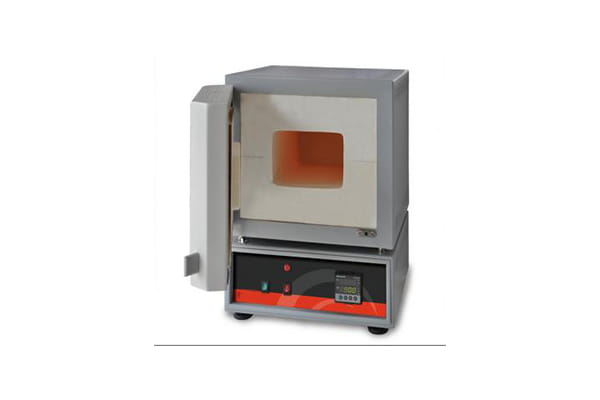
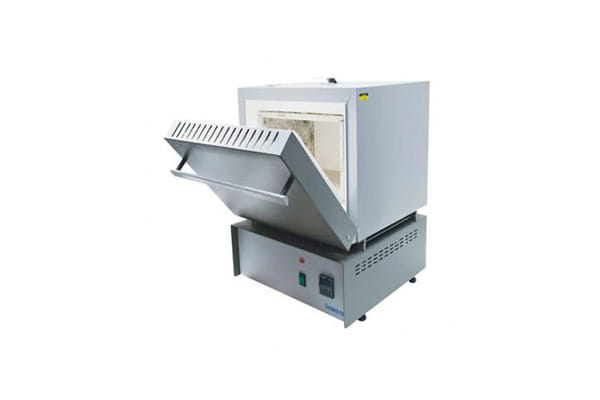
A High Temperature Furnace is a refractory-lined thermal chamber used for sintering, calcination, ashing, annealing, ceramic firing and other laboratory or industrial heat-treatment processes. Marjan Polymer Industries (MPI) supplies project-matched chamber/muffle furnaces, controls, accessories, installation and technical support for organisations in Pakistan.
The furnace class is selected from the maximum and continuous operating temperature, chamber/load size, atmosphere, ramp profile, temperature uniformity, sample chemistry and production duty. Heating elements, insulation, thermocouples and electrical power must be rated as one system.
High-Temperature Process Purpose
At high temperature, heat transfer is predominantly radiant. The furnace must control the programmed ramp, allow the load to approach the required temperature, hold for the defined soak and cool at a safe rate. A controller display does not prove the temperature of the sample or the uniform working zone.
Furnace Classes
| Temperature class | Typical heating system | Common applications |
|---|---|---|
| 1100–1200 °C class | Metallic resistance wire/elements | Ash determination, general laboratory heat treatment, pre-firing and calcination |
| 1400–1600 °C class | Silicon carbide or application-selected high-temperature elements | Ceramics, sintering, advanced materials and high-temperature research |
| 1700–1800 °C class | Molybdenum disilicide (MoSi₂) elements | Technical ceramics, sintering, refractory and materials-development work |
| Controlled-atmosphere/tube furnace | Element and work-tube system selected from atmosphere and temperature | Inert, selected reactive or vacuum processes requiring a purpose-designed enclosure |
Configurable Technical Range
| Parameter | Common project range | Selection basis |
|---|---|---|
| Maximum temperature | 1200, 1400, 1600, 1700 or 1800 °C class | Process peak, soak duration, atmosphere, sample chemistry and element life |
| Continuous temperature | Model-specific, commonly below maximum by approximately 50–100 °C | Element, insulation, chamber and manufacturer duty rating |
| Usable chamber volume | Approximately 3–165 L for common laboratory/pilot units; larger industrial chambers by review | Load envelope, uniform working zone, hearth loading and handling |
| Programmable ramp rate | Commonly approximately 1–20 °C/min subject to furnace class and load | Installed power, chamber, load mass, setpoint and element limits |
| Temperature uniformity | Model- and zone-specific at stated setpoint and working volume | Element layout, chamber geometry, sensor positions, load and mapping method |
| Control | PID or programmable controller; optional multi-zone control and recording | Ramp/soak profile, research method and traceability |
Heating Elements and Sensors
| Furnace class | Typical element | Typical control sensor |
|---|---|---|
| Up to approximately 1200 °C | FeCrAl or other metallic resistance element | Type K or application-selected thermocouple |
| Up to approximately 1600 °C | Silicon carbide (SiC) | Type S/B or model-selected high-temperature thermocouple |
| Up to approximately 1800 °C | Molybdenum disilicide (MoSi₂) | Type B or manufacturer-specified high-temperature sensor |
Element compatibility must be reviewed against vapours, dust and sample chemistry. Alkalis, halogens, reducing conditions and volatile compounds can attack elements or insulation and may require crucibles, catch trays, exhaust or an alternative furnace design.
Chamber, Insulation and Loading
- Layered ceramic-fibre and/or refractory insulation selected for temperature and mechanical duty.
- Replaceable hearth tile or tray to protect the chamber from load abrasion and accidental spillage.
- Front, top or bottom loading selected from chamber size, hot-load handling and process ergonomics.
- Vent, chimney, controlled exhaust or gas inlet only when engineered for the process.
- Double-wall casing, natural/forced case cooling and guarded hot surfaces.
Controls and Data Recording
- PID temperature control with programmable ramp-and-soak segments.
- Independent over-temperature limiter to protect furnace and load.
- Element-current/power control matched to the selected heating technology.
- Optional multi-zone control, recorder, batch report and remote data interface.
- Door, cooling, exhaust and atmosphere interlocks where included.
Atmosphere and Vacuum Options
A standard muffle/chamber furnace operates in air and is not gas-tight. Inert gas, reducing gas, reactive gas or vacuum operation requires a purpose-designed retort, sealed chamber or work tube with compatible seals, gas train, pressure/vacuum protection, purge sequence, monitoring and exhaust. The safe operating temperature may be lower than the furnace maximum under a controlled atmosphere.
Applications in Pakistan
- Ceramic, glass, refractory and powder-metallurgy sintering or firing.
- Calcination, ashing, loss-on-ignition and laboratory preparation.
- Annealing, stress relief and heat treatment of compatible metal samples.
- Catalyst, battery, mineral, cement and advanced-material research.
- Universities, quality-control laboratories and pilot manufacturing.
- Polymer-composite residue, filler or thermal-decomposition studies with suitable exhaust and method controls.
Safety and Use Limitations
Safeguards can include over-temperature protection, door switch, element-contactor monitoring, case cooling, emergency isolation and exhaust/atmosphere interlocks. Flammable liquids, sealed containers, explosive powders, pressurised samples and unidentified materials must not be heated without a specific hazard assessment and compatible furnace system.
Factory Acceptance and Documentation
| Deliverable | Typical scope |
|---|---|
| Design data | Chamber, temperature class, power, utilities, element, sensor and controller specification |
| Functional FAT | Controller, ramp/soak, alarms, over-temperature and door/cooling functions |
| Temperature survey | Agreed empty-chamber or working-zone test at stated setpoint and conditions |
| Calibration | Controller/recorder sensors and certificates as included in the quotation |
| Documentation | Operation, maintenance, element replacement, electrical drawings and spare-parts guidance |
Information Required for a Proposal
- Process, sample/material, maximum and continuous temperature and soak duration.
- Load size, weight, quantity, crucible/tray and required usable chamber dimensions.
- Required ramp/cooling profile, uniformity/accuracy method and data recording.
- Air, inert gas, reactive gas or vacuum requirement with full safety data.
- Electrical supply, ventilation, bench/floor space and installation location in Pakistan.
Installation and After-Sales Support
MPI can provide delivery coordination, installation, commissioning, controller training, calibration coordination and preventive-maintenance guidance in Pakistan. Ventilation, gas handling, lifting, electrical feeder and customer safety procedures are confirmed before start-up.
Frequently Asked Questions
What is a High Temperature Furnace?
It is a refractory-lined thermal chamber designed for processes such as sintering, calcination, ashing, annealing and ceramic firing at temperatures beyond ordinary hot-air ovens.
What maximum temperatures are available?
Common furnace classes include 1200, 1400, 1600, 1700 and 1800 °C. The correct class depends on process peak, continuous duty, atmosphere, sample chemistry and chamber size.
Is maximum temperature the continuous operating temperature?
Usually not. Many furnaces are intended to operate continuously around 50–100 °C below their maximum rating. The offered model’s duty statement governs.
Which heating element is used?
Metallic elements are common around 1100–1200 °C, silicon carbide around 1400–1600 °C, and molybdenum disilicide for selected 1700–1800 °C furnaces. Compatibility with the process atmosphere is essential.
Can MPI supply a muffle or chamber furnace?
Yes. Front-, top- or bottom-loading chamber/muffle systems can be supplied with project-selected volume, temperature class, controls, hearth and accessories.
Can the furnace operate under inert gas or vacuum?
Only a purpose-designed retort, sealed chamber or tube system should be used. A standard muffle furnace is not gas-tight and must not be assumed suitable for vacuum or controlled atmosphere.
How is temperature uniformity verified?
A survey must state the setpoint, working zone, sensor locations, load condition and stabilisation time. Controller accuracy alone does not prove furnace uniformity.
Can flammable or unknown samples be heated?
Not without a documented hazard assessment and compatible equipment. Flammable liquids, sealed vessels, explosive powders and unknown gases can create fire, explosion or toxic-release hazards.
Does MPI provide installation in Pakistan?
MPI can provide installation, commissioning, training, calibration coordination and after-sales support in Pakistan according to the quoted system.
What information is required for a quotation?
Provide the process and material, maximum/continuous temperature, chamber and load dimensions, ramp/soak profile, atmosphere, uniformity method, electrical supply and site location.
Request a High Temperature Furnace Proposal
Send MPI your process temperature, sample chemistry, chamber/load size, ramp-and-soak profile, atmosphere and documentation requirements. Marjan Polymer Industries will prepare a project-specific High Temperature Furnace proposal for your laboratory or production facility in Pakistan.