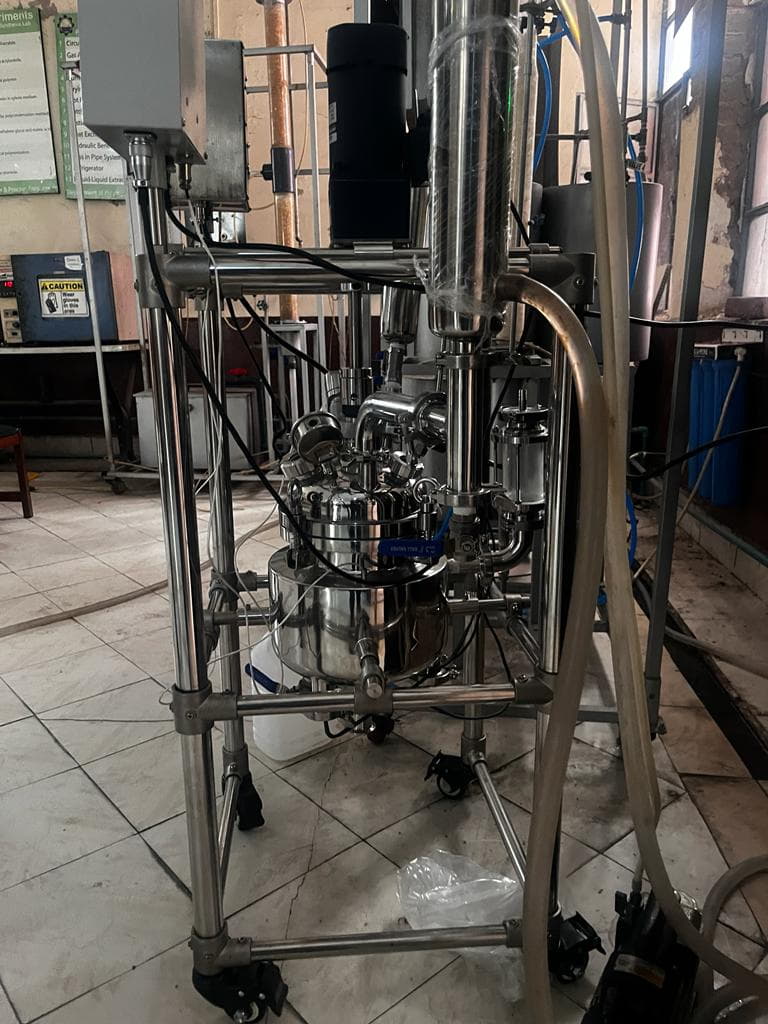
Polymerization Reactor is MPI’s engineered reaction platform for controlled conversion of monomers into polymers at laboratory and pilot scale. The system is configured around polymerization route, reaction kinetics, exotherm, viscosity rise, phase behaviour, pressure or vacuum, feeding strategy and product-quality targets.
MPI can evaluate solution, suspension, emulsion, bulk, semi-batch and selected polycondensation duties. This page is intentionally focused on polymerization reaction engineering; MPI’s separate Polymer Reactor page covers broader resin, coating, adhesive and polymer process development.
Reaction-Engineering Purpose
Polymerization quality depends on temperature history, concentration uniformity, feed rate, mixing, residence time and removal of reaction heat. The reactor package gives the operator controlled agitation, thermal management, dosing, gas/vacuum handling, reflux, sampling and safety functions in a documented system.
Polymerization Routes
| Route | Process character | Primary engineering focus |
|---|---|---|
| Solution polymerization | Monomer and polymer remain in a solvent phase | Heat removal, solvent reflux, viscosity and devolatilization |
| Suspension polymerization | Monomer droplets are dispersed in a continuous liquid phase | Droplet/particle distribution, suspension, wall fouling and heat transfer |
| Emulsion polymerization | Polymer forms in stabilised latex particles | Feed profile, emulsification, temperature uniformity and foam/vent control |
| Bulk polymerization | Little or no solvent; viscosity can rise sharply | Exotherm control, high-viscosity mixing and product discharge |
| Polycondensation | Step-growth reaction with removal of condensate or volatile species | High temperature, vacuum, mass transfer and melt handling |
| Semi-batch process | One or more reactants are added during the cycle | Controlled addition, heat-release rate and composition trajectory |
Core Reactor System
| Subsystem | Function | Project decision |
|---|---|---|
| Reactor vessel | Contains the reacting phases at design conditions | Volume, geometry, material, pressure and temperature |
| Agitator and drive | Controls dispersion, suspension, blending and heat transfer | Route, viscosity curve, shear and solids/particle target |
| Jacket/coil/TCU | Adds start-up heat and removes reaction heat | Heat balance, utility and control response |
| Feed system | Meters monomer, initiator, catalyst or additives | Rate profile, accuracy, containment and redundancy |
| Condenser and receiver | Manages vapours, reflux and recovered condensate | Vapour load, solvent, pressure/vacuum and vent treatment |
| Gas and vacuum system | Supports inerting, purging, pressure or vacuum operation | Oxygen sensitivity, reaction gas and design rating |
| Controls and safeguards | Executes and protects the polymerization sequence | Recipe, alarms, trips, data records and emergency strategy |
Configurable Engineering Range
Final capacities, ratings and performance are contractual only when stated in the approved quotation, data sheet, P&ID and vessel nameplate.
| Parameter | Available engineering direction |
|---|---|
| Scale | Laboratory and pilot systems; production concepts by detailed project review |
| Operating mode | Batch or semi-batch; continuous concepts where process and scale justify them |
| Vessel material | Compatible stainless steel, glass or specified corrosion-resistant material |
| Pressure regime | Atmospheric, vacuum or rated-pressure design |
| Agitation | Application-selected impeller, baffles and variable-speed drive |
| Heating/cooling | Jacket, coil and project-matched temperature-control package |
| Dosing | Manual, pump, gravimetric or automated recipe addition |
| Automation | PID or PLC/HMI with trends, alarms and optional batch records |
SP-5 Project Reference
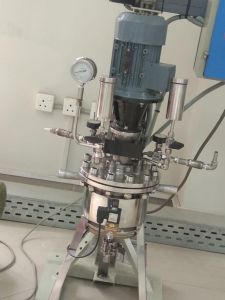
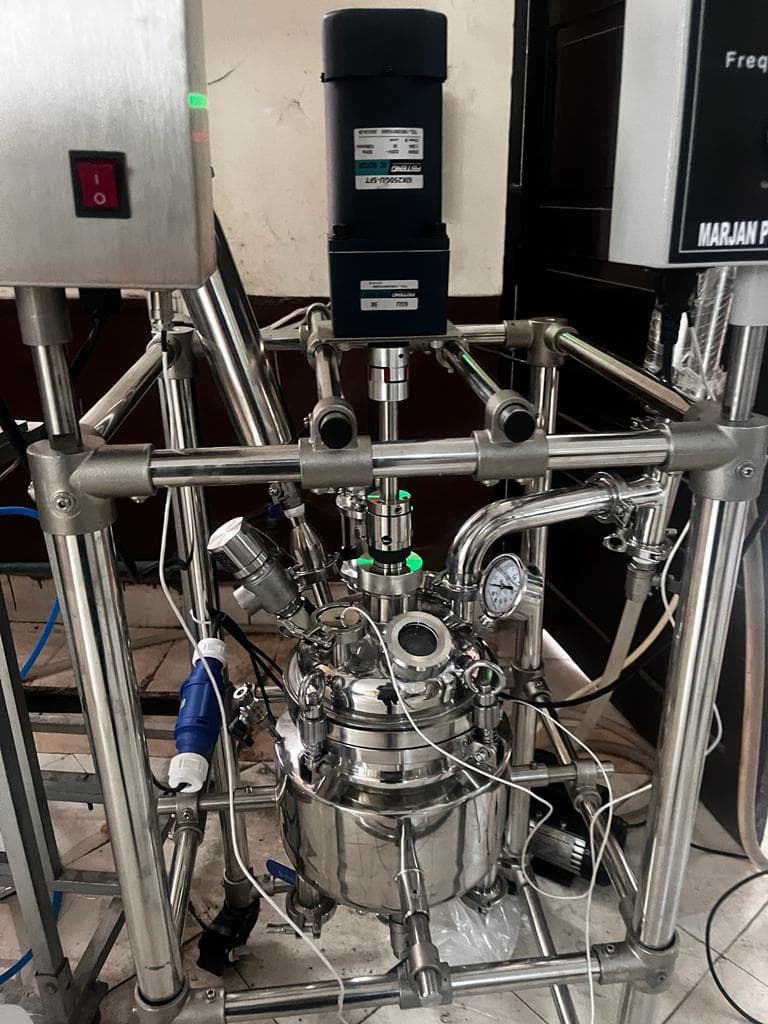
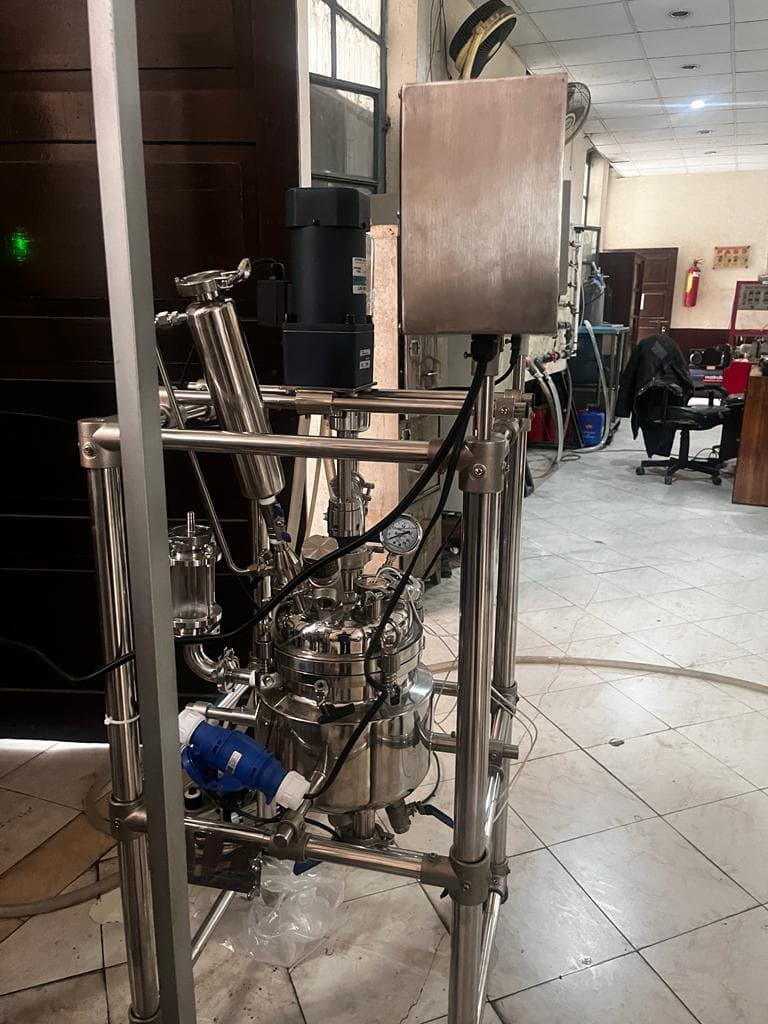
The following is a reference configuration from the existing MPI product record, not a universal specification. Any repeat or modified system is re-engineered against the new URS.
| Reference item | Recorded project direction |
|---|---|
| Application | Suspension and related laboratory/pilot polymerization work |
| Working-volume class | Approximately 25–30 litres, project-customisable |
| Vessel concept | Double-wall stainless-steel vessel |
| Agitation reference | Mechanical geared drive with adjustable speed up to 500 rpm in the recorded configuration |
| Thermal reference | Electrically heated arrangement up to 150 °C in the recorded configuration |
| Process access | Feed ports, gas inlet/control, observation provision, sampling/drain arrangement |
| Vapour handling | Water-cooled condenser system |
| Controls | Temperature and speed control, electrical indication and emergency stop |
| Optional cooling | Chiller-assisted rapid cooling where specified |
Heat-Removal and Exotherm Control
Polymerization can release heat faster than the vessel can remove it. MPI requires reaction-heat data or a justified design basis to size the jacket, coil, temperature-control unit and cooling utility. Semi-batch feed rate, initiator addition, alarm limits and emergency response are treated as part of the thermal-safety design.
Mixing Through Viscosity Change
A reaction may begin as a low-viscosity liquid and finish as a viscous solution, slurry or melt. MPI selects impeller type, diameter, stages, baffles, shaft, seal, gearbox and motor torque from the full process trajectory. Suspension routes also require enough circulation to prevent settling without damaging the desired particle distribution.
Suspension and Particle Control
For suspension or bead polymerization, mixer and vessel geometry influence droplet breakup, pooling, wall fouling, bead suspension and particle-size distribution. The design basis records phase ratio, stabiliser system, target particle range, density difference, viscosity and scale-up method.
Feed, Initiator and Catalyst Dosing
| Stream | Possible equipment | Control objective |
|---|---|---|
| Monomer/comonomer | Feed vessel, metering pump, weigh scale or flow meter | Conversion, composition and heat-release rate |
| Initiator/catalyst | Dedicated contained vessel and accurate low-flow dosing | Kinetics, molecular-weight target and safe addition |
| Surfactant/stabiliser | Prepared solution vessel or controlled charge | Phase stability and particle control |
| Chain-transfer/additive | Metered liquid or sealed solids charge | Polymer properties and batch consistency |
| Inert or reaction gas | Regulator, rotameter or mass-flow controller | Oxygen exclusion, pressure or reaction stoichiometry |
Condenser, Reflux and Vent System
Vapour-load calculation determines condenser area, coolant condition, receiver volume and vent routing. The package can include reflux/divert service, cold trap, vacuum protection and connection to customer-approved vent treatment. Flammable or toxic vapours require a declared hazardous-area and containment basis.
Pressure, Vacuum and Inerting
The approved design pressure and temperature govern vessel fabrication, connections, seal, instruments and relief protection. Nitrogen purge and blanketing may be used for oxygen-sensitive or flammable processes. Vacuum configurations require appropriate vessel strength, valve selection and protection against backflow or collapse.
Automation and Batch Data
- Recipe steps for charge, purge, heat, dose, react, cool and discharge
- Cascade or PID temperature control
- Agitator speed and motor-load trending
- Controlled feed profiles and totalised addition
- Pressure/vacuum and gas-flow monitoring
- Alarm, permissive, trip and emergency-cooling logic
- Optional batch reports, audit trail and plant communication
Sampling and Endpoint Monitoring
Project options include closed sampling, dip tube, bottom sample, sight glass, torque/current trend, pH, conductivity, refractive index or customer-specified analytical interfaces. Sampling frequency, quench procedure and exposure controls are defined before nozzle and valve selection.
Safety and Reaction Hazard Basis
Customer chemistry and reaction data are essential. MPI incorporates engineering safeguards from the approved risk assessment, which may include independent high-temperature and high-pressure limits, relief protection, inerting, controlled dosing, emergency cooling, interlocked agitation, emergency stop, guarded drives and safe vent routing.
Materials, Finish and Cleaning
Contact material, surface finish, gasket and seal are selected from monomer, solvent, catalyst, temperature and contamination limits. Clean-in-place ports, solvent flush, bottom-drain geometry, removable internals or access for manual cleaning can be specified to reduce cross-batch contamination and fouling.
Factory Acceptance and Documentation
| Package | Typical scope when contracted |
|---|---|
| Engineering | URS review, data sheet, general arrangement, P&ID, utilities and control philosophy |
| Mechanical | Material records, dimensional checks and applicable leak/pressure testing |
| Electrical/instrument | I/O checks, calibration records, alarms, interlocks and motor tests |
| FAT | Agitation, heating/cooling response, dosing sequence and safety-function checks using an agreed medium |
| Handover | Manuals, drawings, certificates, spares list, commissioning and training records |
Information Needed for Sizing
- Polymerization route, monomers, solvent, initiator/catalyst and additives
- Batch mass, target conversion and cycle time
- Reaction heat, feed profile and emergency-cooling basis
- Viscosity and phase changes throughout the reaction
- Operating/design temperature, pressure and vacuum
- Particle-size or suspension requirement where applicable
- Condenser duty, vent handling and hazardous-area classification
- Utilities, automation, documentation and site requirements
Installation and Support in Pakistan
MPI can provide site-interface review, installation supervision, commissioning, operator training, documentation handover and after-sales support across Pakistan. The proposal defines travel, utilities, civil works, test material and customer responsibilities.
Frequently Asked Questions
What is a polymerization reactor?
A polymerization reactor is a controlled reaction system designed around monomer conversion, heat removal, mixing, dosing, pressure or vacuum, reflux and the viscosity change that occurs as polymer forms.
Which polymerization routes can MPI evaluate?
MPI can evaluate batch and semi-batch solution, suspension, emulsion, bulk and selected polycondensation processes. Suitability and equipment scope depend on chemistry, kinetics, heat release, viscosity and hazards.
How is this different from the Polymer Reactor page?
This page targets polymerization reaction engineering and polymer-production routes. MPI’s Polymer Reactor page covers the broader laboratory and pilot platform for polymer, resin, coating, adhesive and formulation development.
What working volume is available?
Laboratory and pilot volumes can be configured. Working volume is selected from batch mass, headspace, foaming, reflux, suspension quality and heat-transfer requirements rather than a nominal litre value alone.
Can MPI supply the existing SP-5 configuration?
A 25–30 litre-class suspension-polymerization configuration has been used as a project reference. Any new SP-5 or similar system is revalidated against the current customer URS and issued with project-specific ratings.
How is an exothermic polymerization controlled?
The design combines adequate heat-transfer area, utility capacity, agitation, controlled initiator or monomer addition, alarms, independent limits and an agreed emergency response. A reaction heat and hazard basis is required.
Can the reactor handle rising viscosity?
Yes when the agitator, drive torque, shaft, seal and heat-transfer arrangement are selected from the full viscosity profile. Some routes may require anchors, helical elements, multi-stage impellers or another reactor concept.
Are condenser, nitrogen and vacuum functions available?
Condenser/reflux, inert-gas control, vacuum, feed vessels, receivers and vent interfaces can be included when required by the approved process and safety design.
Is automatic recipe control available?
PLC/HMI control can manage temperature, agitation, feed profiles, pressure/vacuum, alarms and batch records. The exact automation and data integrity requirement is defined in the project scope.
Does MPI provide commissioning in Pakistan?
MPI can provide installation supervision, commissioning, operator training, documentation handover and after-sales support across Pakistan under the agreed commercial scope.
Request a Polymerization Reactor Proposal
Send MPI your polymerization route, chemistry, batch volume, exotherm, viscosity profile, pressure/vacuum, utilities and control requirements. MPI will prepare a project-specific Polymerization Reactor proposal for Pakistan.