

Vacuum Infusion is MPI’s configurable equipment and process platform for manufacturing fibre-reinforced composite laminates under a sealed vacuum bag. The system can be supplied for laboratory development, training, tooling, pilot production or industrial composite fabrication in Pakistan.
The project is engineered around part dimensions, reinforcement architecture, resin viscosity and working time, core material, flow strategy, target vacuum, leak criterion, cure temperature and production rate. MPI can supply the vacuum station, infusion table or tooling interface, catch pot, manifolds, controls and selected consumables as an integrated scope.
Process Principle
Dry reinforcement and core are placed on a mould, covered with peel ply and flow media, then sealed inside bagging film. Vacuum removes air and compacts the stack. After a successful leak test, vacuum draws mixed resin from the feed line through the laminate toward the vacuum outlet and catch pot.
Why Use Vacuum Infusion
- Controlled resin distribution through a compacted dry-fibre stack
- Potential for lower void content and improved fibre/resin consistency
- Cleaner closed-bag processing and reduced operator exposure compared with open wet lay-up
- Practical manufacture of large or complex one-sided-mould parts
- Repeatable process documentation for research and production
- Compatibility with glass, carbon, aramid, natural-fibre and hybrid composites
Complete System Architecture
| Subsystem | Purpose | Project selection |
|---|---|---|
| Vacuum pump/station | Evacuates and maintains the sealed process | Part volume, leakage allowance, ultimate vacuum and duty cycle |
| Resin catch pot | Protects the pump from resin carryover | Expected excess resin, ports, liner and vacuum rating |
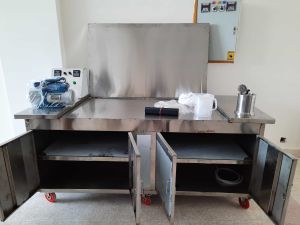
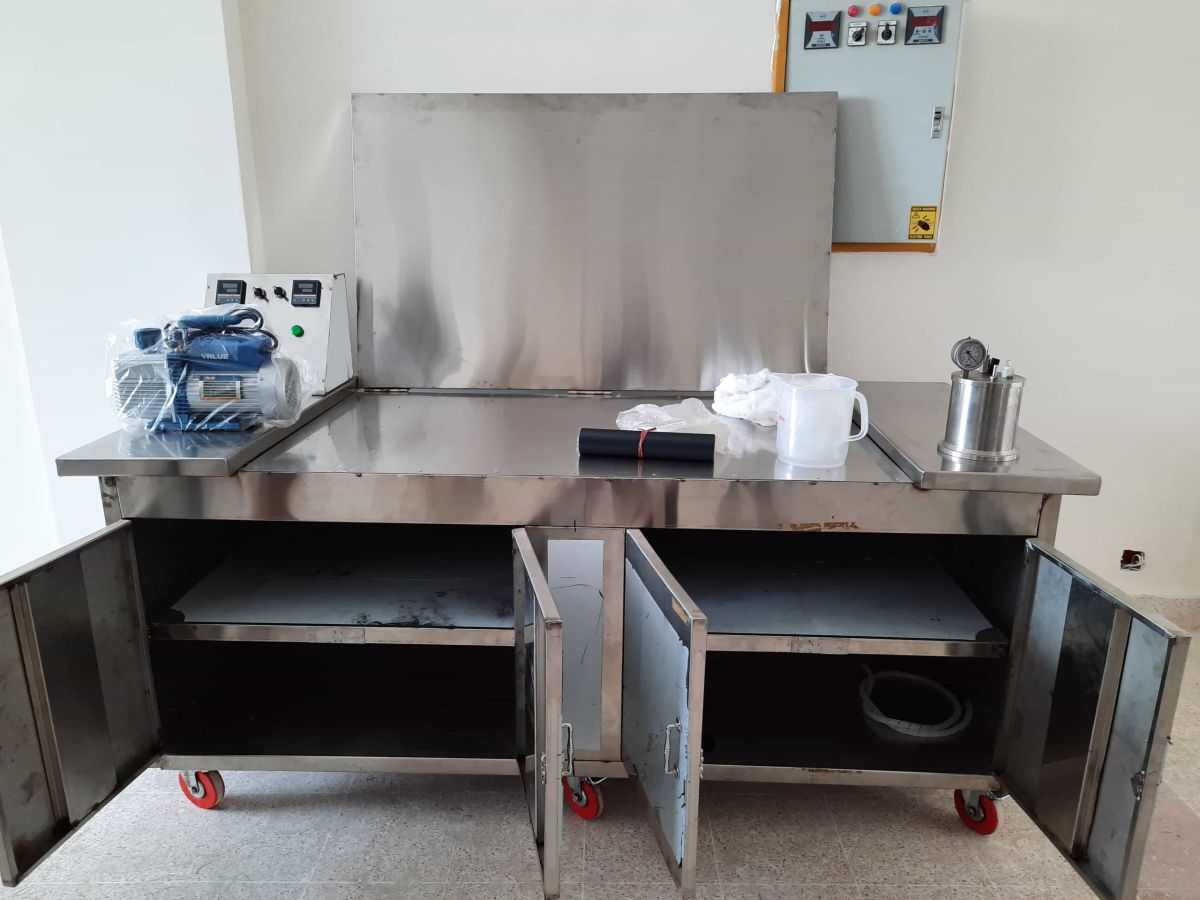
| Vacuum table or mould interface | Supports the laminate and bag seal | Size, flatness, heating, port layout and surface |
| Feed and vacuum manifolds | Distribute resin and vacuum across the part | Flow model, laminate permeability and part geometry |
| Gauges and sensors | Verify vacuum, leaks and process conditions | Accuracy, zones, logging and alarm requirements |
| Hoses, valves and connectors | Control resin and vacuum paths | Resin compatibility, diameter, temperature and cleaning |
| Bagging consumables | Create the sealed flow stack | Resin, cure temperature, surface and removal needs |
Configurable Engineering Range
The final scope and ratings are confirmed in the approved MPI quotation, equipment data sheet and process plan.
| Parameter | Available project direction |
|---|---|
| Scale | Training coupon, laboratory panel, pilot mould or production part |
| Vacuum source | Portable pump, integrated vacuum station or multi-zone system |
| Table/tooling | Flat infusion table, heated table or customer-mould connection package |
| Vacuum zones | Single or multiple monitored zones |
| Resin feed | Pot/bucket feed, controlled reservoir or metered delivery system |
| Thermal control | Ambient process, heated surface or project-specified cure arrangement |
| Monitoring | Analogue gauges, digital sensors, data logging or PLC/HMI |
| Consumables | Application-matched bagging film, sealant, peel ply, flow media and lines |
Vacuum Pump Selection
Pump selection considers part volume, evacuation time, expected leakage, operating vacuum, resin vapour, duty cycle and site power. Pumping speed does not compensate for a leaking bag; the system must first pass the agreed vacuum-drop test.
Resin Catch Pot and Pump Protection
The catch pot sits between the laminate and pump. It requires adequate usable volume, vacuum-rated construction, visible or measurable level where specified, secure lid sealing and resin-resistant ports. Disposable liners or cleanable vessels may be selected.
Infusion Table and Tooling Options
| Option | Best suited to | Key design points |
|---|---|---|
| Flat laboratory table | Coupons, panels, training and process development | Flatness, seal area, ports and cleanable surface |
| Heated infusion table | Viscosity control and controlled cure development | Temperature uniformity, sensor layout and over-temperature protection |
| Mould connection kit | Existing one-sided production moulds | Port location, edge sealing and manifold routing |
| Multi-zone vacuum system | Large parts and process monitoring | Independent gauges, isolation, balance and alarm logic |
| Training demonstrator | Universities and technical institutes | Clear flow observation, repeatability and safe handling |
Consumable Stack
A typical infusion stack includes mould release, dry reinforcement, optional core, peel ply, perforated or release film where required, distribution mesh, spiral or flow line, vacuum line, bagging film and sealant tape. Every material must be compatible with resin chemistry and cure temperature.
Resin and Reinforcement Compatibility
Infusion resin needs suitable viscosity, wet-out behaviour, working time and exotherm for the part size. MPI reviews the resin technical data, reinforcement areal weight, number of plies, core permeability and temperature before proposing line diameter and flow layout.
Flow Strategy and Port Layout
Feed and vacuum positions determine flow distance, front shape, race-tracking risk and fill time. Options include edge feed, centre feed, parallel lines, staged gates and multiple vacuum outlets. Complex parts may require permeability trials or simulation before production tooling is finalised.
Leak Testing Before Infusion
- Assemble and seal the complete dry laminate stack.
- Evacuate the bag while inspecting folds, fittings and sealant.
- Reach the specified process vacuum and stabilise.
- Isolate the bag from the pump and record vacuum decay for the agreed period.
- Repair any leak and repeat until the acceptance criterion is met.
- Only then prepare and release the resin.
Process Monitoring
- Vacuum at pump, catch pot and laminate zones
- Vacuum-drop test record
- Resin and tool temperature
- Mix time, resin mass and batch identification
- Resin-front progress and gate/vacuum valve timing
- Gel, cure and demould timestamps
- Optional digital logging and alarm history
Heating and Cure Control
Heating can reduce resin viscosity and support a controlled cure, but it also changes working time and reaction exotherm. Heated tables or moulds require zoned sensors, uniformity checks, independent limits and a cure schedule approved for the selected resin and tooling.
Applications
| Sector | Example components |
|---|---|
| Marine | Panels, decks, hull sections and structural members |
| Automotive/transport | Body panels, fairings, covers and lightweight structures |
| Wind/energy | Blade, nacelle and structural composite components |
| Aerospace/research | Development panels, sandwich structures and demonstrators |
| Construction | Architectural panels, strengthening elements and profiles |
| Universities | Composite processing education, test coupons and R&D |
Safety and Process Controls
Risk assessment covers resin/hardener handling, vapours, vacuum-rated hardware, implosion protection, electrical equipment, hot surfaces, exotherm, spills and waste. Personnel must use the resin supplier’s SDS, suitable ventilation and approved PPE.
Quality and Acceptance Plan
The project can include equipment leak testing, pump performance verification, gauge checks, heater uniformity, control and alarm tests, and a customer-agreed demonstration panel. Finished laminate acceptance may include mass, thickness, visual voids, cure and mechanical testing where contracted.
Information Required for a Proposal
- Part dimensions, geometry and production quantity
- Reinforcement, ply schedule, core and target fibre fraction
- Resin system, mixed viscosity, working time and cure schedule
- Existing mould/table and available ports
- Vacuum, heating, monitoring and data-record requirements
- Site power, ventilation and hazardous-material controls
- Required consumables, trials, training and documentation
Installation and Training in Pakistan
MPI can provide system setup, vacuum-integrity checks, demonstration infusion, operator training and after-sales support across Pakistan. Test materials, customer moulds and responsibilities are agreed before commissioning.
Frequently Asked Questions
What is vacuum infusion?
Vacuum infusion is a closed-mould composite process in which vacuum compacts dry reinforcement and draws low-viscosity resin through the laminate under a sealed bag.
Is this the same as VARTM?
Vacuum Assisted Resin Transfer Moulding (VARTM) is a widely used name for vacuum-driven infusion. Exact tooling, pressure and resin-delivery arrangements vary by process.
What equipment is required?
A complete setup normally includes a sealed mould or table, vacuum pump, resin catch pot, gauges, hoses, valves, feed and vacuum manifolds, bagging film, sealant tape, peel ply and flow media.
Why is a resin catch pot important?
The catch pot is installed between the laminate and vacuum pump to intercept excess resin and protect the pump and vacuum line.
Can the table be heated?
Yes. A heated table, mould heating or separate curing arrangement can be engineered where resin viscosity, infusion time or cure schedule requires controlled temperature.
Which composite materials can be infused?
Typical reinforcements include glass, carbon, aramid, natural-fibre and hybrid fabrics with compatible core materials and low-viscosity infusion resins.
How do I know the bag is leak-tight?
The bag is evacuated and isolated for a documented vacuum-drop test before resin is mixed or released. Acceptance limits depend on part size, process risk and customer procedure.
Can MPI supply consumables and training?
The project can include reusable hardware, selected consumables, process demonstration, lay-up planning and operator training subject to the agreed scope.
Can the system be automated?
Vacuum monitoring, multiple zones, resin valves, temperature logging, alarms and PLC/HMI functions can be added for pilot or production systems.
Does MPI support projects in Pakistan?
MPI can provide application review, equipment supply, installation supervision, process trials, training and after-sales support across Pakistan.
Request a Vacuum Infusion Proposal
Share your part size, laminate, resin, mould, heating and production requirements. MPI will prepare a project-specific Vacuum Infusion equipment and process proposal for Pakistan.