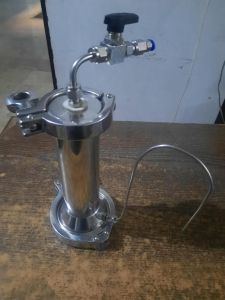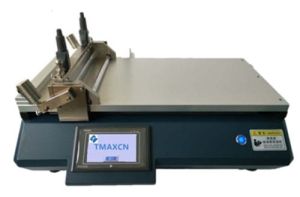
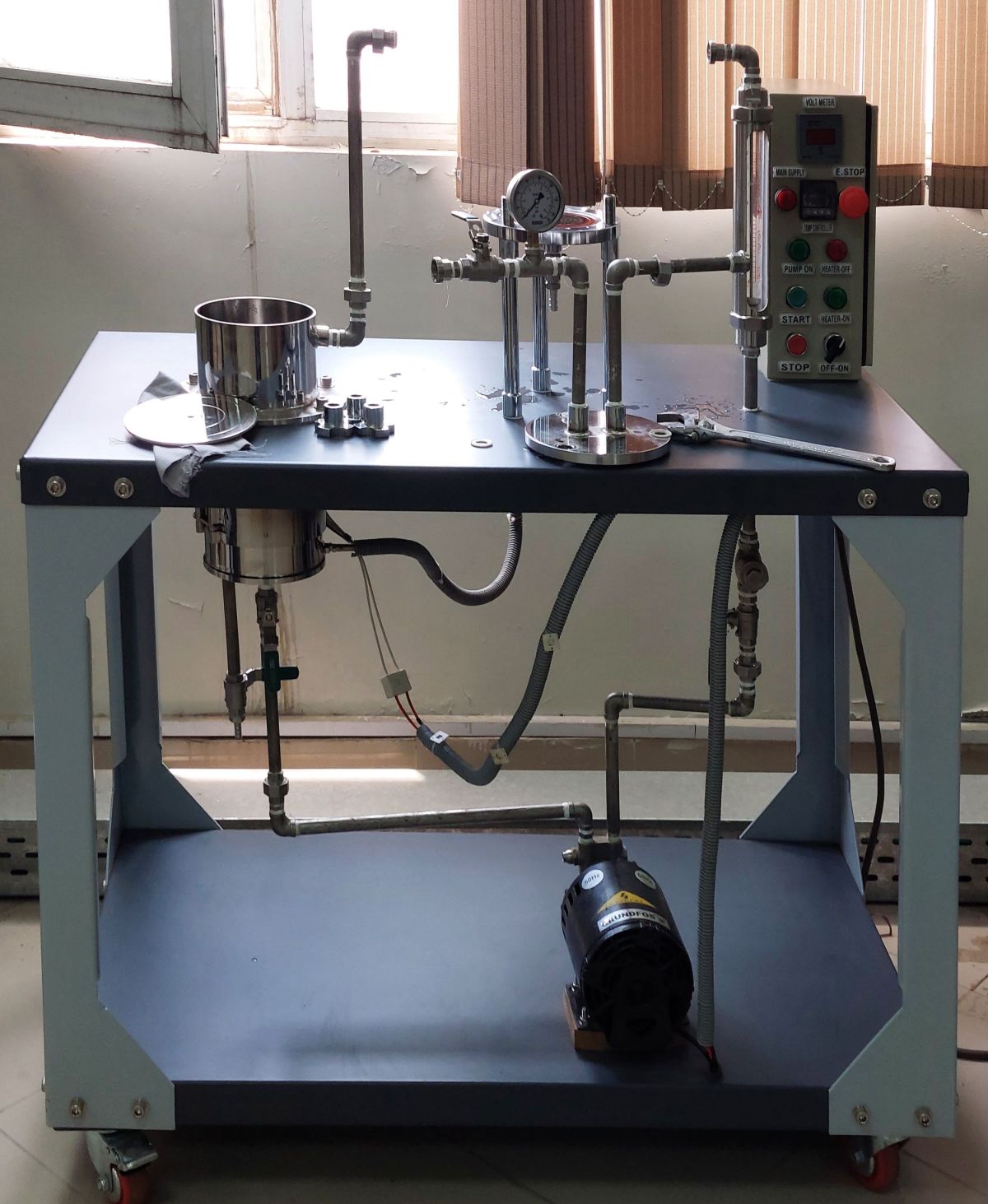
Cross-Flow Membrane Filtration System is a configurable laboratory and process-development platform for testing flat-sheet membranes under controlled feed flow, pressure and temperature. Unlike dead-end filtration, the feed moves tangentially across the membrane surface; a portion passes through as permeate while the retained stream continues through the cell and returns to the feed vessel or exits as concentrate.
The MPI MF 25 reference system supports membrane screening, concentration, clarification, desalination research and diafiltration studies. It is configured around the membrane type, active area, feed chemistry, required pressure, cross-flow velocity, temperature, hold-up volume and analytical plan. Pump, cell, tubing, valves, sensors and membrane must all be rated for the same operating envelope.
How cross-flow membrane filtration works
- Feed circulation: a pump moves the test liquid from the reservoir through the membrane cell.
- Tangential sweep: liquid flows parallel to the membrane surface, creating shear that can reduce cake accumulation compared with dead-end operation.
- Selective permeation: solvent and selected solutes pass through the membrane as permeate.
- Retentate control: a back-pressure valve controls the retentate pressure and recirculation condition.
- Measurement: pressure, temperature, permeate mass or volume and time are recorded to calculate flux and rejection.
- Concentration or diafiltration: permeate removal concentrates retained species; controlled buffer addition enables diafiltration.
Reference MF 25 configuration
| Parameter | Reference development scope |
|---|---|
| System type | Bench/pilot cross-flow membrane evaluation and recirculation system |
| Reference membrane format | Circular flat-sheet polymer membrane, approximately 90 mm disc diameter; active filtration area is defined by the cell |
| Membrane processes | Microfiltration, ultrafiltration, nanofiltration or reverse-osmosis evaluation with a compatible cell and pump |
| Reference pressure envelope | Approximately 1–40 bar; the approved limit is the lowest rating among membrane, cell, fittings, tubing, sensors and pump |
| Reference temperature envelope | Ambient to approximately 80 °C where every wetted component and the selected membrane are compatible |
| Feed pump | Application-selected positive-displacement or high-pressure pump with controllable recirculation flow |
| Pressure control | Retentate back-pressure valve with feed and retentate pressure measurement |
| Temperature measurement | Electronic temperature sensor/thermocouple in the process loop |
| Permeate measurement | Balance, load cell, flow sensor or volumetric collection, selected for expected flux |
| Data logging | Pressure, temperature, permeate mass/volume and time; optional flow, conductivity, pH and turbidity inputs |
| Diafiltration | Optional buffer/water addition pump with level or mass control |
| Software logic | Configurable permeate collection target, replacement-fluid addition and flux-versus-time plotting |
| Wetted materials | Selected from stainless steel, engineering polymer, elastomer and membrane compatibility requirements |
| Electrical supply | 220–230 V, 50 Hz Pakistan reference; final connected load and protection are confirmed |
Published maximum pressure and temperature values are not automatically simultaneous and do not apply to every membrane. The approved process envelope is configuration-specific.
Transmembrane pressure, cross-flow and flux
Transmembrane pressure (TMP) is the driving force for permeation. For a recirculating system with negligible permeate pressure, it is commonly estimated from the average of feed and retentate pressures minus permeate pressure. Cross-flow rate determines velocity and wall shear. Permeate flux is permeate volume or mass per membrane area and time. Increasing TMP does not always increase stable flux because concentration polarization, compaction and fouling may become controlling.
Membrane selection and separation objective
| Membrane class | Typical development objective |
|---|---|
| Microfiltration (MF) | Suspended solids, cells, emulsions and clarification; selected by nominal pore size |
| Ultrafiltration (UF) | Macromolecule, protein, polymer or colloid concentration; selected by MWCO and material |
| Nanofiltration (NF) | Small-organic and multivalent-ion separations at application-specific pressure |
| Reverse osmosis (RO) | High-rejection desalination and water purification testing under a compatible high-pressure configuration |
Membrane chemistry, pore size or MWCO, surface charge, support layer, solvent tolerance, pH range, chlorine tolerance, temperature limit and compaction behaviour must match the feed and test objective.
Concentration, clarification and diafiltration
In concentration mode, permeate is removed while retained material remains in the recirculation loop, reducing retentate volume and increasing retained-species concentration. In clarification, the permeate may be the desired product. Diafiltration adds water or buffer while permeate is removed to wash smaller solutes through the membrane and exchange the solution environment. Constant-volume and discontinuous diafiltration can both be studied.
Mass balance and performance calculations
- Permeate flux: permeate collected divided by active membrane area and time.
- Rejection: one minus permeate concentration divided by feed or retentate concentration, using the defined sampling basis.
- Concentration factor: initial feed amount or volume relative to final retentate.
- Recovery: target material recovered in the chosen product stream relative to the feed amount.
- Volume balance: feed equals retentate, permeate, samples, hold-up and verified losses.
- Normalized comparison: temperature, viscosity, TMP, cross-flow and membrane area must be recorded when comparing runs.
Fouling, concentration polarization and compaction
Cross-flow can reduce surface accumulation but does not eliminate fouling. Flux decline may result from reversible polarization, cake formation, adsorption, pore blocking, scaling or irreversible membrane compaction. A proper test records clean-water or clean-solvent permeability before use, stabilized process flux, rejection, cleaning recovery and post-test permeability.
Feed loop and membrane-cell engineering
The flow channel, spacer, membrane support, gasket compression and active area affect pressure drop and shear. The cell must prevent bypass while avoiding membrane damage. Feed-vessel geometry and agitation should keep solids suspended and temperature uniform. Low hold-up is important for valuable samples, while larger reservoirs may be needed for long concentration or diafiltration runs.
Pump and back-pressure control
The pump is chosen from pressure, flow, viscosity, solids, shear sensitivity and pulsation requirements. A bypass or speed control prevents dead-heading. The back-pressure valve should provide stable control without excessive shear or blockage. Pressure relief and a verified return path protect the loop if a valve is closed or a membrane channel plugs.
Instrumentation and data logging
- Feed, retentate and optional permeate pressure.
- Feed or loop temperature.
- Recirculation flow and calculated cross-flow velocity.
- Permeate mass, volume or flow versus time.
- Feed and permeate conductivity, pH, turbidity or concentration where required.
- Reservoir level or mass for diafiltration control.
- Alarm history, run metadata and exportable test records.
Typical research and industrial applications
- Drinking-water, wastewater, brackish-water and desalination membrane development.
- Food, beverage, dairy, juice and fermentation-broth clarification studies.
- Protein, enzyme, vaccine and bioprocess concentration or buffer-exchange development.
- Polymer, coating, colloid, nanoparticle and emulsion separation research.
- Oil–water, dye, metal-ion and industrial effluent treatment trials.
- University membrane characterization, fouling and cleaning studies.
- Scale-down testing before pilot or production membrane selection.
What this system is not
The MF 25 is not automatically a complete municipal RO plant, a validated GMP bioprocess skid or a production wastewater line. It is a configurable membrane evaluation and process-development system. Full-scale equipment requires separate sizing for feed pretreatment, membrane area, recovery, cleaning, energy, automation, hygienic design, concentrate management and regulatory requirements.
Configurable system options
- Alternative flat-sheet cells, cassette holders, tubular modules or hollow-fibre modules.
- Low-pressure sanitary pump or high-pressure RO/NF pump.
- Variable-frequency or servo pump control and pulsation damping.
- Heated/chilled jacketed reservoir and heat exchanger.
- Automated TMP or retentate-valve control.
- Permeate balance, flow meter, fraction collection or multiple permeate channels.
- Constant-volume diafiltration and buffer-addition control.
- pH, conductivity, turbidity, UV, pressure, temperature and flow sensors.
- PLC/HMI recipes, trend plots, data export and remote-support provisions.
Cleaning, integrity and changeover
Cleaning chemistry and sequence are selected from membrane and wetted-material compatibility. A typical study may include drain, flush, detergent or enzymatic cleaning, rinse and permeability recovery check. Membranes intended for reuse require documented storage and integrity procedures. The system must be depressurized and safely drained before opening the cell.
Site, utilities and installation planning
MPI confirms bench or floor space, electrical supply, cooling or heating utilities, feed and cleaning-water quality, drain and concentrate collection, ventilation, spill containment and chemical storage. The customer provides safe waste handling and any required sanitary or hazardous-area facilities unless expressly included.
Commissioning and operator training
The agreed service scope can include equipment placement, tubing and sensor checks, leak testing, pressure-hold verification, clean-water trials, flow and pressure calibration, membrane loading, baseline permeability measurement, software setup and operator training. Process acceptance uses the approved membrane and representative feed whenever practical.
Supply and technical support in Pakistan
Marjan Polymer Industries supplies cross-flow membrane filtration systems in Pakistan for universities, water laboratories, food and bioprocess developers, chemical manufacturers and industrial R&D teams. Services may include application review, configuration, fabrication or sourcing coordination, installation planning, commissioning, training, documentation and after-sales support.
Information required for a technical quotation
- Feed composition, solids, viscosity, pH, conductivity, temperature and hazard data.
- Desired product stream and target rejection, recovery, concentration or buffer exchange.
- Membrane class, material, pore size/MWCO, diameter or module format.
- Required active area, batch volume, hold-up limit and test duration.
- Normal and maximum pressure, cross-flow rate and temperature.
- Permeate measurement, sensors, data logging and diafiltration requirements.
- Cleaning chemicals, sanitary requirements and wetted-material preferences.
- Available utilities, installation location, documentation and training scope.
Frequently asked questions
What is cross-flow membrane filtration?
It is a filtration mode in which feed flows tangentially across the membrane while permeate passes through and retentate continues along the membrane surface.
Is cross-flow filtration the same as tangential flow filtration?
Yes. Cross-flow filtration and tangential flow filtration describe the same basic flow orientation, although TFF is commonly used in bioprocess ultrafiltration and diafiltration.
Which membrane processes can the MF 25 evaluate?
Microfiltration, ultrafiltration, nanofiltration and reverse-osmosis membranes can be evaluated when the selected cell, pump, tubing and sensors are compatible with the required pressure and chemistry.
Can the system operate up to 40 bar?
The reference platform can be configured for approximately 1–40 bar, but the safe limit is the lowest rating among the membrane, cell, fittings, tubing, sensors and pump.
Can it perform diafiltration?
Yes. An optional buffer or water-addition pump with level or mass control can support constant-volume or staged diafiltration studies.
How is membrane flux measured?
Permeate mass or volume is recorded over time and divided by the active membrane area and test duration. Temperature, TMP and cross-flow condition should be recorded with the result.
Does cross-flow completely prevent membrane fouling?
No. Tangential flow can reduce cake accumulation, but adsorption, pore blocking, scaling, polarization and compaction can still cause flux decline.
Can the system be used for bioprocessing?
It can support laboratory UF/DF development when low-shear, hygienic and membrane-compatible components are selected. GMP production requires a separately validated configuration.
Is the Cross-Flow Membrane Filtration System available in Pakistan?
Yes. Marjan Polymer Industries supplies configured cross-flow membrane systems in Pakistan with application review, installation planning and technical support.
Are commissioning and operator training available?
Yes. Leak tests, clean-water trials, instrument checks, membrane setup, software orientation and operator training can be included in the service scope.
Request a membrane filtration proposal
Contact Marjan Polymer Industries with your feed, membrane, pressure, temperature, active area, batch volume, separation target and instrumentation requirements. MPI will prepare a suitable configuration and quotation.