

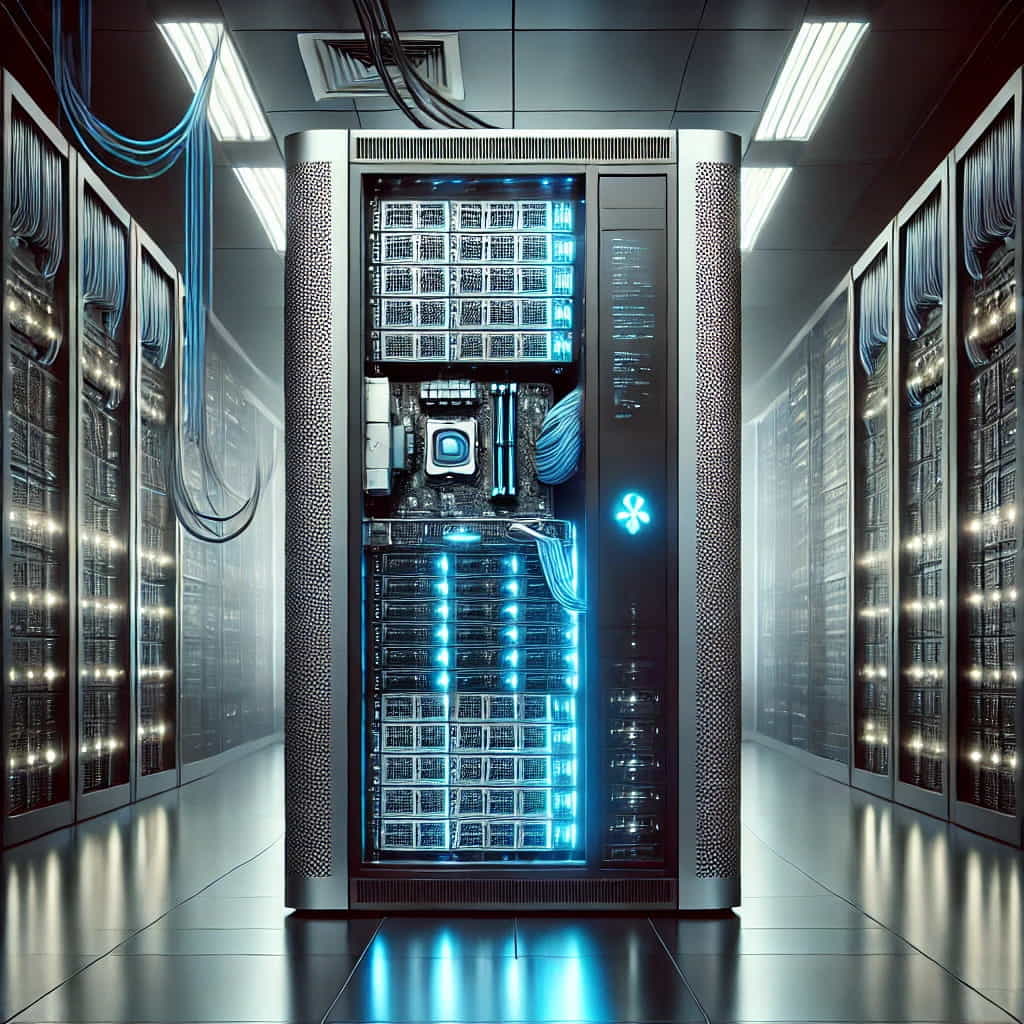
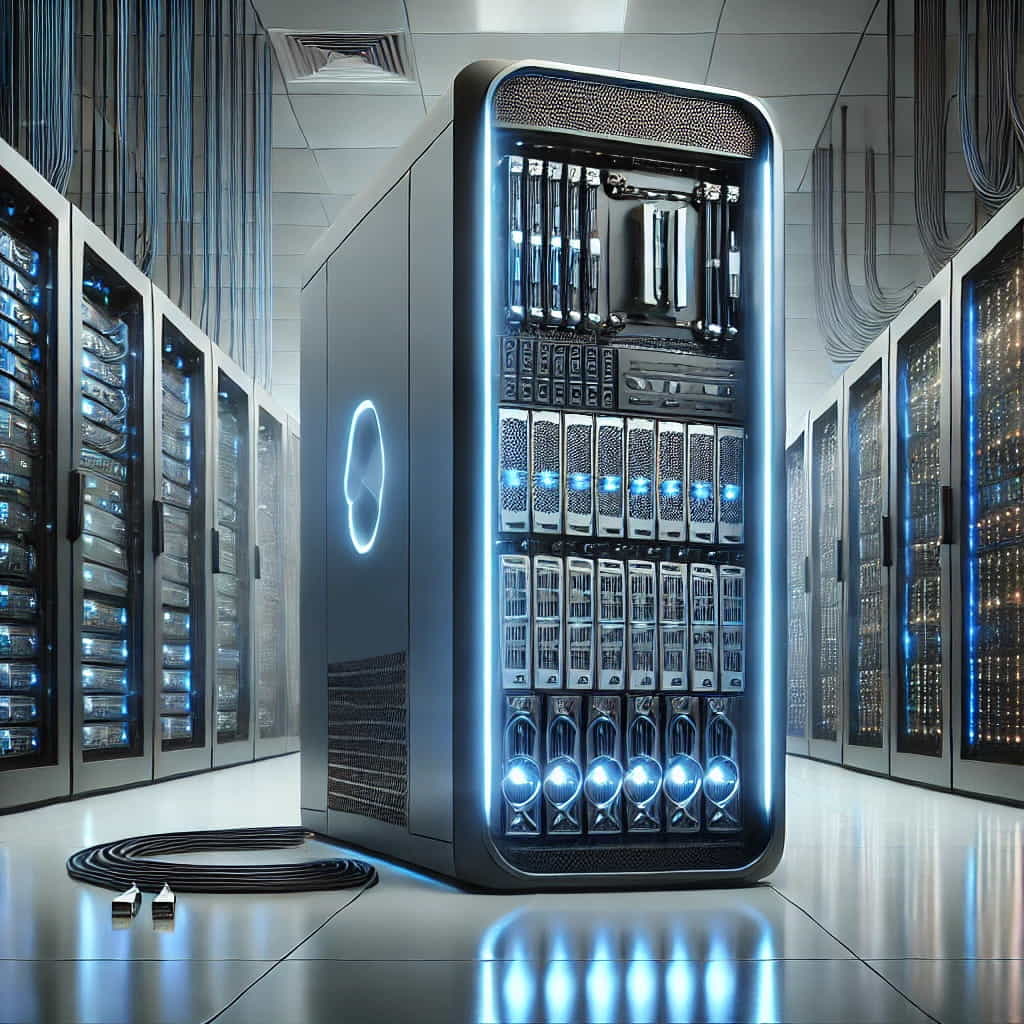
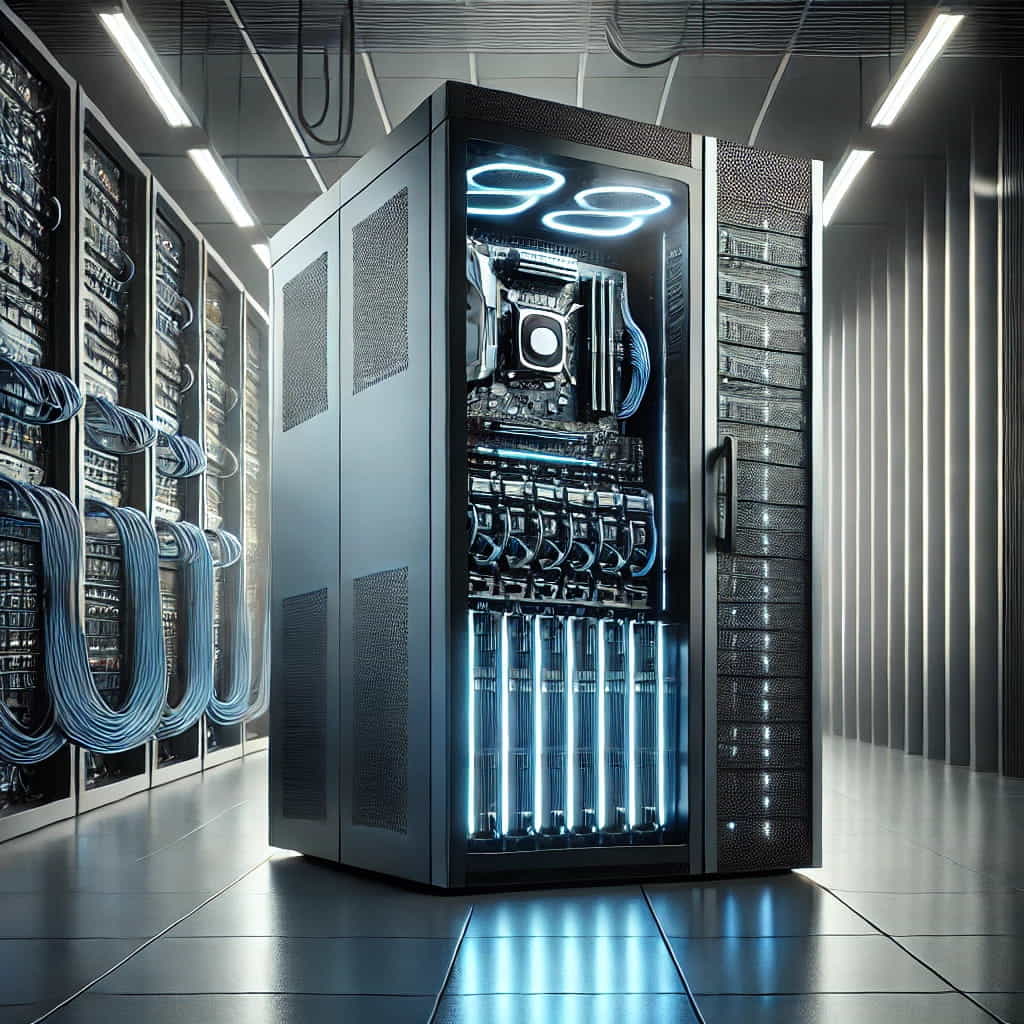
High-Performance Computing (HPC) Cluster is a coordinated platform of compute nodes, accelerators, high-speed networking, shared storage and workload-management software. Marjan Polymer Industries supplies application-engineered HPC systems in Pakistan for scientific simulation, artificial intelligence, engineering analysis, data processing and university research.
HPC System Architecture
Management & Login
Redundant management, login, provisioning and monitoring services provide controlled user access and cluster administration.
CPU Compute
Multi-socket nodes for MPI, OpenMP, parameter sweeps, computational chemistry, CFD, FEA and general parallel workloads.
GPU / Accelerator Compute
Application-qualified accelerator nodes for AI training, inference, visualisation and GPU-enabled scientific codes.
Low-Latency Fabric
Ethernet or InfiniBand selected from communication pattern, message rate, GPU-direct needs and scale.
Parallel Storage
Capacity, throughput and metadata performance sized for datasets, checkpoints, scratch space, home directories and backup.
Software Stack
Linux, schedulers, containers, compilers, MPI, GPU toolkits, monitoring and user environments integrated into a controlled platform.
Configurable Platform
| Subsystem | Engineering options |
|---|---|
| Compute nodes | Single- or dual-socket x86 or supported alternative architecture; core count and frequency matched to codes |
| System memory | Standard, high-memory or memory-bandwidth-optimised nodes; ECC and capacity per core defined by workload |
| Accelerators | Data-centre or qualified professional GPUs, 1–8 per node where the chassis and power design support them |
| Interconnect | 10/25/40/100/200/400 GbE or InfiniBand generation selected by scale and communication demand |
| Storage | NVMe cache/scratch, shared parallel or scale-out filesystem, archival tier and backup |
| Scheduler | Slurm or compatible commercial/open-source workload manager with queues, fair-share and accounting |
| Deployment | Rack, power distribution, UPS interface, cooling plan, cabling, management network and documentation |
| Growth | Single high-density server, small departmental cluster or multi-rack expansion architecture |
The proposal identifies actual make, model, generation, quantities, warranties and benchmark basis at quotation. Generic “latest” specifications are not substituted for a signed bill of materials.
Workload Discovery
- Applications, solvers, versions and licence limits
- CPU cores, vectorisation and memory per job
- GPU framework, precision, memory and multi-GPU scaling
- MPI communication and latency sensitivity
- Dataset size, I/O pattern and checkpoint frequency
- Concurrent users, queues and target turnaround
- Current benchmark runtime and bottleneck evidence
- Three- to five-year growth and refresh strategy
Performance Validation
Peak FLOPS do not predict every workload. MPI recommends representative application benchmarks or validated proxies before final sizing. Acceptance can include CPU and GPU compute tests, memory bandwidth, interconnect latency/bandwidth, storage throughput, scheduler operation and an agreed customer workload.
- HPL or application-appropriate CPU benchmark
- GPU compute and GPU-to-GPU communication checks
- MPI latency and node-to-node bandwidth
- Sequential, random and metadata storage tests
- Thermal soak, power draw and hardware health monitoring
- Reproducible acceptance report with installed firmware and software versions
Software and User Environment
Provisioning
Automated node images, firmware baselines, configuration management and controlled updates.
Scheduling
Partitions, reservations, fair-share, job limits, accounting and resource-aware CPU/GPU allocation.
Research Toolchains
Compilers, MPI, maths libraries, CUDA or alternative accelerator stacks, containers and environment modules.
Commercial simulation and analytics licences are quoted separately and must be verified for the selected processor count, accelerator and operating system.
Storage and Data Protection
HPC storage should separate fast scratch space from persistent project data and backup. Design inputs include active capacity, file count, read/write pattern, ingest rate, retention, replication, off-site copy and recovery objectives. RAID is not a substitute for backup.
Power, Cooling and Data-Centre Readiness
- Measured rack kW, phase loading and suitable PDU/UPS capacity
- Airflow direction, inlet temperature and hot-aisle containment
- Rack depth, floor loading, service clearance and cable paths
- Liquid-cooling interfaces where required by accelerator density
- Earthing, surge protection and generator/UPS transition plan
- Remote-management, environmental sensors and alerting
Security and Governance
Architecture can include directory integration, multi-factor authentication, role-based administration, management-network isolation, firewalling, encryption, audit logging, vulnerability management and controlled research-data access. Requirements depend on whether the platform handles public, proprietary, personal or regulated data.
Applications
AI & Data Science
Model training, inference, computer vision, language processing and distributed analytics.
Engineering Simulation
CFD, FEA, multiphysics, optimisation, digital twins and computational materials.
Scientific Research
Chemistry, physics, bioinformatics, climate, geoscience and large numerical experiments.
Rendering & Visualisation
GPU rendering, remote visualisation and scientific post-processing.
Education
Shared teaching and research infrastructure with queues, quotas and isolated environments.
Industrial Analytics
Batch optimisation, risk calculations and high-throughput parameter studies.
Deployment and Support in Pakistan
MPI can provide discovery, solution design, bill of materials, site survey, rack integration, cluster installation, acceptance testing, administrator/user training and support coordination across Pakistan. Manufacturer warranty, spares, response time and software maintenance are defined in the commercial offer.
Information Required for a Proposal
- Applications, versions and sample workloads
- CPU/GPU utilisation and current runtimes
- Users, concurrency and queue priorities
- Memory, dataset and I/O requirements
- Rack, power, cooling and network availability
- Storage, backup and security policy
- Commercial software/licence constraints
- Budget range, deployment date and growth plan
Frequently Asked Questions
What is an HPC cluster?
An HPC cluster links compute nodes, high-speed networking, shared storage and scheduling software so many processors or GPUs can work on large or parallel workloads.
Is this the same as a supercomputer?
A supercomputer is a high-end HPC system. For procurement, the useful term is an application-sized HPC cluster because performance depends on the complete configured architecture and workload.
Do I need CPU nodes or GPU nodes?
That depends on software support and benchmark scaling. CPU nodes suit many general and MPI workloads; GPU nodes excel only when the application is efficiently accelerator-enabled.
How many GPUs can be installed?
One to eight accelerators per node may be feasible depending on platform, thermal design, power, interconnect and qualified GPU model. The right count follows workload and scaling tests.
Which network is best for HPC?
Ethernet may suit throughput and loosely coupled work. Low-latency InfiniBand is often preferred for tightly coupled MPI or large multi-node GPU jobs. Selection follows communication profiling.
What scheduler can be supplied?
Slurm or a compatible workload manager can be configured with partitions, fair-share, reservations, job accounting and CPU/GPU resource controls.
How much power and cooling are required?
Requirements come from the exact node and accelerator bill of materials, redundancy and utilisation. High-density GPU servers can demand several kilowatts each and require a verified data-centre plan.
Can existing servers be integrated?
Potentially, after checking age, network, firmware, operating system, support status, power, scheduler compatibility and whether mixed-node performance is operationally worthwhile.
Does MPI install HPC systems in Pakistan?
Yes. Scope can include design, site survey, rack integration, networking, software stack, acceptance testing, training and support coordination across Pakistan.
What is needed for an HPC quotation?
Provide applications, sample jobs, users, CPU/GPU and memory needs, datasets, storage/I/O targets, licences, site power/cooling, security, budget and growth plan.
Design an HPC Platform Around Your Workloads
Share real applications, runtimes and site constraints. MPI will build a benchmarkable CPU/GPU cluster proposal for research or industrial computing in Pakistan.