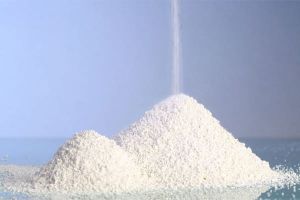


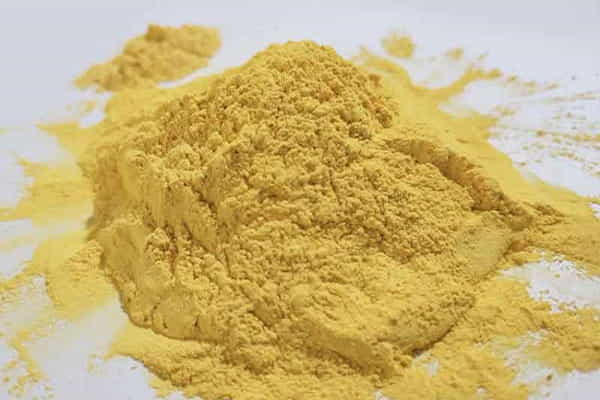
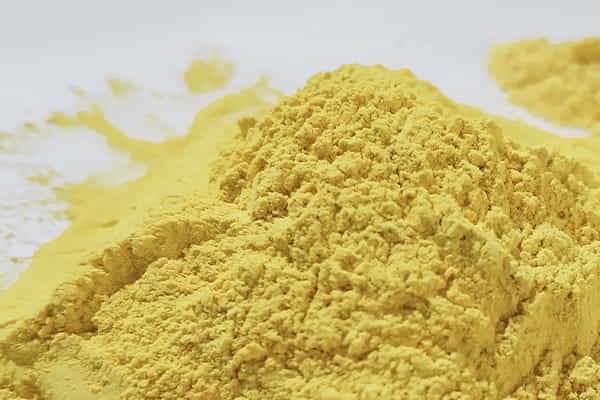
Marjan Polymer Industries supplies Polyimide material in Pakistan for advanced membrane, coating, adhesive, composite and research applications. The current product reference is Matrimid™ 5218-1, a fully imidized, soluble thermoplastic polyimide supplied as a light-yellow solid powder.
Polyimide is a material family, not one universal grade. Chemistry, molecular characteristics, particle form, solvent response, glass-transition temperature, processing route and end-use approval must be confirmed from the selected manufacturer’s current technical data sheet, safety data sheet and batch certificate.
Matrimid 5218 Polyimide Resin
Matrimid 5218-1 is described by its manufacturer as a soluble thermoplastic polyimide based on a proprietary diamine. Because it is fully imidized during manufacture, a solution coating does not require a polyamic-acid-to-imide conversion step; processing principally removes solvent to leave the polymer film.
The resin is a 100% solids powder before dissolution and is associated with good toughness, adhesion, chemical resistance and thermal properties. It is widely studied for gas-separation membranes and can also be evaluated in high-temperature coatings, adhesives and composite matrices.
Available Polyimide Supply Forms
| Supply Form | Typical Use | Selection Note |
|---|---|---|
| Matrimid 5218-1 powder | Solution casting, membrane research, coatings and formulation | Current reference product; manufacturer and batch documents govern |
| Compression-moulding polyimide powder | High-temperature semi-finished or direct-formed parts | Requires a grade designed for hot compaction or sintering |
| Polyimide solution / varnish | Electrical insulation, coating and film formation | Polymer concentration and solvent system are application-specific |
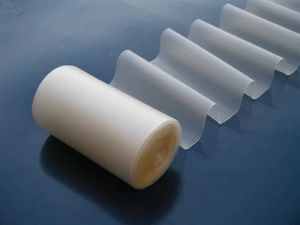
| Polyimide film | Flexible electrical, thermal and masking applications | Thickness, coating and dielectric grade require separate specification |
| Polyimide fibre or fabric | Filtration, insulation and protective textiles | Not interchangeable with resin powder |
| Custom compound | Tribological or filled high-temperature components | Filler, process and property package are grade-specific |
Applications
- Gas-separation and research membranes
- Solution-cast polymer films and selective layers
- High-temperature adhesive and toughening studies
- Heat-resistant coatings on compatible prepared substrates
- Polymer blends and advanced composite matrix development
- Aerospace, automotive and industrial research programmes
- Electronic and insulating material studies subject to grade qualification
- Carbon-molecular-sieve membrane precursor research
- Academic polymer science and materials-characterization work
- Custom formulation projects using controlled solvents and processing
Reference Grade Identification
| Property | Manufacturer Reference | Control Note |
|---|---|---|
| Product | Matrimid™ 5218-1 Polyimide Resin | Trademark and manufacturer must be verified on the quotation |
| Polymer type | Soluble thermoplastic polyimide | Fully imidized; not a polyamic acid precursor |
| Physical form | 100% solid powder | Appearance commonly light yellow |
| Density | Manufacturer reference approximately 1.2 g/cm³ | Use current TDS and batch data for design |
| Glass transition | Manufacturer reference approximately 280 °C dry by DMA | Wet reference approximately 265 °C; method and conditioning matter |
| Packaging reference | Manufacturer lists 50 lb drums | MPI pack size and availability are confirmed at order |
| Storage reference | Dry, sealed original container at 2–40 °C | Batch label, SDS and expiry information govern |
Data control: earlier generic claims of “operation to 350 °C” are not retained as a universal Matrimid service rating. Glass transition, short-term thermal exposure, decomposition and end-use temperature are different properties.
Configurable Commercial and Technical Scope
| Parameter | Available Selection | Defined From |
|---|---|---|
| Grade | Matrimid 5218-1 or approved alternative polyimide | Process, chemistry and required properties |
| Quantity | Evaluation, laboratory or commercial packaging where available | Manufacturer pack, MOQ and import schedule |
| Documentation | TDS, SDS, CoA and origin records as available | Customer quality and regulatory requirements |
| Packaging | Original sealed or agreed controlled repack | Moisture protection, traceability and quantity |
| Logistics | Ambient controlled dry shipment unless SDS states otherwise | Supplier conditions and Pakistan delivery location |
| Technical support | Grade selection and application discussion | Customer process data and qualification plan |
| Testing | Incoming identity or property checks by agreement | Specification, method and accredited resource |
Thermoplastic and Fully Imidized Character
Matrimid 5218 is supplied in its polyimide form. This distinguishes it from polyamic acid precursors that require a high-temperature imidization cure and evolve water during conversion.
Solvent removal is still a critical process. Residual solvent can affect film density, glass transition, mechanical behaviour and permeability. A fully imidized polymer must not be described as requiring no thermal control.
Glass Transition and Thermal Performance
Glass transition identifies a major change in polymer-chain mobility; it is not a continuous-use rating or decomposition temperature. Current manufacturer data presents a dry DMA Tg near 280 °C and a wet value near 265 °C for Matrimid 5218-1.
Other publications may report different values because grade history, method, heating rate, conditioning and sample preparation differ. Design temperature must be set from the actual grade, test method, environment, load and required life.
Solubility and Solution Processing
The manufacturer lists solubility in several organic solvents and notes that solutions around 20% may be possible in examples including methylene chloride, chloroform, tetrahydrofuran, dioxane, acetophenone, cyclohexanone, m-cresol, gamma-butyrolactone, DMF, DMAc and NMP.
This is technical compatibility information, not a solvent recommendation. Many listed solvents are hazardous, regulated or environmentally restricted. Selection requires SDS review, engineering controls, recovery, waste planning and confirmation that the solvent suits the desired film or membrane morphology.
Membrane and Gas-Separation Research
Matrimid 5218 is a recognized membrane polymer because it can be solution processed into dense or asymmetric structures and has useful gas-transport selectivity. Performance depends on polymer history, solvent, concentration, additives, evaporation, coagulation, thickness and conditioning.
Permeability and selectivity are not supplied as universal product guarantees. Mixed-gas composition, pressure, humidity, ageing, plasticization and membrane geometry must be represented in the qualification programme.
Coatings and Adhesion
After a Matrimid solution is applied and solvent is thoroughly removed, a tough polyimide coating can remain. Manufacturer reference data reports strong adhesion to a range of prepared metals and indicates that glass and some engineering polymers may require surface treatment.
Substrate cleaning, roughness, primer or silane, film thickness, solvent flash-off and thermal schedule should be validated. Adhesion from a reference table cannot be transferred automatically to a customer surface.
Adhesives and Toughening
The resin can be evaluated in temperature-resistant adhesive formulations and as a modifier in compatible resin systems. Solubility and compatibility allow formulators to introduce a thermoplastic phase under controlled conditions.
Viscosity, phase separation, cure kinetics, bond-line quality and final thermal-mechanical properties must be tested in the actual adhesive chemistry. MPI does not present the powder as a standalone hardener.
Composite Matrix Development
Manufacturer literature includes a graphite-prepreg processing example based on dissolving the resin in gamma-butyrolactone, applying it to carbon fibre and using controlled B-stage, moulding and post-treatment conditions.
Those values are an example for a defined system, not a general recipe. Fibre sizing, solvent content, pressure, temperature, tooling and void control require a dedicated development and safety plan.
Polyimide Powder for Moulded Parts
Not every polyimide powder is solution-grade Matrimid. Grades such as dedicated moulding polyimides can be processed through hot compression moulding or direct forming at high pressure and temperature, followed by machining or sintering.
If the customer requires bearings, seals, bushings or near-net-shape components, the resin grade must explicitly support that process. MPI will not substitute Matrimid 5218 solely because both products are labelled polyimide powder.
Electrical and Electronic Applications
Polyimides as a family are widely used for dielectric films, insulation and high-temperature electronic structures. However, dielectric constant, dissipation, breakdown strength, ionic contamination, film thickness and moisture absorption vary by product form and grade.
Electrical qualification must use the final film or coating under the relevant standard and environment. Kapton-type film data cannot be assigned to Matrimid powder.
Chemical Resistance
The manufacturer describes resistance to water, steam, brine, acids, caustic and non-polar organic solvents, while the resin remains soluble in certain polar organic solvents unless cross-linked. Chemical category statements do not replace immersion data.
Concentration, temperature, stress, exposure duration, residual solvent and crosslinking can change performance. A coupon test using the final processed material is recommended for critical service.
Powder Handling and Moisture Control
Keep the product sealed, dry and identified by batch. Open containers only in a controlled area and reseal promptly. Avoid contamination from tools, packaging fibres, humidity and incompatible chemicals.
Powder transfer can generate airborne particulate and static. Use the PPE, local extraction, bonding or grounding and housekeeping measures stated in the current SDS and site risk assessment.
Storage and Shelf-Life Control
Current manufacturer information for Matrimid 5218-1 specifies original sealed storage in a dry place between 2 °C and 40 °C, protected from direct sunlight, and lists a five-year shelf life under those conditions.
The container label, batch certificate and contractual expiry take precedence because customer specification or regional supply can differ. Quarantined, wet, damaged or expired material should not be processed without documented approval.
Safety and Environmental Controls
- Obtain and review the current resin SDS before receipt and use.
- Control powder inhalation, eye contact, skin exposure and combustible-dust risk as applicable.
- Review every solvent separately; polymer safety does not cover solvent hazards.
- Use closed mixing, local exhaust and suitable electrical classification where required.
- Store, label and segregate chemicals according to Pakistan regulations and site rules.
- Collect solvent and polymer waste through an approved disposal route.
- Do not use in food, medical or regulated applications without written grade approval.
Incoming Quality Verification
| Check | Purpose | Record |
|---|---|---|
| Product and manufacturer name | Prevents substitution between polyimide grades | Label and purchase order |
| Batch / lot number | Maintains traceability | CoA and receiving log |
| Container and seal | Protects against moisture and contamination | Receiving inspection |
| Appearance | Identifies gross contamination or damage | Approved visual method |
| Certificate values | Checks compliance with ordered specification | Manufacturer CoA |
| Expiry / retest date | Controls usable inventory | Label and ERP record |
Application Qualification
Begin with small-scale solubility, film, coating or membrane trials using a controlled batch. Record solids content, mixing temperature, filtration, substrate, casting, drying and post-treatment.
Qualification should measure the properties that matter: viscosity, film integrity, adhesion, Tg, mechanical response, permeability, selectivity, dielectric behaviour or chemical resistance. Generic high-performance language is not an acceptance criterion.
Information Required for a Quotation
| Customer Input | Required Detail |
|---|---|
| Application | Membrane, coating, adhesive, composite, moulding or research |
| Required grade | Matrimid 5218-1, named alternative or performance basis |
| Quantity | Evaluation amount, annual usage and delivery schedule |
| Process | Solvent, solids, substrate, temperature and equipment |
| Quality | TDS, SDS, CoA, origin and testing requirements |
| Packaging | Original drum or approved smaller controlled pack |
| Site | Delivery city, storage and hazardous-material capability |
| Regulatory | Restricted substance, end-use and compliance requirements |
Supply and Technical Support in Pakistan
MPI can coordinate technical inquiry, sourcing, documentation and delivery for research institutions and industrial users in Lahore, Karachi, Faisalabad, Islamabad and other Pakistani locations. Availability is subject to manufacturer region, pack size, MOQ and import conditions.
For critical projects, the quotation identifies manufacturer, grade, packaging, documents and delivery basis. Application trials and analytical testing are agreed separately.
Important Product Boundaries
This page distinguishes Matrimid 5218 soluble thermoplastic powder from polyimide film, fibres, polyamic acid varnish and dedicated moulding grades. These forms cannot be substituted by family name.
Trademark, exact grade, current datasheet values, solvent regulations and batch documentation are confirmed before order. No medical, food-contact, aerospace-flight or certified electrical approval is implied.
Why Grade Control Matters
Polyimide performance comes from a specific molecular structure and processing history. A technically correct supply therefore starts with grade identity and batch documentation, then connects it to the customer’s film, coating, membrane or composite process.
MPI presents the material with realistic boundaries so Pakistani customers can qualify the right product instead of purchasing a generic “high-temperature powder” description.
Frequently Asked Questions
What is Matrimid 5218?
It is a fully imidized, soluble thermoplastic polyimide resin supplied as a solid powder and used in membrane, coating, adhesive and composite research.
Is Polyimide the same as Kapton film?
No. Polyimide is a material family. Kapton is a specific film family, while Matrimid 5218 is a soluble resin powder with different processing and properties.
Does Matrimid 5218 need an imidization cure?
It is already fully imidized. Solution processing still requires thorough and controlled solvent removal, but no polyamic-acid conversion is required.
What is its glass-transition temperature?
Current manufacturer information lists approximately 280 °C dry by DMA and about 265 °C wet. Method and conditioning must be reported.
Which solvents dissolve Matrimid 5218?
The manufacturer lists several polar and chlorinated organic solvents, including NMP, DMAc, DMF, THF and others. Selection requires an SDS-based safety and process review.
Can it be used for gas-separation membranes?
Yes, it is widely used in membrane research. Permeability and selectivity depend on casting, thickness, conditioning, pressure and gas composition.
Can this powder be compression moulded into parts?
Moulding requires a polyimide grade designed for that process. Matrimid 5218 should not be substituted for a dedicated moulding powder without supplier approval.
How should the powder be stored?
Manufacturer guidance states dry storage in the sealed original container at 2–40 °C, protected from sunlight. The label and batch expiry govern.
What documents can be supplied?
Current TDS, SDS, batch CoA and origin or packaging records can be included as available and stated in the quotation.
Can MPI supply Polyimide in Pakistan?
MPI can coordinate grade selection, sourcing, import documentation and delivery in Pakistan subject to manufacturer availability, MOQ and order terms.