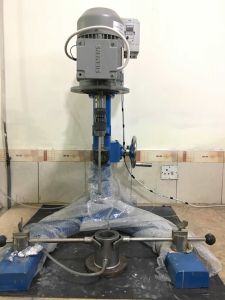
Marjan Polymer Industries designs and supplies automatic film applicators in Pakistan for repeatable laboratory drawdowns of paints, inks, resins, adhesives, polymer solutions, membrane dopes, battery slurries and other liquid coatings. The motorized traverse replaces the variable hand speed and pressure of a manual drawdown with a controlled application stroke.
Each system is configured around the coating material, viscosity range, substrate, applicator type, required wet-film thickness, working width, stroke, bed surface, temperature requirement and laboratory method. MPI can provide a standard glass-bed unit, vacuum-bed arrangement, heated platform or a purpose-built coating system after reviewing the user’s process.
Repeatable Laboratory Coating Preparation
Many coating tests depend on a film that is uniform enough for meaningful comparison. Colour, gloss, opacity, drying, adhesion, abrasion, permeability, conductivity and membrane performance can all change with film thickness and drawdown quality. An automatic applicator improves repeatability by controlling travel speed and stroke while the selected blade or bar controls the nominal wet film.
The instrument does not guarantee final dry thickness by itself. Actual coating thickness is affected by applicator geometry, solids content, rheology, substrate wetting, solvent loss, temperature and drying conditions. Method development and verification remain essential.
Available Automatic Film Applicator Configurations
| Configuration | Typical Use | Available Design Approach |
|---|---|---|
| Glass-bed automatic applicator | Rigid panels, charts, paper, glass and routine coating drawdowns | Flat glass platform with adjustable speed and stroke |
| Vacuum-bed film applicator | Flexible paper, foil, polymer film and membrane-support substrates | Perforated plate and vacuum pump selected for the substrate area and leakage |
| Heated-bed applicator | Temperature-conditioned coating, drying studies and viscous formulations | Controlled heated platform with sensor, controller and temperature protection |
| Heated vacuum-bed applicator | Flexible substrates requiring both hold-down and controlled bed temperature | Integrated vacuum and heating package with project-specific limits |
| Custom research coater | Membrane casting, battery slurry, adhesive, ceramic or special-material development | Application-specific bed, travel, tooling, enclosure and control options |
Applications Across Research and Quality Control
- Paint, varnish and protective-coating drawdowns
- Printing ink, pigment dispersion and colour comparison
- Adhesive, pressure-sensitive adhesive and resin films
- Polymer-solution and flat-sheet membrane casting studies
- Battery electrode slurry on copper or aluminium foil
- Ceramic, catalyst, conductive and functional coatings
- Paper, textile, nonwoven and flexible-film treatment trials
- University teaching, formulation development and production quality control
Hazardous, reactive, flammable or toxic formulations require a separate safety review. A standard benchtop unit must not be assumed suitable for explosive atmospheres, uncontrolled solvent vapour or high-temperature reactive chemistry.
MAF-400 Reference Configuration
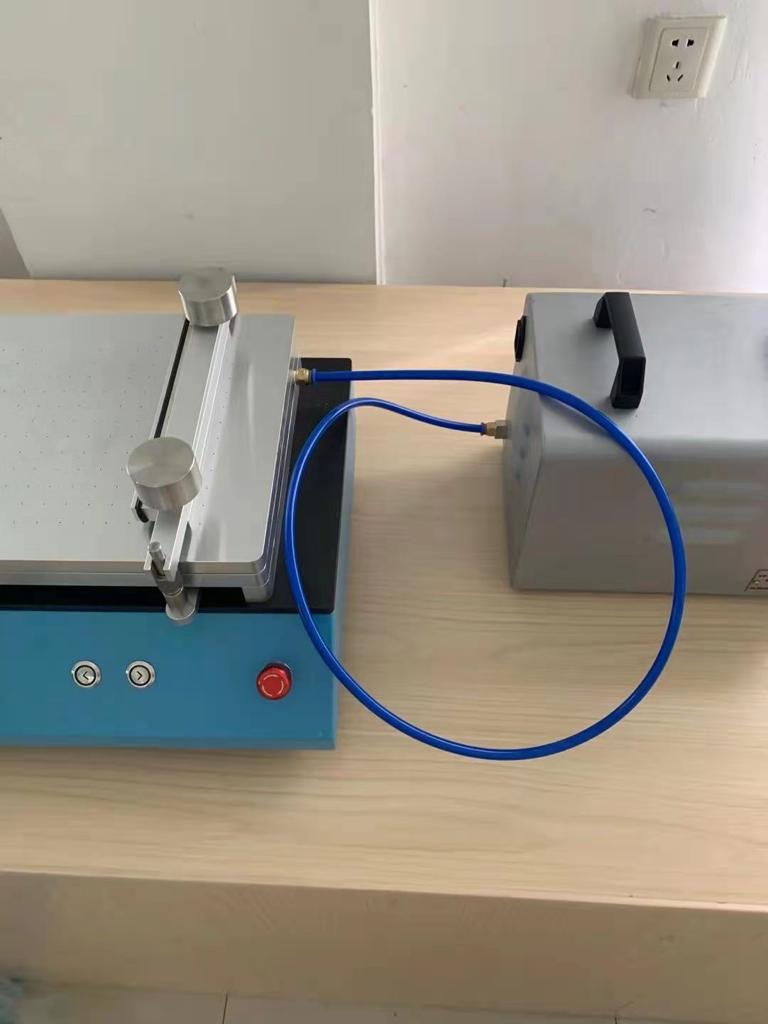
The current MAF-400 reference system is arranged around an approximately 400 mm controllable drawdown distance, a 400 to 450 mm by 300 mm working bed, adjustable motorized travel and a digital display. The recorded configuration includes a perforated aluminium vacuum plate, external glass plate, vacuum pump and a 300 mm doctor-blade applicator option.
| Reference Parameter | Recorded Value / Arrangement | Contract Note |
|---|---|---|
| Model reference | MAF-400 | Final model code follows the approved bed, heating and tooling configuration |
| Traversing speed | Approximately 1 to 160 mm/s, adjustable | Confirm calibrated working range on the supplied controller |
| Stroke / controllable distance | Up to approximately 400 mm | Usable coating length is less than total travel and depends on tooling |
| Drawdown bed | Approximately 400–450 x 300 mm | Bed style and effective area are stated in the final drawing |
| Vacuum plate | Flat perforated aluminium bed with external pump | Hole pattern and vacuum capacity are configuration-dependent |
| Heating option | Ambient to approximately 150°C reference maximum | Available only on the heated model with an approved temperature rating |
| Reference heating power | Approximately 2000 W | Depends on bed mass, dimensions, voltage and temperature requirement |
| Electrical supply | 220–230 V, 50/60 Hz reference | Final supply, plug, protection and earthing are confirmed for the site |
| Doctor-blade option | 300 mm working width; adjustable gap up to the selected tool limit | Gap setting is not a guarantee of deposited or dry-film thickness |
Specification control: values above describe the current reference concept, not every available machine. The signed quotation, datasheet and nameplate govern the supplied equipment.
Configurable Technical Range
| Parameter | Available Selection | Defined From |
|---|---|---|
| Bed type | Glass, aluminium vacuum, heated or heated-vacuum platform | Substrate rigidity, size, temperature and hold-down requirement |
| Application width | Tool- and bed-dependent laboratory widths | Specimen width, edge clearance and applicator type |
| Travel speed | Adjustable motorized range selected for the formulation | Viscosity, levelling, shear sensitivity and test method |
| Stroke length | Fixed or programmable within the machine travel | Required coated length and start/stop clearance |
| Applicator tools | Wire-wound rods, Bird, Baker, bar, casting knife or compatible special tools | Target wet-film range, material and method |
| Vacuum system | Integrated or external pump with configurable zones | Substrate porosity, leakage and area |
| Temperature control | Unheated or controlled heated-bed option | Process temperature, uniformity, ramp and safety limit |
| Controls | Digital speed, stroke and temperature display; optional recipe or PLC functions | Repeatability, records and automation scope |
Bed Selection: Glass, Vacuum or Heated
A glass bed provides a flat, solvent-resistant working surface for rigid test panels and supported charts. A vacuum bed improves contact when coating paper, polymer film, metal foil or a membrane support that may wrinkle or lift during travel.
A heated bed can condition a viscous formulation, accelerate solvent removal or support a defined casting process. Temperature uniformity should be verified across the effective working area, and the substrate, applicator and formulation must all tolerate the selected temperature.
Compatible Film Applicator Tools
- Wire-wound or Mayer rods for defined coating ranges
- Bird and Baker block applicators
- Fixed-gap and adjustable-gap doctor blades
- Micrometric casting knives for research films and membrane dope
- Sagging, levelling or related test tools where mechanically compatible
- Customer-specified bars or fixtures after dimensional review
The tool must sit squarely in the carriage without rocking or binding. Applicator width, body height, end clearance and mass are checked before supply. Precision tools should be protected from dents, dried coating and abrasive cleaning.
Wet-Film Gap and Final Thickness
A blade gap or wire-bar rating represents a nominal application geometry. The deposited wet film may differ because material can remain on the tool, flow at the edges, penetrate a porous substrate or level after the pass. Dry-film thickness is lower again when solvent or water evaporates.
For controlled work, record applicator identification, set gap, solids content, viscosity, temperature, speed, substrate and measured wet or dry thickness. Use an appropriate calibrated thickness method rather than treating the dial setting as the final result.
Speed, Stroke and Drawdown Repeatability
Travel speed affects shear, levelling and the amount of material carried by the applicator. A stable motorized speed reduces operator variation, but the useful setting must still be established for each formulation and tool.
Stroke control should provide enough lead-in for the coating bead and enough run-out to stop before the substrate edge. Acceptance can include repeated travel-time measurements, stroke verification and a series of drawdowns evaluated for thickness, width and visible defects.
Vacuum Hold-Down and Flexible Substrates
Vacuum must be strong enough to flatten the substrate without marking, stretching or pulling coating through a porous sheet. Hole size, pitch, zoning, bed seals and pump flow all influence performance. A porous release sheet or mask may be used where appropriate.
The bed and tubing should be protected from spilled coating. Solvent vapour must not be drawn through a pump that is not compatible with the formulation. MPI defines the vacuum arrangement after reviewing substrate leakage and chemical risk.
Heated-Bed Control
A heated model can include a temperature sensor, digital controller, heater, insulation and independent over-temperature protection. The displayed value should be understood as the sensor location; actual surface temperature may vary during warm-up and when a cold panel is placed on the bed.
Temperature mapping, stabilization time and allowable deviation can be included in acceptance when required. Never heat a volatile solvent system without confirmed ventilation, ignition-risk assessment and equipment suitability.
Substrates and Sample Preparation
Typical substrates include glass, coated test charts, metal panels, aluminium or copper foil, polymer film, paper, textile and supported membrane material. The surface must be clean, flat and compatible with the coating solvent.
Before drawing down, condition the sample, mix without entraining excessive air, remove skins or agglomerates, and apply a consistent bead volume. Bubbles, dust, damaged substrates and uneven edge restraint can create defects unrelated to the machine.
Coating Rheology and Method Development
Low-viscosity liquids may flood or drain at the edges, while high-viscosity materials may require slower travel, a larger gap or a heated option. Thixotropic, shear-sensitive and rapidly drying formulations need a controlled time between mixing, loading and application.
A robust method specifies sample conditioning, bead volume, tool, substrate, speed, stroke, bed temperature, vacuum setting, environmental conditions and cleaning interval. MPI can support trial planning but the customer remains responsible for validating the method for its product and test standard.
Operating Workflow
- Inspect and clean the bed, carriage and applicator tool.
- Place the substrate and activate vacuum only when required.
- Set the approved speed, stroke and bed temperature.
- Install the applicator squarely and confirm free movement.
- Apply a consistent coating bead ahead of the tool.
- Start the traverse and allow the carriage to complete the programmed stroke.
- Remove or condition the coated specimen according to the test method.
- Clean the applicator immediately with a compatible procedure.
- Record settings, material batch, substrate and observations.
Quality Control and Acceptance Criteria
Commissioning can verify carriage travel, speed stability, stroke repeatability, bed flatness, vacuum hold-down, temperature indication and safety functions. Coating trials should use an agreed material, substrate and applicator.
Acceptance criteria may include coated width, absence of chatter, thickness variation, edge quality and repeatability across multiple specimens. Because formulations behave differently, a machine test with a reference liquid does not prove every future product without method development.
Safety and Laboratory Controls
- Emergency stop and guarded moving parts where applicable
- Electrical earthing, circuit protection and heater over-temperature protection
- Ventilation suitable for the solvent and coating quantity
- Compatible gloves, eye protection and laboratory clothing
- Safe cleaning tools that keep hands away from the moving carriage
- Spill control and chemical-compatible bed, seals and tubing
- Lockout before adjustment, service or heater access
Explosion-proof construction is not included unless explicitly engineered and certified. Flammable solvent work may require a fume hood or another assessed control system independent of the applicator.
Cleaning and Preventive Maintenance
Remove wet coating before it cures, using a cleaner compatible with the tool, bed, seals and finish. Do not scrape a precision glass bed or blade edge with hard metal. Check carriage guides, belts or drive components, fasteners, vacuum hoses and electrical cables on a planned schedule.
Calibration or verification intervals should reflect use and the laboratory quality system. Speed, temperature and thickness tools can be checked against traceable instruments where required. Maintain a log of cleaning, faults, service and verification results.
Supply and Support in Pakistan
MPI provides a local point of contact for laboratories, universities, paint and ink manufacturers, polymer researchers, membrane developers and industrial quality teams across Pakistan. The supply scope can include requirements review, custom fabrication, delivery, installation, commissioning and operator training.
Recommended spares can include belts, switches, sensors, heater controls, vacuum tubing, fuses and application tools. Consumable test charts, substrates and coating bars are quoted separately unless listed in the offer.
Information Required for a Quotation
- Coating material, solvent system, solids and viscosity range
- Substrate type, dimensions, thickness, porosity and flexibility
- Required wet and dry film range
- Preferred applicator tool and working width
- Required speed and stroke range
- Glass, vacuum, heated or heated-vacuum bed preference
- Maximum working temperature and uniformity requirement
- Electrical supply, ventilation and laboratory location
- Applicable test method, documentation and acceptance criteria
- Installation, training, spares and delivery city in Pakistan
Automatic Film Applicator Price in Pakistan
Price depends on bed size, vacuum system, heating capacity, speed and stroke control, carriage design, applicator tools, temperature instrumentation, safety features, documentation, freight and support. A glass-bed unit and a heated vacuum research coater are different technical scopes.
MPI prepares a quotation after reviewing the material and substrate. The offer identifies the model, working area, included tools, utilities, options, exclusions, delivery basis, warranty and acceptance scope.
Installation, Training and Limited Warranty
Installation can include positioning, electrical and vacuum checks, travel verification, temperature checks, a reference drawdown and operator instruction. Training covers setup, substrate restraint, applicator installation, parameter entry, safe operation, cleaning and routine maintenance.
Warranty terms are stated in the commercial offer and normally cover eligible manufacturing defects for the agreed period. Applicator tools, glass breakage, seals, tubing and other consumables or wear items, chemical attack, misuse, incorrect utilities and unauthorized modification are excluded unless the contract states otherwise.
Frequently Asked Questions
What is an Automatic Film Applicator?
It is a motorized laboratory instrument that moves a coating blade or bar over a flat substrate at a controlled speed and stroke to produce more repeatable wet-film drawdowns.
Which materials can be coated?
Typical materials include paints, inks, varnishes, adhesives, resins, polymer solutions, membrane dopes and battery slurries, subject to viscosity, solvent compatibility and safety review.
Can it use wire bars and doctor blades?
Yes. Compatible wire-wound rods, Bird or Baker applicators, fixed-gap blades and adjustable casting knives can be used when their dimensions match the carriage and bed.
Do I need a vacuum bed?
A vacuum bed is useful for flexible paper, foil, polymer film and membrane supports that may wrinkle or move. Rigid panels and glass may only require a flat glass bed.
Is a heated bed available?
Yes. Heated and heated-vacuum configurations are available for approved temperature ranges, with suitable controls and over-temperature protection.
Does blade gap equal the final film thickness?
No. Actual wet and dry thickness also depend on rheology, solids, substrate wetting, speed, levelling and drying. Thickness should be measured using an appropriate method.
Can the machine cast flat-sheet membranes?
It can support laboratory membrane casting when bed, blade, solvent safety, dope properties and post-casting workflow are correctly specified. A dedicated membrane-casting configuration may be recommended.
Which speed should be used?
The correct speed is established by trial for the coating, tool and substrate. The goal is a uniform film without chatter, flooding, premature drying or excessive edge flow.
Is installation and training available in Pakistan?
Yes. MPI can provide delivery, installation, commissioning and operator training in Pakistan when included in the quotation.
What information is required for a quotation?
Provide coating and solvent details, viscosity, substrate, film range, working width, speed, stroke, bed type, temperature, electrical supply and required standards or acceptance tests.
Request an Automatic Film Applicator Proposal
Send MPI your coating material, substrate, applicator method, film range, bed requirement and laboratory utilities. We will define a suitable Automatic Film Applicator configuration and prepare a clear technical and commercial proposal for supply in Pakistan.