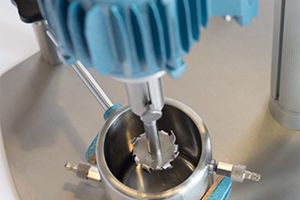
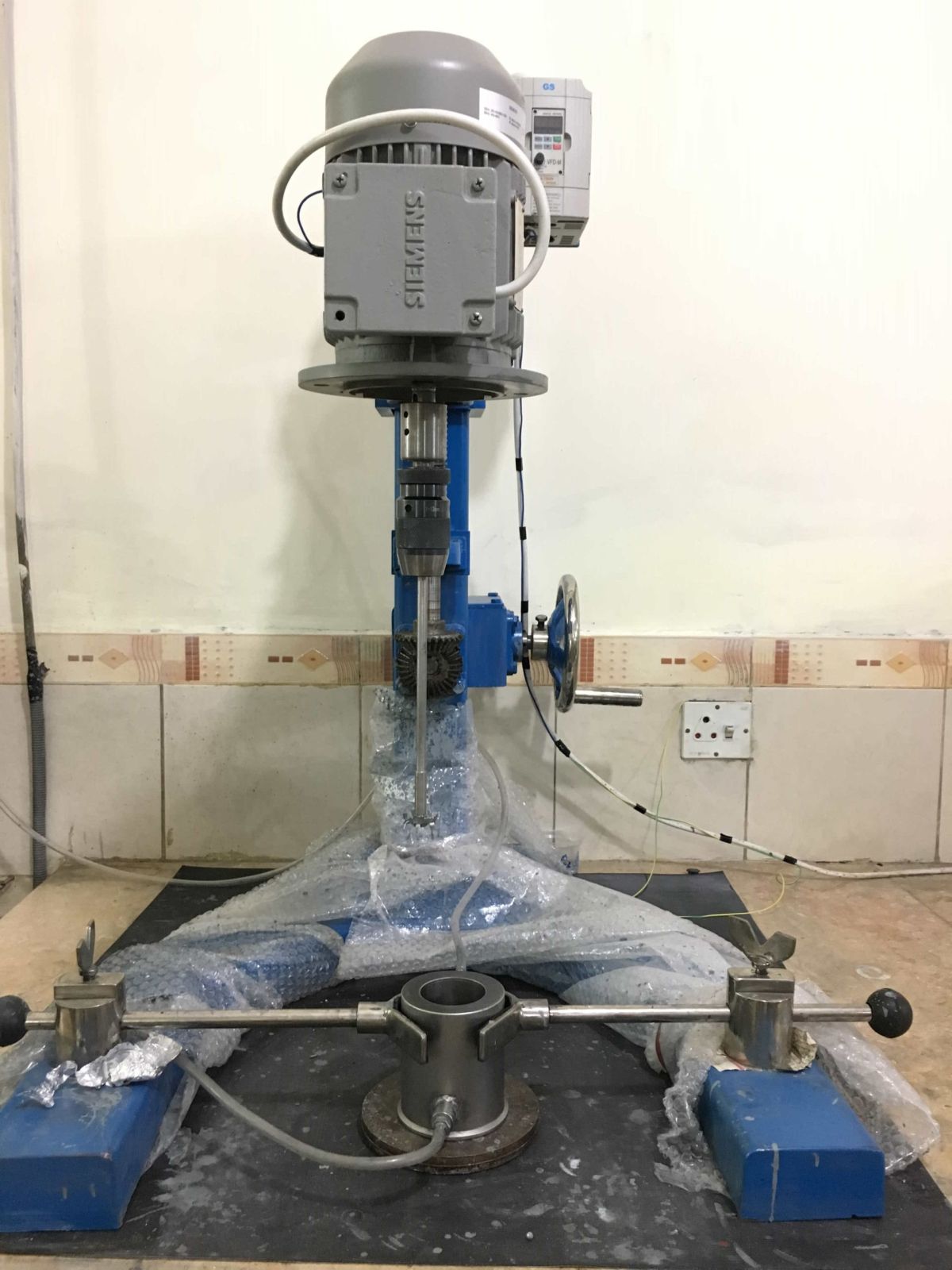
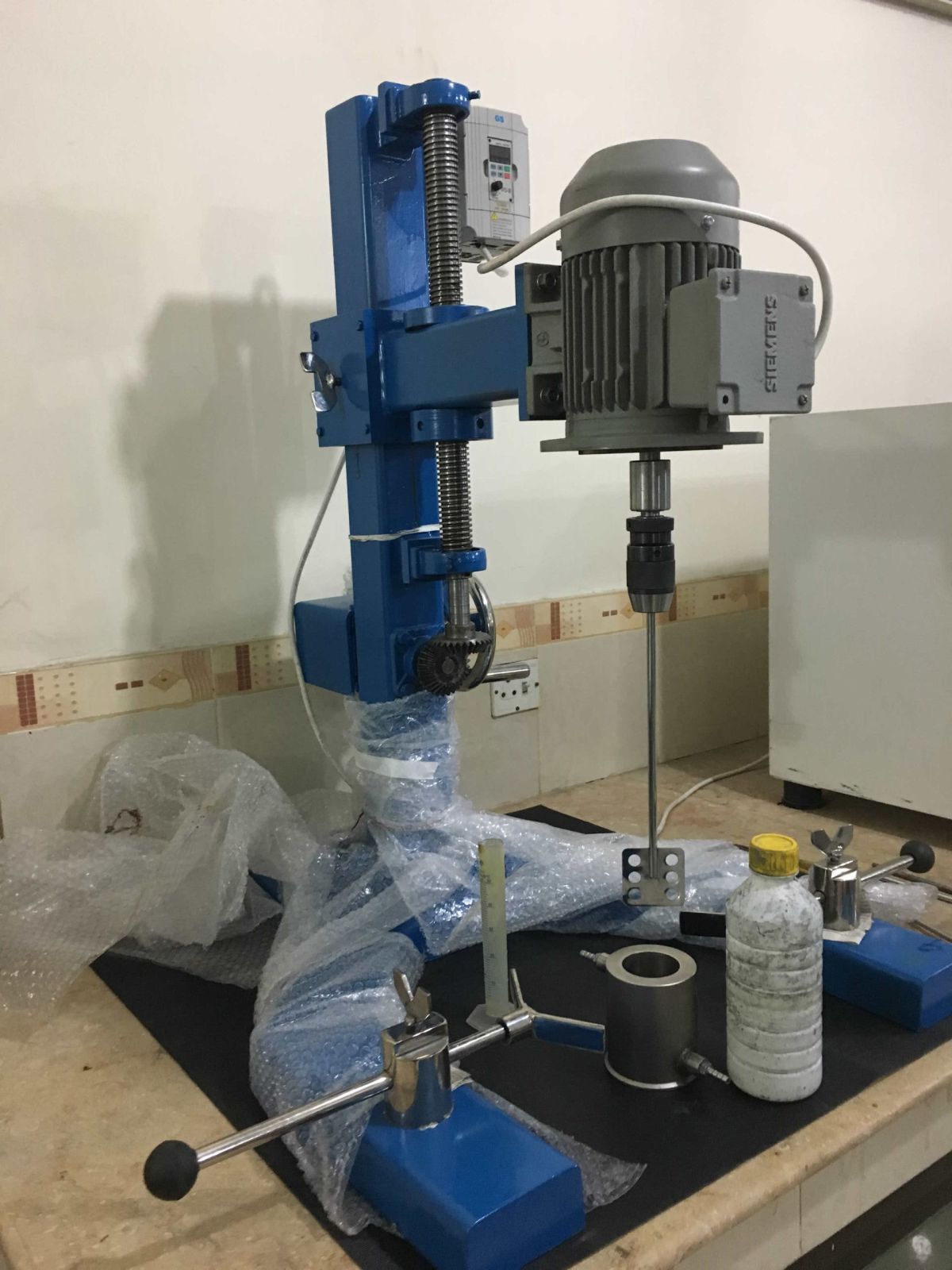
Paint Mixer machines from Marjan Polymer Industries are engineered for coating manufacture, pigment wet-out, blending and controlled batch preparation in Pakistan. The drive, impeller, vessel interface, lift, controls and wetted materials are selected from the actual formulation and batch duty rather than a generic horsepower claim.
Product Identity
This product is an industrial paint mixer supplied as a laboratory, pilot or production configuration. Depending on process need, the machine may be a high-speed disperser, propeller agitator, anchor mixer or combined system. It is not a powder-coating blender and it is not automatically a fine-grinding mill.
Custom Engineering Options
| Design area | Available engineering basis |
|---|---|
| Batch scale | Laboratory, pilot and production working volumes sized to the customer’s formulation and vessel |
| Mixing duty | Low-shear blending, high-speed dispersion, high-viscosity agitation or combined duty |
| Impeller | Dispersion blade, marine propeller, pitched blade, anchor or application-specific geometry |
| Wetted materials | Stainless steel 304/316 or qualified coated/carbon-steel construction |
| Speed control | Fixed or variable speed with VFD, display and controlled operating limits |
| Lift and positioning | Fixed mount, manual lift, pneumatic lift or hydraulic lift according to size |
| Vessel interface | Customer vessel, supplied vessel, cover, clamp, scraper, jacket or vacuum option |
| Electrical | Site voltage/frequency and hazardous-area protection selected to the approved specification |
Capacity, motor rating and speed are quotation-specific. Final values must follow torque, power, tip-speed, shaft and vessel calculations.
Selecting the Correct Mixing Technology
- High-speed disperser: pigment wetting and dispersion in a controlled liquid phase.
- Propeller or pitched-blade agitator: circulation and blending of lower-to-medium-viscosity material.
- Anchor mixer: wall sweeping and bulk movement in high-viscosity coatings.
- Dual-shaft mixer: independent high-speed dispersion plus high-viscosity bulk turnover.
- Bead mill connection: used downstream when the required fineness cannot be achieved by dispersion alone.
Process Data Required for Sizing
Engineering starts with minimum, normal and maximum batch volume; density; starting and final viscosity; solids and pigment loading; target fineness or dispersion result; heat sensitivity; foaming tendency; required cycle time; vessel diameter and liquid height. Motor power is then selected against torque and duty—not guessed from volume alone.
Typical Applications
- architectural water-based paint and primer production;
- industrial enamel, protective coating and maintenance-paint blending;
- epoxy and polyurethane components before reactive-component addition;
- ink, adhesive, sealant and polymer-dispersion development after compatibility review;
- laboratory formulation, pilot scale-up and production batching in Pakistan.
Recommended Operating Workflow
- Approve the recipe: define addition order, temperatures, speeds and acceptance tests.
- Inspect equipment: verify guarding, vessel restraint, shaft, impeller, earthing and cleanliness.
- Charge the liquid phase: maintain the approved minimum immersion and safe starting speed.
- Add powders progressively: prevent dusting, floating solids and overload while establishing circulation.
- Disperse or blend: control speed, temperature, torque and time within the qualified process window.
- Sample: check fineness, viscosity, colour, density and other formulation requirements.
- Discharge and clean: isolate energy and use a validated cleaning procedure compatible with the formulation.
Safety and Hazardous-Area Requirements
Solvent-borne paint can create flammable vapour and static risk. The site must define the hazardous-area classification, ventilation, bonding and earthing, motor/control certification and fire protection. A standard motor or switchgear must never be assumed suitable. Guarding, emergency stop, overload protection, lift interlock and vessel restraint are selected from the risk assessment.
Quality, Installation and Acceptance
A project specification should define materials of construction, motor and gearbox data, speed range, shaft runout, impeller, lift travel, controls, electrical drawings, surface finish and documentation. Factory and site acceptance may include no-load checks, water trials and a customer-product trial where safe and practical.
Information Required for a Quotation
Send the formulation type, batch volume range, density, viscosity, solids and pigment loading, desired process result, existing vessel drawing, available utilities, hazardous-area classification, automation requirement, cleaning method and delivery location. MPI will return an engineered scope and identify any data still required before manufacture.
Frequently Asked Questions
What type of machine is an industrial paint mixer?
It is a driven mixing system engineered around the coating viscosity and process duty. Common configurations include high-speed dispersers, propeller agitators, anchor mixers and dual-shaft systems.
Can MPI build a paint mixer to the required batch size?
Yes. Laboratory, pilot and production configurations can be engineered after confirming working volume, vessel dimensions, viscosity, density, solids loading and required dispersion duty.
Is a high-speed disperser the same as a bead mill?
No. A disperser wets and breaks down agglomerates using a rotating blade; a bead mill provides finer grinding through media. Many paint plants use both in sequence.
Can one mixer process both water-based and solvent-based paint?
Only with appropriate wetted materials, seals, cleaning design and electrical classification. Solvent service may require certified hazardous-area motors, controls, earthing and ventilation.
What motor power and speed are required?
They must be calculated from batch volume, density, viscosity, impeller diameter, tip speed and duty. A catalogue horsepower should not be selected without the process data.
Which impeller should be used?
A dispersion blade suits pigment wet-out and dispersion; a propeller suits lower-viscosity circulation; an anchor supports high-viscosity wall sweeping. The process may require more than one impeller.
Can the machine include variable-speed control?
Yes. A VFD, speed display and programmed operating range can be included, with motor cooling and torque considered across the selected speed range.
Are vacuum and jacketed-vessel options available?
They can be engineered where air removal or temperature control is required. Vessel pressure, vacuum rating, heat-transfer area and utilities must be specified separately.
What safety features should be specified?
Typical requirements include guarding, emergency stop, overload protection, lift interlock, vessel restraint, earthing and suitable electrical protection. Final safeguards follow the site risk assessment.
What information is needed for a quotation?
Provide formulation type, batch size, density, viscosity range, solids and pigment loading, target result, vessel dimensions, utilities, hazardous-area classification, automation level and delivery city.