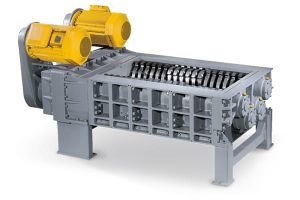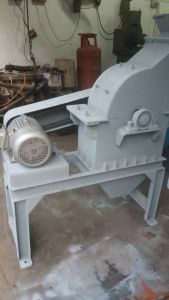

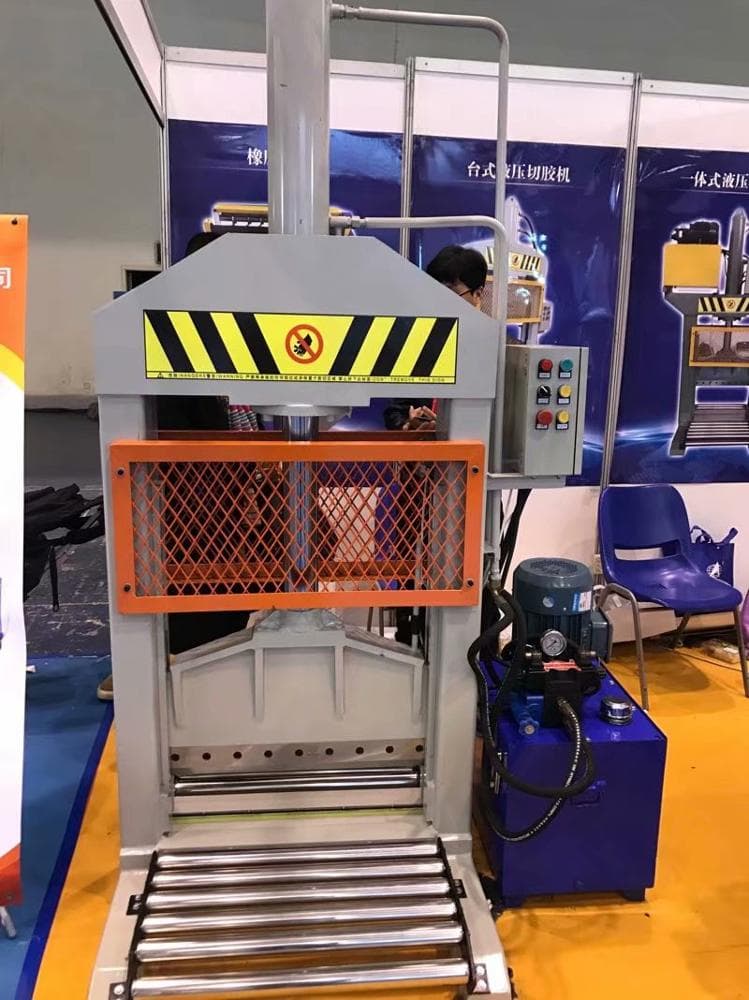
Rubber Bale Cutter is an industrial hydraulic cutting machine for reducing natural rubber, synthetic rubber and reclaimed-rubber bales into controlled blocks before weighing, batching and feeding to a kneader, Banbury mixer, internal mixer or two-roll mill. Marjan Polymer Industries engineers the machine around bale dimensions, required cut weight, cutting force, production method and site-safety requirements in Pakistan.
The standard engineering direction uses a vertically guided guillotine blade, hydraulic power pack, rigid fabricated frame and guarded cutting zone. Manual-loading, roller-table, conveyor-assisted and PLC-controlled configurations can be evaluated. Final ratings are issued only in the approved quotation, data sheet and machine documentation.
Processing Purpose
Raw-rubber bales are heavy, elastic and difficult to divide consistently by manual methods. A properly selected bale cutter converts the bale into manageable charges so operators can prepare recipes more accurately, reduce manual handling and feed downstream mixing equipment in a controlled sequence.
- Cut natural rubber, synthetic rubber and suitable reclaimed-rubber blocks.
- Prepare repeatable batch charges for rubber compounding.
- Reduce bale size before kneading, internal mixing or two-roll milling.
- Support weighing, recipe preparation and controlled material handling.
- Integrate with loading tables, roller conveyors, weighing stations or downstream transfer systems.
Machine Configuration
| Subsystem | Function | Project decision |
|---|---|---|
| Cutting frame | Supports the cylinder, blade guides and working table under cutting load | Force rating, opening, blade width and installation layout |
| Hydraulic cylinder | Drives the blade through the bale and returns it after the cut | Stroke, speed, force, duty cycle and return method |
| Guillotine blade | Produces the cut through elastic polymer material | Tool-steel grade, edge geometry, replaceability and re-sharpening plan |
| Hydraulic power pack | Provides regulated flow and pressure to the cutting cylinder | Motor, pump, reservoir, filtration, cooling and control valves |
| Material support | Positions and transfers the bale before and after cutting | Fixed table, rollers, conveyor, pusher or weighing arrangement |
| Electrical controls | Runs the cutting sequence and monitors safety devices | Manual, semi-automatic or PLC/HMI control philosophy |
| Safety system | Prevents access or unintended blade movement during operation | Guarding, two-hand control, interlocks, emergency stop and maintenance isolation |
Configurable Technical Range
Important: the values below describe practical engineering directions, not one universal model. The selected machine is sized from the customer’s actual bale, material, cut pattern, throughput and safety specification.
| Parameter | Available engineering direction |
|---|---|
| Primary material | Natural rubber, synthetic rubber and compatible reclaimed-rubber bales or blocks |
| Cutting principle | Hydraulic vertical guillotine with guided, replaceable blade |
| Cutting-force class | Approximately 10–50 tonnes for common duties; heavier configurations subject to engineering review |
| Useful blade width | Approximately 600–1,000 mm; wider project-specific designs can be evaluated |
| Blade stroke/opening | Approximately 400–700 mm, selected for bale height and handling clearance |
| Hydraulic drive power | Typically 3–7.5 kW, depending on force, speed and duty cycle |
| Typical cutting cycle | Approximately 10–30 seconds per stroke, material and configuration dependent |
| Operating mode | Manual loading with protected two-hand cycle, semi-automatic return or PLC-controlled sequence |
| Material handling | Fixed table, roller table, gravity rollers, powered conveyor, pusher and weighing options |
| Electrical supply | Configured for the customer’s verified site supply in Pakistan |
| Machine finish | Industrial coating system; contact and wear surfaces selected for service conditions |
| Documentation | Operating manual, electrical/hydraulic information, maintenance guidance and agreed inspection records |
Blade and Cutting System
The blade is selected for toughness, edge retention and controlled re-sharpening. A guided blade carrier keeps the cutting line stable, while a replaceable lower cutting pad or anvil protects the knife edge at the end of the stroke. Blade geometry must suit uncured rubber because elastic recovery, tack and material temperature affect cutting behaviour.
Optional arrangements include a heated blade for difficult tacky compounds, adjustable stop or pusher for repeat cut length, and quick-access provisions for safe blade removal. Blade heating is applied only after reviewing the rubber compound, temperature limit and operating risk.
Hydraulic Power Pack
| Component | Engineering purpose |
|---|---|
| Pump and motor | Deliver the required pressure and flow for cutting and return movement |
| Reservoir | Provides oil volume, deaeration and heat-management capacity for the duty cycle |
| Pressure-relief valve | Limits hydraulic pressure to the approved safe setting |
| Directional valve | Controls blade descent, stop and return |
| Filtration and breather | Protect hydraulic components from contamination |
| Pressure indication | Supports setup, monitoring and maintenance diagnosis |
| Optional oil cooling | Manages temperature where cycle frequency or ambient conditions require it |
Material Handling Options
- Fixed loading table: practical for low-frequency cutting and manually positioned bales.
- Roller table: reduces sliding effort and helps align heavy bales with the blade.
- Infeed and outfeed conveyor: supports higher-throughput or integrated compounding lines.
- Mechanical or hydraulic pusher: controls advance distance for repeated block sizes.
- Weighing station: verifies cut portions against the compound recipe before mixing.
- Collection tray or trolley: receives cut pieces and keeps the work area organised.
Control and Safety Philosophy
A rubber bale cutter presents serious crushing and shearing hazards. The final safety design must follow the agreed risk assessment, operating method and applicable customer requirements. Production speed is never treated as a substitute for guarding or controlled access.
- Guarded or enclosed cutting zone with controlled material openings.
- Anti-tie-down two-hand control where manual loading is used.
- Emergency-stop devices positioned for the operator and line interface.
- Upper and lower position sensing for controlled blade travel.
- Hydraulic pressure limitation and protected hose routing.
- Interlocked access doors or light-guard options where the application requires them.
- Mechanical maintenance block, electrical isolation and hydraulic pressure-release procedure.
- Clear operating, cleaning, blade-change and lockout instructions.
Applications in Pakistan
MPI supplies and supports Rubber Bale Cutter projects for tyre and tube plants, automotive-rubber component manufacturers, footwear and sole producers, hose and belt factories, gasket and seal manufacturers, cable-compound facilities, reclaim-rubber processors, research centres and general rubber-compounding operations across Pakistan.
The machine can be specified as a standalone cutter or as the first material-preparation stage before a kneader, Banbury-type internal mixer, two-roll mill or batch-weighing system.
Selection Between Manual, Semi-Automatic and Automatic Systems
| Configuration | Best suited to | Typical scope |
|---|---|---|
| Manual-loading hydraulic | Low to moderate throughput and varied bale sizes | Two-hand cycle, automatic blade return and fixed or roller table |
| Semi-automatic | Repeated batch preparation with reduced handling | Powered return, position control, optional pusher or weighing interface |
| PLC-controlled line | Higher throughput and integration with compounding systems | Conveyors, sensors, guarded sequence, recipe interface and production counters |
Factory Acceptance and Documentation
| Package | Typical scope when contracted |
|---|---|
| Engineering | Customer requirement review, machine data sheet, layout and utility schedule |
| Mechanical checks | Dimensions, blade travel, fasteners, guarding and hydraulic connections |
| Hydraulic test | Pressure setting, leakage check, cutting/return sequence and temperature observation |
| Electrical test | Motor direction, controls, limits, emergency stops and interlocks |
| FAT | Agreed dry-cycle and representative-material cutting trials when test material is available |
| Handover | Operating and maintenance information, spare/wear parts list, training and agreed records |
Information Required for a Proposal
- Rubber type, bale dimensions, bale mass and material temperature.
- Required piece size, cut pattern or target charge weight.
- Bales per hour, cuts per bale and operating shifts.
- Preferred cutting force or existing process experience.
- Manual, roller, conveyor, pusher or weighing requirement.
- Available electrical supply and hydraulic/ambient conditions.
- Required automation, guarding, interlocks and plant interface.
- Installation location, access, documentation and commissioning scope.
Installation and After-Sales Support
Marjan Polymer Industries can provide site-interface review, installation supervision, commissioning, operator training, preventive-maintenance guidance and spare/wear-parts planning across Pakistan. The approved proposal identifies foundations, lifting, utilities, test material and customer responsibilities.
Frequently Asked Questions
What is a Rubber Bale Cutter?
It is a hydraulic guillotine machine that divides natural, synthetic or suitable reclaimed-rubber bales into manageable pieces before weighing, compounding and mixing.
Why cut rubber bales before mixing?
Smaller controlled portions improve manual handling, recipe weighing and the feeding sequence for kneaders, internal mixers and two-roll mills.
What cutting force is available?
Common project classes are approximately 10–50 tonnes, while heavier duties can be evaluated. Correct force depends on bale size, rubber type, temperature, blade width and desired cycle time.
Can MPI manufacture a custom bale size?
Yes. Blade width, opening, stroke, table height and handling equipment can be engineered around the customer’s verified bale dimensions and site layout.
Can the machine cut natural and synthetic rubber?
Yes, subject to confirmation of the grade, bale size, temperature and required cut. Tacky, reinforced or unusually hard materials require separate review.
Are conveyors and weighing available?
Roller tables, powered infeed/outfeed conveyors, pushers, collection systems and weighing integration can be included in the project scope.
What operator-safety features are used?
Available safeguards include guarded access, anti-tie-down two-hand control, emergency stops, position sensing, hydraulic pressure limitation, interlocked doors and maintenance isolation provisions.
Can the blade return automatically?
Yes. Semi-automatic configurations return the blade after the cutting stroke, subject to the approved control and safety sequence.
Does MPI provide installation in Pakistan?
MPI can provide installation supervision, commissioning, operator training and after-sales support across Pakistan as defined in the quotation.
What information is needed for a quotation?
Provide rubber type, bale dimensions and weight, cut size, required throughput, working shifts, material-handling method, power supply, automation level and safety requirements.
Request a Rubber Bale Cutter Proposal
Send Marjan Polymer Industries your bale dimensions, rubber grade, required cut size, production rate, handling method and site-safety requirements. MPI will prepare a project-specific Rubber Bale Cutter proposal for your facility in Pakistan.