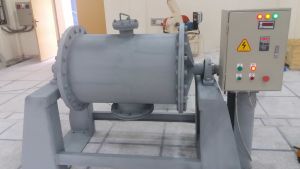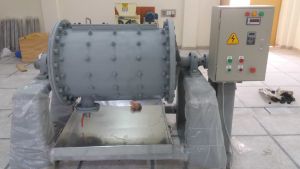


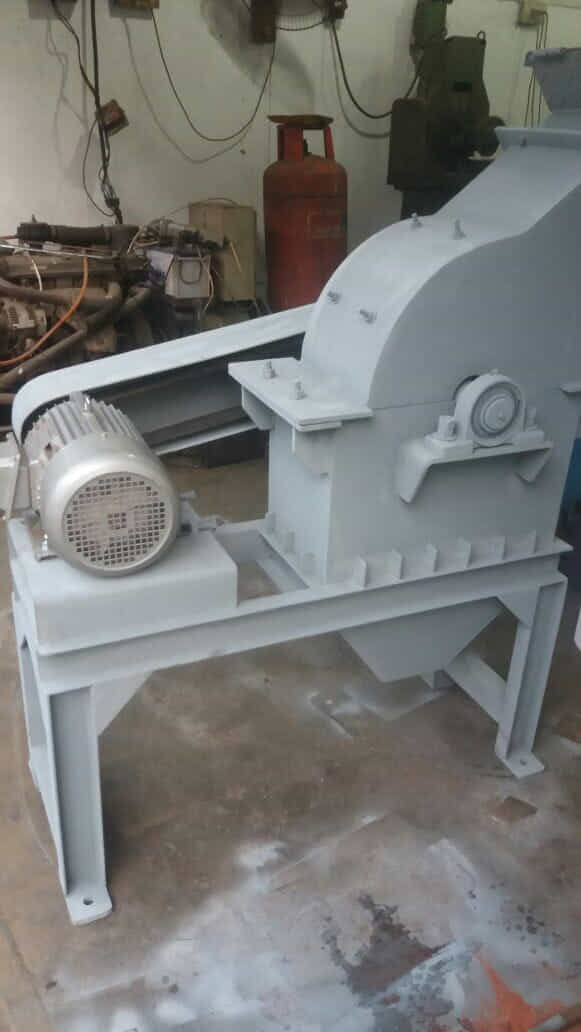
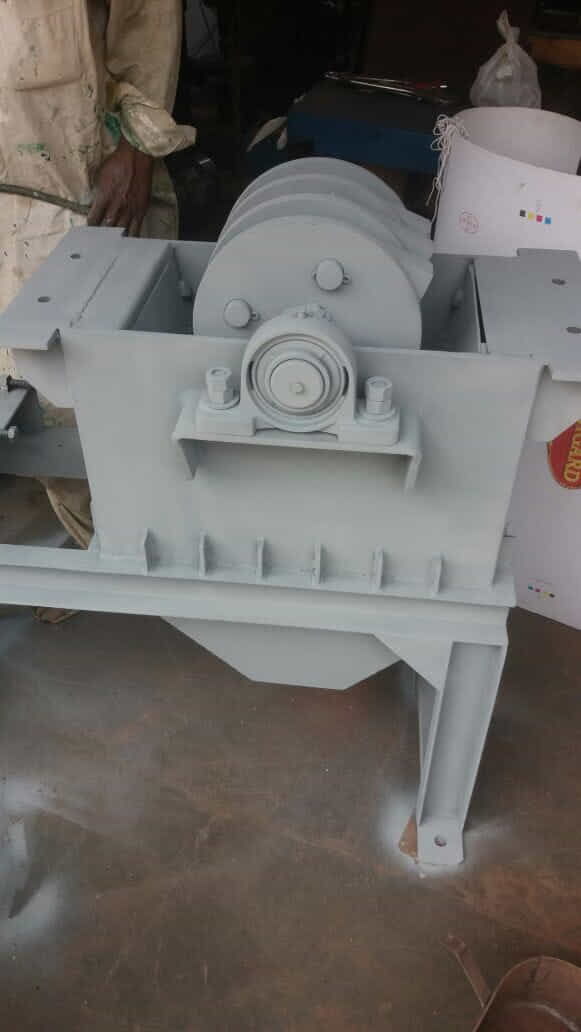
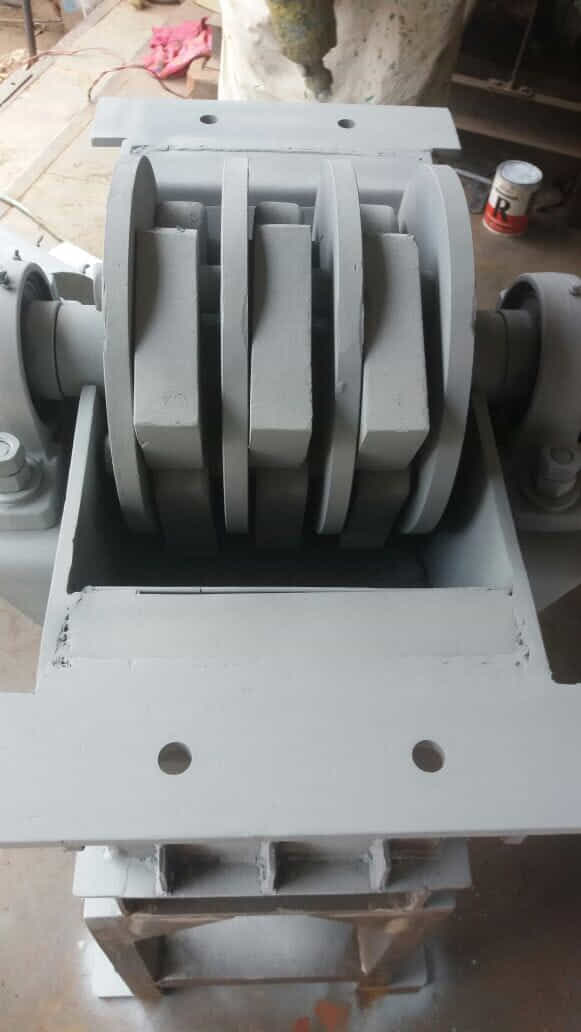
Hammer Mill is an impact size-reduction machine for converting suitable dry or controlled-moisture feed materials into a smaller, application-defined particle-size distribution. Material enters the grinding chamber, is repeatedly struck by rotating hammers and remains inside until it can pass through the selected screen or grate.
Marjan Polymer Industries supplies and configures hammer mills in Pakistan for laboratory development, pilot work and industrial grinding. The machine is selected around the actual material, feed size, moisture, hardness, abrasiveness, target particle-size distribution, throughput, hygiene duty and available utilities—not around one universal capacity claim.
How a hammer mill works
- Metered feeding: material enters through a guarded hopper, screw, rotary valve or other suitable feeder.
- Impact reduction: fixed or swinging hammers accelerate the material against the chamber, breaker surfaces and other particles.
- Screen classification: particles remain in the chamber until small enough to pass through the installed screen or grate.
- Discharge: ground product leaves by gravity or an engineered pneumatic system and can be collected in a bin, cyclone or filter arrangement.
Material assessment before machine selection
Hammer milling performance changes materially with hardness, friability, toughness, fibre length, bulk density, moisture, oil or resin content, initial feed size, temperature sensitivity, dust explosibility and contamination limits. MPI reviews a representative sample or a complete material datasheet before confirming the grinding chamber, hammer geometry, rotor speed, screen, feed system and wear materials.
Process limit: a screen opening is not a guaranteed final particle size. The mill produces a distribution whose shape depends on material behaviour, operating conditions and the complete process train.
Configurable Hammer Mill range
| Configuration | Typical purpose | Engineering approach |
|---|---|---|
| Laboratory hammer mill | Feasibility trials, formulation work and small samples | Compact batch or metered-feed arrangement with interchangeable screens and easy cleaning |
| Pilot hammer mill | Process development and scale-up confirmation | Variable-speed drive, controlled feeder, representative chamber and defined sampling procedure |
| Industrial gravity-discharge mill | Continuous grinding of free-flowing materials | Hopper or mechanical feeder, screened chamber and bin or conveyor discharge |
| Pneumatic-discharge system | Fine, light, hot or difficult-to-evacuate product | Airflow, cyclone, ducting and filter selected as one pressure-balanced system |
| Application-specific mill | Food, feed, biomass, chemical, mineral or recycling duty | Contact materials, wear protection, cleaning, dust control and guarding matched to the process |
Reference engineering parameters
| Parameter | Configurable reference scope |
|---|---|
| Reduction principle | High-speed impact using fixed or swinging hammers with a retaining screen or grate |
| Scale | Laboratory, pilot and industrial systems; final chamber and rotor dimensions are application-specific |
| Rotor speed | Selected from required tip speed and material behaviour; many industrial designs operate near 1,500–3,600 rpm, while compact machines may use different speeds |
| Drive | Direct, belt or coupling drive with motor, starter or variable-frequency drive as specified |
| Screen | Interchangeable perforated screen or bar grate; opening, thickness, open area and metallurgy selected for the target product |
| Hammer arrangement | Fixed or swinging, reversible where suitable, with quantity, mass, clearance and material selected for impact duty |
| Feed | Manual batch hopper, slide gate, screw feeder, belt feeder or rotary valve according to flow and safety requirements |
| Discharge | Gravity, screw, pneumatic conveying, cyclone and/or dust-filter package |
| Contact construction | Painted carbon steel, SS 304 or SS 316L options subject to product, hygiene and corrosion requirements |
| Electrical supply | Single-phase for selected small systems or 380–415 V, 50 Hz, three-phase for typical industrial configurations; final load is model-specific |
| Capacity | Confirmed by material trial or an agreed application basis; it varies with feed, screen, moisture, target fineness and motor load |
Particle-size control
Finished particle-size distribution is governed mainly by screen opening and open area, rotor tip speed, hammer size and quantity, hammer-to-screen clearance, feed rate and material properties. A smaller screen or higher impact intensity can produce a finer product, but may also reduce throughput, increase heat and raise energy or wear.
Hammer and screen options
Options include swinging or fixed hammers, reversible edges, impact or cutting profiles, replaceable wear plates and multiple screen sets. Screens are selected by hole shape, opening, thickness, open area and material. Quick-access construction can be incorporated where frequent product or screen changes are required.
Feed and discharge arrangements
A stable feed rate prevents overload, excessive fines and unstable motor current. MPI can integrate a guarded hopper, screw feeder, belt feeder, rotary airlock, magnetic trap or pre-breaker where required. Discharge equipment is sized to remove product at least as quickly as it is generated.
Applications and suitable material families
- Grains, cereal ingredients, animal-feed materials and selected agricultural products.
- Dry spices, herbs, food ingredients and nutraceutical materials subject to hygienic design review.
- Wood, crop residue, biomass and approved fibrous feedstocks.
- Polymers, resins, chemicals, pigments and minerals whose impact behaviour and safety are verified.
- Recycling and pre-processing duties where tramp metal, abrasion and contamination are controlled.
Materials that require special review
Sticky, oily, elastic, highly moist, heat-sensitive, very abrasive, toxic, corrosive or combustible-dust materials may require drying, cooling, inerting, a different mill technology, containment or explosion-protection engineering. MPI does not recommend hammer milling until the hazard and process suitability are established.
Construction and hygiene options
General industrial systems may use painted structural steel with selected wear liners. Food, nutraceutical, laboratory or corrosive duties can require SS 304 or SS 316L contact parts, smoother internal surfaces, sanitary seals, accessible cleaning zones and controlled lubricant selection. Required material certificates or finish values must be stated in the quotation.
Dust, airflow and product collection
Fine grinding can generate airborne dust. A pneumatic system may include calculated airflow, ducting, cyclone, rotary valve and correctly sized filter. The complete arrangement must avoid product accumulation, excessive pressure drop, material loss and uncontrolled dust release.
Drive, controls and instrumentation
Controls may include star-delta or soft starting, VFD speed adjustment, feeder interlock, motor-current display, bearing-temperature monitoring, speed detection, vibration monitoring, blocked-discharge protection and emergency stops. The final control philosophy is matched to the motor, process risk and operator skill level.
Safety and combustible-dust assessment
Required safeguards can include fixed and interlocked guards, feed-chute protection, rotor run-down control, emergency stops, electrical isolation, tramp-metal removal, earthing and safe access for screen changes. Combustible dusts require a documented hazard assessment and project-specific prevention or protection measures before operation.
Capacity and performance qualification
Throughput is stated only against an agreed feed material, maximum feed size, moisture, bulk density, target screen, operating speed and acceptable particle-size distribution. A serious acceptance trial records feed rate, motor load, product temperature, retained oversize, fines, noise and dust performance.
Wear parts and preventive maintenance
Routine work includes inspecting hammers, pins, rotor, bearings, liners, screens, seals, belts or coupling, fasteners and motor current. Hammers should be rotated or replaced in balanced sets. Unbalanced wear, a damaged screen or product buildup can cause vibration, poor output and unsafe operation.
Installation and utility requirements
Site planning covers floor loading, anchoring, service clearance, feed access, discharge height, electricity, ventilation or dust extraction, compressed air where used, safe lifting and noise control. The customer provides compliant building services and process-hazard controls unless expressly included in MPI supply.
Commissioning and operator training
The agreed service can include mechanical inspection, alignment, rotation check, guard and interlock verification, no-load run, feeder calibration, trial grinding, screen-change procedure, cleaning, maintenance training and a documented operating window using the approved material.
Local supply and after-sales support in Pakistan
Marjan Polymer Industries supplies configured Hammer Mill systems in Pakistan with requirements review, fabrication or sourcing coordination, control integration, installation planning, commissioning, operator training and local technical support. Warranty coverage is defined against the approved supply scope; screens, hammers and normal wear items are treated separately.
Information required for a technical quotation
- Material name, composition, safety data and intended end use.
- Feed size distribution, moisture, temperature, bulk density and hardness or abrasiveness.
- Required throughput and target particle-size distribution—not only a screen size.
- Batch or continuous operation and expected daily operating hours.
- Contact material, hygiene, cleaning, containment and certification requirements.
- Available electricity, dust extraction, compressed air, floor space and discharge arrangement.
- Required controls, feeder, cyclone, filter, spares, installation and training.
Frequently asked questions
What is a Hammer Mill?
It is an impact size-reduction machine in which rotating hammers repeatedly strike feed material until particles are small enough to pass through a selected screen or grate.
Which materials can a Hammer Mill process?
Suitable applications include approved grains, feed ingredients, spices, biomass, chemicals, polymers, minerals and recycling materials. Suitability depends on moisture, hardness, toughness, abrasiveness, heat sensitivity and dust risk.
What controls the final particle size?
Screen opening, rotor tip speed, hammer size and quantity, clearance, feed rate and material properties work together. A screen opening alone does not guarantee one exact particle size.
Can screen sizes be changed?
Yes. Interchangeable screens can be supplied where the mill design permits. Hole size, shape, open area, thickness and material are selected for the product and duty.
What capacity is available?
Capacity is project-specific and must be confirmed against the feed material, initial size, moisture, selected screen, target distribution, motor power and discharge system.
Can the mill use a variable-frequency drive?
Yes. A VFD can provide controlled starting and adjustable rotor speed when the motor, rotor and process design are approved for the intended operating range.
Can stainless-steel contact parts be supplied?
Yes. SS 304 or SS 316L contact construction can be evaluated for food, laboratory, corrosive or hygienic applications, with the required finish and documentation defined in the quotation.
Does the system include a cyclone or dust collector?
It can. Gravity discharge, pneumatic conveying, cyclone and filtration options are configured according to material behaviour, fineness, containment and site requirements.
Is the Hammer Mill available in Pakistan?
Yes. Marjan Polymer Industries supplies configured Hammer Mill systems in Pakistan with technical review, installation planning, commissioning, training and after-sales support.
What is required for a quotation?
Provide the material and safety data, feed size, moisture, required throughput, target particle-size distribution, operating hours, construction, utilities and required accessories.
Request a Hammer Mill proposal
Contact Marjan Polymer Industries with your material data, capacity, target particle-size distribution, construction, dust-control and utility requirements. MPI will review the duty and prepare an application-specific configuration and quotation.