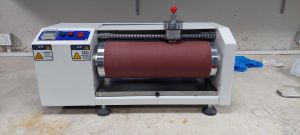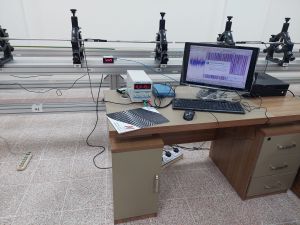

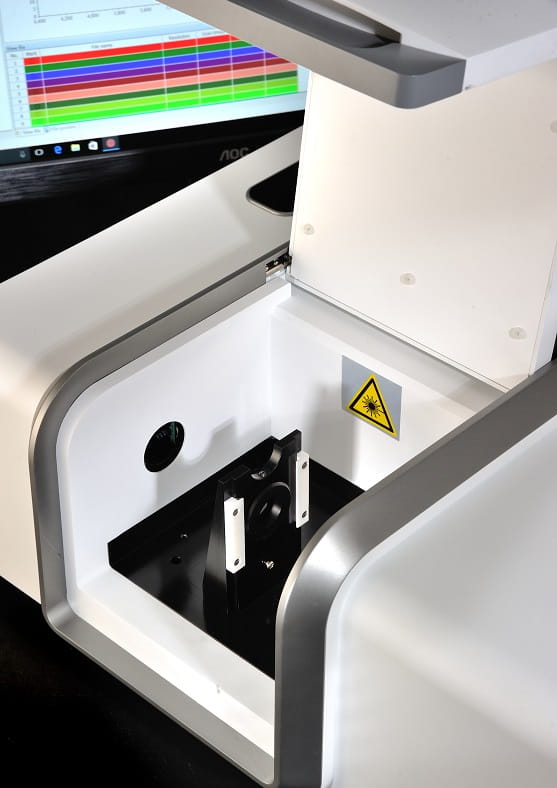
An FTIR Spectrometer (Fourier Transform Infrared Spectrometer) measures the infrared absorption spectrum of a sample to support material identification, functional-group analysis, quality control and comparative investigation. Marjan Polymer Industries (MPI) supplies project-matched FTIR systems, sampling accessories, software, spectral libraries, installation and user training for laboratories in Pakistan.
The correct system is selected from the analytical method, sample type, spectral range, resolution, sensitivity, workload, library requirements and regulated-data workflow. MPI does not present one generic specification as equivalent to every manufacturer or application.
Analytical Purpose
FTIR analysis records an interferogram and mathematically converts it into an infrared spectrum. Absorption bands are compared with reference spectra, known materials or validated methods. An FTIR result must be interpreted with suitable sample preparation, background collection, accessory selection and method controls; library matching alone is not conclusive proof of composition.
System Configuration
| System element | Typical configuration | Selection basis |
|---|---|---|
| Optical platform | Sealed/desiccated interferometer for routine mid-infrared analysis | Humidity, spectral range, stability and service environment |
| Detector | Room-temperature DTGS/DLaTGS for routine work; cooled MCT or specialised detector when higher speed/sensitivity is required | Signal level, scan speed, spectral range and cooling logistics |
| Sampling | ATR, transmission, diffuse reflectance, specular reflectance, gas cell or microscopy options | Solid, powder, liquid, film, coating, gas and micro-sample workflow |
| Software | Acquisition, processing, library search, quantitative tools and reporting | Method control, user access, audit trail and laboratory data policy |
| Computer and accessories | Compatible workstation, sample tools, desiccation/purge and reference materials as quoted | Site IT policy, workload and accessory package |
Selectable Technical Performance
| Parameter | Common procurement class | Important qualification |
|---|---|---|
| Core spectral range | Approximately 4000–400 cm⁻¹ for routine mid-IR methods | Many current systems extend to approximately 7800–350 cm⁻¹; NIR/FIR extensions require suitable optics and detectors |
| Spectral resolution | Selectable 0.5, 1, 2, 4, 8 or 16 cm⁻¹ class, depending on platform | Routine identification often uses 4 cm⁻¹; the required resolution is method-specific |
| Signal-to-noise | Manufacturer- and test-method-specific performance | Compare only values measured with the same resolution, scan time, region, detector and peak-to-peak/RMS method |
| Wavenumber accuracy | Model-specific certified tolerance | Verification protocol and reference material must be stated in the purchase specification |
| Scan and accumulation | Single or accumulated scans with selectable speed | Sensitivity improves with additional scans at the cost of analysis time |
| Purge/desiccation | Sealed optics with desiccant, dry-air or nitrogen purge options | Selected from humidity, optical materials and low-level atmospheric interference requirements |
Sampling Accessories
| Accessory | Suitable samples | Method considerations |
|---|---|---|
| Diamond ATR | Polymers, rubbers, powders, liquids, coatings and many routine solids | Surface contact, pressure, penetration depth and ATR correction |
| Transmission holder | Thin films, KBr pellets, liquid cells and selected gases | Thickness/path length, window compatibility and sample preparation |
| Diffuse reflectance | Powders and rough or scattering solids | Particle size, dilution, packing and background consistency |
| Specular reflectance | Reflective coatings, films and surfaces | Angle, surface flatness and optical model |
| Gas cell | Vapours and process/off-gas studies | Path length, window material, temperature, pressure and gas safety |
| FTIR microscope | Fibres, particles, layers, inclusions and small contamination spots | Spot size, detector, mapping and sample preparation |
Software, Libraries and Data Integrity
- Spectrum collection, background control, baseline and atmospheric corrections, peak tools and comparison.
- Commercial, polymer, pharmaceutical, coating or customer-built spectral libraries selected for the laboratory’s scope.
- Method templates and pass/fail comparison where the method and acceptance limits are validated.
- User roles, audit trail, electronic signatures and data-integrity functions when a regulated package is explicitly included.
- Export and backup compatible with the customer’s approved IT and cybersecurity policy.
Compliance with pharmacopoeial, ISO, ASTM, GMP or 21 CFR Part 11 requirements is not automatic. The offered hardware, software, qualification documents, procedures and customer controls must collectively meet the applicable requirement.
Applications in Pakistan
- Polymer, rubber, plastic, composite, adhesive and coating identification.
- Incoming raw-material verification and finished-product quality control.
- Pharmaceutical and chemical laboratory method work where the offered package meets regulatory needs.
- Universities, R&D organisations, forensic and environmental laboratories.
- Failure analysis, contamination comparison, oxidation/weathering and surface studies.
- Textile fibres, films, packaging, paints, resins and mineral/ceramic materials.
Site and Utility Requirements
| Requirement | Planning point |
|---|---|
| Environment | Stable laboratory temperature, controlled humidity, low dust and vibration-free bench |
| Electrical | Rated supply with protective earth and recommended UPS/voltage conditioning |
| Purge | Dry air or nitrogen when required by the optics, atmosphere or method |
| Computer/network | Approved workstation, user access, backup, antivirus and network policy |
| Sample safety | Ventilation, containment and chemical handling appropriate to the sample and accessory |
Installation, Qualification and Training
MPI can coordinate delivery, installation, basic performance verification, software setup and operator training in Pakistan. IQ/OQ, pharmacopoeial verification, certified standards, preventive maintenance and extended service are included only when stated in the offered package. Customer method validation and routine system-suitability control remain laboratory responsibilities unless separately contracted.
Information Required for a Proposal
- Sample types, expected concentration, physical form and required measurement mode.
- Spectral range, resolution, sensitivity, throughput and any published method.
- Required ATR crystal, transmission, reflectance, gas-cell or microscope accessories.
- Required libraries, quantitative software, reporting and regulated-data features.
- Qualification, reference standards, training, warranty and service expectations.
- Laboratory environment, utilities, computer/network policy and delivery location in Pakistan.
Frequently Asked Questions
What is an FTIR Spectrometer?
An FTIR Spectrometer measures how a sample absorbs infrared radiation across a wavenumber range and produces a spectrum used for material identification, functional-group analysis and comparison.
What is the difference between FTIR and ATR-FTIR?
FTIR is the spectrometer technique. ATR is a sampling accessory that measures the sample at an internal-reflection crystal, often allowing direct analysis of solids, powders, films and liquids with little preparation.
Which spectral range is needed?
Routine organic and polymer identification commonly uses the mid-infrared region around 4000–400 cm⁻¹. Extended near- or far-infrared work requires compatible sources, beamsplitters, detectors and accessories.
Is 4 cm⁻¹ resolution sufficient?
Four reciprocal centimetres is common for routine identification, but narrow bands, gas analysis or specialised research may require higher resolution. The analytical method should set the requirement.
Can FTIR identify an unknown material?
It can compare an unknown spectrum with libraries and known references, but a library hit is not automatically conclusive. Sample quality, mixtures, additives, degradation and complementary tests must be considered.
Can liquids, powders and films be tested?
Yes, with the correct accessory. Diamond ATR is widely used for routine solids, powders and liquids; transmission cells, film holders and reflectance accessories serve other methods.
What detector is normally used?
DTGS or DLaTGS detectors are common for routine room-temperature FTIR. MCT and other detectors are selected for higher speed, lower signal or specialised spectral ranges and may require cooling.
Does an FTIR Spectrometer require nitrogen?
Not always. Many systems use sealed, desiccated optics. Dry-air or nitrogen purge may be recommended for humidity protection or to reduce atmospheric water and carbon-dioxide interference.
Can MPI provide installation and training in Pakistan?
MPI can supply installation coordination, software setup, operator training and service options in Pakistan according to the offered manufacturer and project scope.
What information is required for a quotation?
Provide the samples and methods, spectral range and resolution, accessories, libraries, data-integrity and qualification needs, user count, service expectations and delivery location.
Request an FTIR Spectrometer Proposal
Send MPI your sample types, analytical methods, required accessories, software/library needs, qualification scope and laboratory location. Marjan Polymer Industries will prepare a project-specific FTIR Spectrometer proposal for your organisation in Pakistan.