

A High Shear Mixer uses a close-clearance rotor–stator workhead to create intense mechanical and hydraulic shear for emulsifying, dispersing, homogenising, deagglomerating and rapidly incorporating powders into liquids. Marjan Polymer Industries (MPI) supplies laboratory, pilot and production batch or inline systems for processors in Pakistan.
The mixer is selected from the formulation, batch volume or flow rate, viscosity curve, density, particle/droplet target, temperature, pressure/vacuum, cleanability and hazardous-area requirement. Motor power or rpm alone does not define process performance.
Mixing Principle
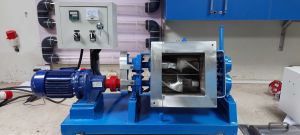
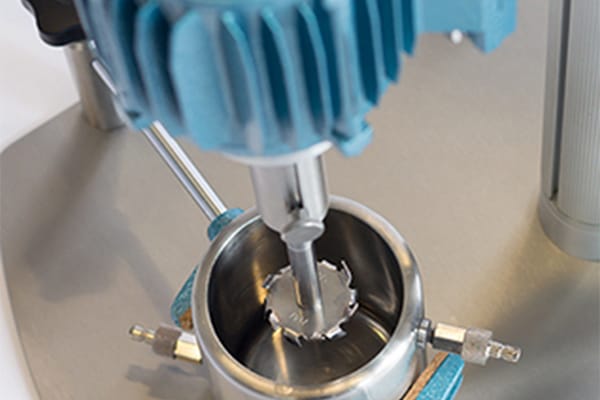
The high-speed rotor draws product axially into the workhead. Material is accelerated through the narrow rotor–stator gap and stator openings, then discharged radially at high velocity. Repeated circulation combines mechanical shear, turbulence and pumping action to break agglomerates, disperse solids and form emulsions.
High Shear Mixer Configurations
| Configuration | Typical use | Project options |
|---|---|---|
| Laboratory disperser/homogeniser | Formulation screening and small samples | Interchangeable workheads, digital speed, stand, timer and temperature monitoring |
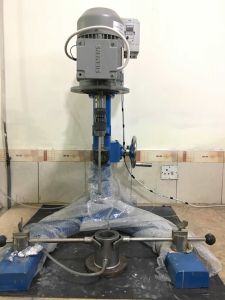
| Top-entry batch mixer | Open or closed vessels with repeated recirculation through the workhead | Fixed/variable speed, lift, sealed shaft and vessel integration |
| Bottom-entry mixer | Short product path, low residual volume and integrated process vessel | Flush mounting, hygienic design and clean-in-place interface |
| Inline rotor–stator mixer | Recirculation or continuous processing | Single/multi-stage workhead, feed hopper, flow control and skid package |
| Vacuum emulsifying plant | High-viscosity creams, gels, coatings and air-sensitive products | Anchor/scraper, heating/cooling, powder/liquid charging and vacuum deaeration |
Configurable Technical Range
| Parameter | Common project class | Selection basis |
|---|---|---|
| Batch volume | Laboratory millilitres to production vessels of several thousand litres; larger systems by review | Working level, viscosity, turnover, power input and vessel geometry |
| Inline flow | Project-specific from pilot recirculation to high-throughput production | Residence time, pressure drop, number of passes and feed system |
| Rotor tip speed | Commonly approximately 10–30 m/s | Rotor diameter, rpm, product sensitivity, workhead and mechanical rating |
| Installed power | Approximately 0.5–150 kW for common lab-to-production duties; larger systems by review | Viscosity, batch/flow, tip speed, duty cycle and service factor |
| Product-contact material | SS304, SS316L or application-selected alloy/coating | Corrosion, abrasion, hygiene, temperature and contamination |
| Operating condition | Atmospheric, vacuum or pressure-capable design as specified | Vessel/piping code, seals, vapour, temperature and process safety |
Rotor–Stator Workhead Selection
| Workhead style | Typical duty |
|---|---|
| General-purpose head | Mixing, emulsion formation and moderate deagglomeration |
| Slotted head | Fibrous materials, larger soft solids and rapid circulation |
| Fine/emulsor screen | Fine emulsions and small soft particles after adequate pre-mixing |
| Disintegrating head | Powder incorporation and break-up of agglomerates |
| Multi-stage inline head | Repeated shearing actions per pass for demanding continuous/recirculation duties |
Vessel and Ancillary Systems
- Jacketed vessel for controlled heating/cooling with validated heat-transfer area.
- Slow-speed anchor, gate or scraper for high-viscosity wall turnover and heat transfer.
- Powder induction hopper or eductor to improve wetting and reduce airborne dust.
- Vacuum deaeration, condenser and sealed charging for air-sensitive or foam-prone formulations.
- Load cells, flowmeter, temperature, pressure and inline quality instruments as required.
Seals, Materials and Hygienic Options
Mechanical seal, lip seal or cartridge-seal design is selected from pressure/vacuum, temperature, solvent, abrasive solids and cleaning method. Product-contact parts can be supplied in SS316L or other compatible materials with application-selected surface finish, drainability, sanitary connections and CIP/SIP provisions.
Food, cosmetic and pharmaceutical use requires a purpose-designed hygienic package and customer qualification. Stainless steel alone does not establish GMP, food safety or cleanability.
Control and Process Data
- VFD/servo speed control with rpm, current/load and permissive monitoring.
- Recipe sequence for charging, mixing, recirculation, heating/cooling and vacuum.
- Temperature, pressure/vacuum, flow and batch-time alarms.
- Optional trend, batch report, user access and plant data interface.
- Interlocks for vessel level, lid, seal system, cooling, discharge valve and recirculation path.
Applications in Pakistan
- Paints, coatings, inks, pigments, resins, adhesives and construction chemicals.
- Cosmetics, creams, lotions, gels, detergents and personal-care products.
- Food, dairy, beverages, sauces and nutritional products with hygienic design.
- Pharmaceutical suspensions, emulsions and process development with validated equipment.
- Polymer latex, additives, masterbatch liquids and composite dispersions.
- University, formulation, pilot-plant and quality-control laboratories.
Safety and Hazard Review
Rotating equipment requires guards, secure mounting, emergency stop, overload protection and safe isolation. Solvent, flammable vapour, combustible dust, pressurised/vacuum, hot product and toxic service require a formal hazard review, compatible seals/materials, ventilation, electrical classification and pressure protection. An ordinary open mixer must not be used for a hazardous formulation.
Factory Acceptance and Documentation
| Deliverable | Typical scope |
|---|---|
| Design data | General arrangement, workhead, motor/drive, materials, seals, vessel and utilities |
| Mechanical FAT | Run, vibration/noise, speed range, direction, guards, seal and functional checks |
| Water trial | Circulation, leakage, controls and temperature/pressure functions where applicable |
| Product trial | Only with agreed formulation, material quantity, procedure and acceptance method |
| Documents | Manual, drawings, material/finish records as quoted, spare and wear-parts list |
Information Required for a Proposal
- Formulation components, order of addition, solids, density, viscosity and safety data.
- Batch volume or flow rate, current mixing time and target result/test method.
- Starting/final particle or droplet size, permitted temperature and aeration limit.
- Atmospheric, vacuum or pressure duty; solvent/hazardous-area classification.
- Product-contact material, surface finish, cleaning/sterilisation and documentation needs.
- Utilities, vessel dimensions, installation space and delivery location in Pakistan.
Installation and After-Sales Support
MPI can provide site-interface review, installation supervision, commissioning, operator training, preventive-maintenance guidance and rotor–stator/seal spare-parts planning in Pakistan. Process acceptance requires the agreed formulation, raw materials and test method.
Frequently Asked Questions
What is a High Shear Mixer?
It is a rotor–stator mixer that draws product into a close-clearance workhead and subjects it to intense shear and turbulence for emulsifying, dispersing, homogenising, deagglomerating and powder incorporation.
What is the difference between a High Shear Mixer and an agitator?
An agitator mainly circulates and blends bulk liquid. A rotor–stator High Shear Mixer creates much higher local shear through a small gap and stator openings, making it more suitable for emulsification and deagglomeration.
Should the mixer be batch or inline?
Batch mixers are simple and flexible for vessel processing. Inline mixers suit recirculation, continuous production, powder induction and controlled passes. Formulation, throughput, cleanability and plant layout determine the choice.
What tip speed is normally used?
Many rotor–stator processes operate around 10–30 m/s tip speed, but the correct value depends on workhead, product sensitivity, viscosity, scale and mechanical rating. Rpm cannot be compared without rotor diameter.
Can it make a stable emulsion?
It can create fine droplets and improve dispersion, but long-term stability also depends on formulation chemistry, emulsifier, phase ratio, temperature and storage conditions.
Can high-viscosity products be processed?
Yes, within a validated design. High-viscosity systems may require an anchor/scraper, vacuum, heating, controlled powder addition and a bottom-entry or recirculating workhead.
Can MPI supply hygienic SS316L construction?
Yes. SS316L contact parts, sanitary connections, selected surface finish, drainability and CIP/SIP options can be specified. The complete package must be reviewed for the applicable food, cosmetic or pharmaceutical requirement.
Can the mixer operate under vacuum?
A mixer can operate on a vacuum-rated vessel with the correct shaft seal, structure, condenser, controls and protection. A standard open batch mixer is not suitable for vacuum duty.
Does MPI provide installation in Pakistan?
MPI can provide installation supervision, commissioning, training and after-sales support in Pakistan according to the approved project scope.
What information is required for a quotation?
Provide the formulation, batch or flow, viscosity, solids, target particle/droplet result, temperature, pressure/vacuum, cleaning, hazardous-area and site requirements.
Request a High Shear Mixer Proposal
Send MPI your formulation, batch volume or flow, viscosity, target result, vessel details, temperature, pressure/vacuum, hygiene and safety requirements. Marjan Polymer Industries will prepare a project-specific High Shear Mixer proposal for your facility in Pakistan.