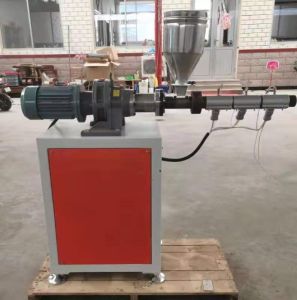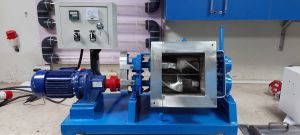
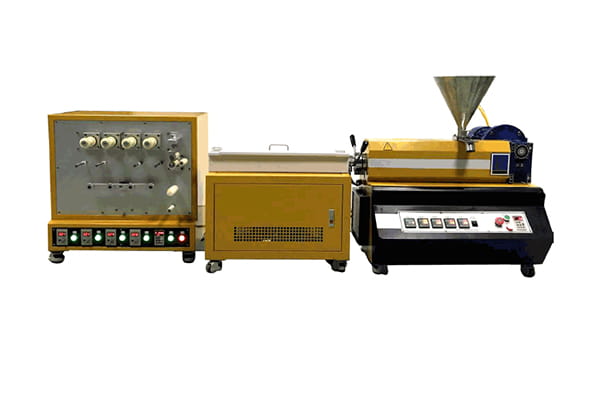
Twin Screw Extruder is MPI’s configurable continuous processing platform for plastics compounding, masterbatch production, blending, devolatilization, reactive processing and selected recycling duties. In Pakistan it is also commonly searched as a twin screw extruder machine, plastic compounding machine or co-rotating twin screw extruder.
Every line is engineered from the formulation, feed condition, throughput, mixing intensity, residence-time window, devolatilization demand and required product form. Final ratings and guarantees are issued only in the approved MPI project data sheet.
Operating Principle
Two profiled screws rotate inside a temperature-controlled barrel and continuously convey the ingredients through selected feeding, melting, mixing, venting and pressure-building zones. Modular screw elements and barrel sections allow the process sequence to be arranged around the material rather than forcing every formulation through one fixed geometry.
Typical Processing Applications
- Colour, additive and functional masterbatch production
- Mineral-filled polypropylene, polyethylene, polyamide and engineering compounds
- Glass-fibre, natural-fibre and other reinforced thermoplastic compounds
- TPE, TPV and compatible elastomer modification processes
- Polymer alloying, blending and compatibilisation
- Selected recycling, deodorisation and re-compounding duties
- Biodegradable and specialty compounds after material qualification
- Reactive extrusion and controlled devolatilization projects
Complete Line Architecture
| Line section | Primary function | Project selection basis |
|---|---|---|
| Raw-material handling | Receives, stores, dries and transfers ingredients | Material form, moisture, dust, segregation and batch logistics |
| Main and loss-in-weight feeders | Meter polymers, powders and minor ingredients | Feed rate, bulk density, accuracy and recipe range |
| Twin-screw process section | Conveys, melts, mixes, reacts and devolatilizes | Rheology, shear sensitivity, mixing task and residence time |
| Side feeding and liquid dosing | Adds sensitive fillers, fibres or liquids downstream | Ingredient sequence, wetting, attrition and vent loading |
| Melt discharge | Builds stable pressure and forms the melt | Viscosity, filtration, pressure stability and product form |
| Pelletizing or direct forming | Converts discharge into usable product | Melt strength, stickiness, cooling demand and pellet specification |
| Cooling and classification | Cools, dries and removes off-size material | Pellet temperature, water sensitivity and quality limits |
| PLC/HMI and electrical system | Controls recipes, interlocks and process records | Automation level, plant standard and reporting needs |
Configurable Engineering Range
Throughput cannot be selected from screw diameter alone. MPI confirms the usable operating window from formulation trials, torque demand, fill level, thermal load, venting and downstream limitations.
| Parameter | Available project direction |
|---|---|
| Screw arrangement | Co-rotating intermeshing, counter-rotating or duty-specific design |
| Scale | Laboratory, pilot and industrial production configuration |
| Process length | Application-selected L/D with modular barrel sequence |
| Drive | Torque and speed selected for the compound and operating window |
| Feeding | Volumetric or gravimetric main, side and liquid dosing systems |
| Devolatilization | Atmospheric and vacuum vent zones with suitable separation hardware |
| Heating/cooling | Independently controlled barrel zones and engineered cooling circuits |
| Discharge | Open die, screen changer, melt pump or direct downstream interface |
| Pelletizing | Strand, water-ring, hot-face or underwater system where appropriate |
| Controls | PLC/HMI, recipe management, trending and plant-integration options |
Screw and Barrel Engineering
Conveying, kneading, mixing, reversing and pressure-building elements are arranged to create the required melting profile and mixing history. Barrel modules can provide solid feeding, liquid injection, side feeding, atmospheric venting, vacuum devolatilization and process measurement. Metallurgy and surface treatment are selected for abrasion, corrosion and expected service life.
Feeding and Dosing Strategy
Stable compound quality begins before the screws. MPI reviews bulk density, particle size, bridging, floodability, moisture and ingredient concentration to select feeders and agitation. Separate loss-in-weight feeders can support recipe accuracy, while side feeders protect fibres or introduce high filler loadings after the polymer has developed suitable melt continuity.
Mixing, Dispersion and Temperature Control
The screw element sequence balances distributive mixing, dispersive mixing, heat generation and residence time. Barrel heating and cooling, screw speed, feed rate and torque loading are treated as a connected process. Shear-sensitive polymers or additives require a different configuration from high-filler or difficult-to-wet formulations.
Venting and Devolatilization
Open and vacuum vents can remove entrained air, moisture, monomer, solvent or degradation volatiles where the process allows. Vent position, melt seal, surface renewal, vacuum capacity and carry-over protection are engineered together. Feed drying and vapour treatment may still be required.
Filtration, Die and Pelletizing Options
Discharge equipment is selected as a complete pressure-and-cooling system. Options include manual or hydraulic screen changers, melt pumps, strand dies with water bath and cutter, water-ring systems, hot-face systems and underwater pelletizing. The correct choice depends on viscosity, contamination, pellet shape, water sensitivity and throughput.
Process Controls and Instrumentation
- Zone temperature measurement and closed-loop control
- Screw speed, drive load, torque and melt-pressure monitoring
- Feeder-rate control, recipe management and material-total reporting
- Vacuum, cooling-water and lubrication status monitoring
- Alarm history, interlocks, trend screens and batch or campaign records
- Remote diagnostics or plant communication where approved
Wear, Corrosion and Material Contact
High mineral loading, glass fibre, flame-retardant packages and corrosive ingredients can accelerate wear. MPI selects screw and barrel metallurgy, liners, coatings, seals and cleanout arrangements after reviewing the complete formulation. Food-contact, medical or regulated applications require separate material, hygiene and validation requirements.
Safety and Maintainability
Machine guarding, emergency stops, drive overload protection, barrel-temperature interlocks, pressure limits, vent protection, heater isolation and lockout provisions are defined through project risk assessment. Split or quick-opening components, lifting aids, access platforms and spare element strategy can be considered for maintenance-intensive duties.
Utilities and Site Requirements
| Utility/interface | Information MPI confirms |
|---|---|
| Electrical supply | Site voltage, frequency, connected load, protection and control standard |
| Cooling water | Supply temperature, pressure, flow, quality and return arrangement |
| Compressed air | Pressure, dryness and demand for valves or downstream equipment |
| Vacuum and exhaust | Vapour load, condensate handling, filtration and safe discharge |
| Material logistics | Bag, big-bag, silo or manual feed; drying and dust-control interfaces |
| Foundation and access | Floor loading, drainage, lifting, operator space and maintenance envelope |
Line Integration
The extruder can be integrated with drying, conveying, pre-mixing, gravimetric feeding, side feeding, melt filtration, pelletizing, cooling, classification, packing and laboratory quality-control equipment. Interfaces are defined early so controls, elevations, material flow and utilities function as one line.
Quality and Acceptance Planning
Before manufacture, MPI aligns the user requirement specification, approved formulation envelope, target capacity, product-quality tests and acceptance criteria. Factory and site acceptance can include mechanical inspection, safety checks, dry running and agreed material trials when representative raw materials are available.
Supply Scope and Documentation
Project scope may include process engineering, machine and line equipment, electrical controls, layout coordination, manuals, drawings, recommended spares, installation supervision, commissioning and operator training. Exclusions and battery limits are stated clearly in the technical offer.
Engineering for Pakistan
MPI configures Twin Screw Extruder projects for local raw-material availability, power conditions, utilities, operator capability and service access. Support can cover Lahore, Karachi, Faisalabad, Islamabad, Rawalpindi and industrial locations across Pakistan under the agreed project scope.
Information Required for a Firm Proposal
- Polymer grades and full formulation percentages
- Feed form, bulk density, particle size and moisture
- Target throughput and normal operating schedule
- Required dispersion, pellet, colour or mechanical-quality criteria
- Volatile, corrosive, abrasive or hazardous ingredients
- Preferred pelletizing or direct downstream process
- Available electrical, water, air, vacuum and exhaust utilities
- Automation, documentation and testing requirements
Frequently Asked Questions
What is a twin screw extruder used for?
A twin screw extruder provides continuous conveying, melting, distributive and dispersive mixing, venting and pressure generation for polymer compounding, masterbatch, filled compounds, blends and selected reactive or recycling processes.
Is a twin screw extruder the same as a plastic compounding machine?
It is the core processing machine in many plastic compounding lines. A complete line also includes material handling, feeders, venting, pelletizing, cooling, classification and controls selected for the formulation.
Which twin screw configuration does MPI supply?
MPI can engineer co-rotating intermeshing, counter-rotating or application-specific configurations. Co-rotating modular systems are commonly selected for intensive polymer compounding, while the final choice follows the material and process duty.
Can the screw and barrel arrangement be customised?
Yes. Screw diameter, length-to-diameter ratio, element sequence, barrel modules, feeding positions, vent ports, heating and cooling are configured after reviewing the formulation, throughput and required product quality.
Can fillers, fibres and additives be dosed separately?
Yes. Gravimetric or volumetric main feeders, liquid dosing, side feeders and downstream injection points can be integrated where the formulation and process sequence require them.
Which pelletizing systems are available?
Depending on melt behaviour and product form, the line may use strand pelletizing, water-ring, hot-face or underwater pelletizing. Die design, cooling, dewatering and classification are selected as one system.
Can the line process recycled plastics?
Selected post-industrial and post-consumer streams can be compounded when feed preparation, contamination control, filtration, venting, stabilisation and pelletizing are engineered for the actual material.
How is moisture and volatile matter removed?
Atmospheric vents and vacuum devolatilization zones can be positioned along the barrel. Their effectiveness depends on melt surface renewal, temperature, residence time, vacuum duty and upstream drying.
What information is needed for a quotation?
Provide polymer grade, formulation percentages, bulk density, moisture, feed form, target throughput, final pellet or profile form, utilities, automation level and any trial data or quality limits.
Does MPI provide installation and support in Pakistan?
MPI can provide line engineering, installation supervision, commissioning, operator training, documentation, spares planning and after-sales support across Pakistan under the agreed scope.
Request a Twin Screw Extruder Proposal
Send MPI your formulation, raw-material condition, target throughput, quality criteria, pelletizing preference and site utilities. MPI will prepare a project-specific Twin Screw Extruder proposal for Pakistan.