


Marjan Polymer Industries supplies and configures Water Jet Loom machines in Pakistan for high-speed shuttleless weaving of water-compatible filament fabrics. A controlled water jet carries the weft yarn through the warp shed, while electronic let-off, take-up and machine controls maintain warp tension and programmed pick density.
The loom is selected around the fabric construction, reed width, warp and weft yarn, pick density, weft colours, shedding motion, number of frames, pump and nozzle arrangement, target speed, water quality, drainage and finishing route. Water-jet weaving is efficient for suitable hydrophobic filaments, but it is not the correct insertion system for every yarn or fabric.
Water-Jet Weft Insertion
A water pump generates a precisely timed jet through a nozzle. The jet entrains the weft and carries it across the open shed, after which the weft is controlled, cut and beaten into the fabric. Correct timing between shedding, jet pressure, weft measurement, arrival detection and beat-up is essential.
Compared with a mechanical carrier, the water jet has low moving mass and supports high cyclic speed. Performance depends on yarn wetting behaviour, nozzle condition, pump setting, reed space, fabric design and water management. The maximum catalogue speed is not automatically the best production speed.
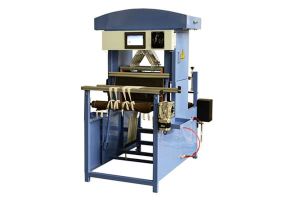
Available Water Jet Loom Configurations
| Configuration | Typical Use | Available Selection |
|---|---|---|
| Laboratory / pilot Water Jet Loom | Teaching, product development and short fabric trials | Compact reed width, electronic let-off/take-up and configurable cam or dobby shedding |
| Single-pump loom | Stable single-weft or selected two-nozzle applications | Pump, nozzle and weft-measuring system matched to yarn and width |
| Double-pump loom | Multiple weft selections or demanding insertion programmes | Independent pump/nozzle arrangement with electronic feeder control |
| Cam-shedding loom | High-volume fabrics with repeatable weave patterns | Positive cam and frame count selected for the construction |
| Electronic-dobby loom | More flexible patterns and larger harness requirements | Dobby capacity, heald frames and design software matched to the weave |
| Production Water Jet Loom | Polyester, nylon and compatible synthetic-fabric production | Reed width, drive, let-off, take-up, drying and water system engineered as one line |
Suitable Fabrics and Applications
- Polyester and nylon taffeta
- Lining, umbrella and rainwear fabrics
- Selected home-textile and blackout constructions
- Sportswear, lightweight apparel and bag fabrics
- Spandex-containing woven fabrics where the loom package is suitable
- Mesh, shade and selected industrial filament fabrics
- Sample development and textile-engineering education
Absorbent natural fibres and yarns that deteriorate when wet are generally poor candidates. Suitability must be confirmed from actual warp and weft data, fabric construction and downstream water-removal or finishing requirements.
Reference Pilot-Loom Configuration
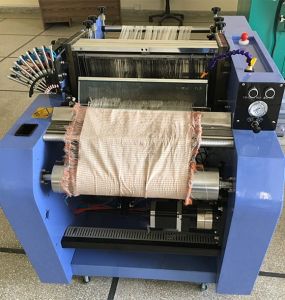
The existing MPI reference is a compact Water Jet Loom concept with approximately 1000 mm working width, water-jet insertion, electronic let-off and take-up, two weft selections and a positive-cam or dobby shedding option. The recorded system is intended for research, training and selected pilot weaving rather than being represented as a universal industrial loom.
| Reference Parameter | Recorded Value / Arrangement | Contract Note |
|---|---|---|
| Working width | Approximately 1000 mm | Effective weaving width depends on reed and fabric setup |
| Reference speed | Up to approximately 650 rpm | Production speed depends on width, yarn, shedding, water and fabric quality |
| Weft insertion | Single-nozzle water-jet reference system | Pump and nozzle are selected for yarn and reed space |
| Weft selection | Two selectors in the recorded concept | Final feeder and colour arrangement follows the fabric plan |
| Shedding | Positive cam or dobby with design-software option | Frame count and motion are confirmed against the weave repeat |
| Let-off / take-up | Electronic | Provides controlled warp delivery and programmed pick density |
| Reference motor | Approximately 1.5 kW for the compact concept | Industrial drive power changes with width, speed and configuration |
| Beam and cloth roll | Approximately 1000 mm reference width | Shaft, flange, barrel and maximum mass require approved drawings |
Specification control: reference values describe the existing compact system. The signed quotation, datasheet, machine drawing and nameplate govern the supplied loom.
Configurable Machine Specification
| Parameter | Available Selection | Defined From |
|---|---|---|
| Nominal reed space | Compact pilot and project-specific production widths | Finished fabric width, selvedge and shrinkage allowance |
| Pump / nozzle | Single- or double-pump and one- or multi-nozzle arrangements | Weft yarn, colour plan, width and insertion demand |
| Shedding | Crank, positive cam or electronic dobby | Weave repeat, frame count and target speed |
| Heald frames | Configuration-specific frame quantities | Construction and shedding-motion capacity |
| Let-off and take-up | Mechanical or electronic; electronic recommended for controlled trials | Warp tension, pick density and recipe repeatability |
| Main drive | Conventional or direct-drive arrangement | Loom width, speed, energy and service strategy |
| Weft measurement | Mechanical or electronic measuring and storage system | Yarn type, insertion timing and changeover requirement |
| Controller | Machine HMI with monitoring and configurable production records | Automation, language, data and maintenance scope |
Reed Width, Fabric Width and Loom Selection
Nominal reed space is larger than the usable fabric width because allowance is required for selvedges, temple, draw-in and machine setup. The quotation should use the widest intended fabric plus the process allowance, not only the finished cut width.
A wider loom has greater moving mass and a longer jet path. Pump and nozzle selection, frame stiffness, beat-up, drive power and attainable speed must therefore be assessed together. Oversizing the reed space can reduce efficiency on narrow articles.
Pump, Nozzle and Jet Control
The water pump, plunger, spring, cam or drive and nozzle geometry determine jet pressure, timing and water volume. A stable jet should carry the measured weft across the shed without excessive water, yarn damage or mispick.
Nozzle diameter and profile are selected for yarn denier, filament structure and loom width. Wear, deposits, misalignment or contamination change jet quality. Pump timing and pressure should be optimized during style setup and recorded in the article parameters.
Weft Measurement and Arrival Detection
The weft-measuring device releases the length required for one pick and presents it to the nozzle at the correct time. Electronic feeders support programmable adjustment and can improve repeatability across style changes.
An arrival sensor confirms that the weft reached the receiving side within the timing window. Stops should be investigated for feeder tension, pump pressure, nozzle alignment, water quality, shed timing, weft package and sensor setup rather than simply increasing jet pressure.
Shedding: Crank, Cam or Dobby
Crank shedding offers simple motion for limited weave structures. Positive cams support high-speed, repeatable patterns with a defined number of heald frames. Electronic dobby expands pattern flexibility but adds frames, motion complexity and control requirements.
The selected shedding system must provide adequate shed opening at insertion timing without excessive warp strain. Harness weight, heald type, warp tension, loom speed and design repeat are reviewed before configuration.
Electronic Let-Off and Take-Up
Electronic let-off adjusts warp-beam delivery as diameter changes and maintains the programmed tension. Electronic take-up controls fabric advance and pick density. Together they help reproduce fabric construction across a roll and between repeat orders.
Load cells, encoders and servo or variable-frequency drives must be calibrated and mechanically aligned. A damaged warp beam, uneven build or slipping cloth roll can still create density and tension faults despite electronic control.
Selvedge, Cutting and Fabric Take-Up
Selvedge formation may use tuck-in, leno or configuration-specific devices. Weft ends are cut after insertion, and waste collection should prevent fibres from entering the water or drive system. The chosen edge must meet fabric finishing and customer requirements.
Cloth take-up, press rollers and winding tension are selected for fabric weight and surface sensitivity. Inspection lighting and stop marks should be included in the quality plan for commercial production.
Water Quality and Recirculation
Water quality directly affects nozzles, pumps, valves, sensors and fabric cleanliness. Hardness, suspended solids, corrosion potential and biological growth should be controlled. Untreated water can produce scale, blockage, rust staining or unstable insertion.
A recirculation system can include collection, settling, filtration, level control, temperature management and make-up water. Treatment and discharge must meet local environmental requirements. Oil, size and fibre contamination should not be allowed to return uncontrolled to the nozzle circuit.
Drying and Downstream Water Removal
Fabric leaves the loom wet and requires an appropriate water-removal or drying route. Options depend on fabric type and plant layout and may include squeeze rollers, suction, centrifugal extraction or integrated / downstream drying.
Dryer duty is part of production planning. A loom running faster than the water-removal system creates handling and quality problems. Energy, ventilation, condensation and fabric shrinkage should be evaluated in the full line scope.
Yarn and Warp Preparation Requirements
Warp beams should have uniform density, correct width and reliable sizing for the selected speed. Warp yarn must tolerate wet weaving, tension and heald/reed abrasion. Weft packages require consistent build, low defects and suitable unwinding tension.
Provide yarn denier or count, filament number, twist, finish, tensile properties and water response. Trials with production yarn are recommended before final acceptance, especially for textured, elastic or speciality filaments.
Fabric Design and Style Setup
A style file or setup sheet should record reed, denting, ends, pick density, weft colours, shedding pattern, let-off tension, take-up, pump timing, nozzle, feeder and stop settings. Design software can prepare dobby or Jacquard patterns where compatible.
CAD output does not replace machine validation. The first fabric is checked for construction, width, picks, warp and weft defects, selvedge, appearance and dimensional behaviour before settings are released for production.
Production Performance and Acceptance
| Measure | Why It Matters | Acceptance Approach |
|---|---|---|
| Good-fabric speed | Reflects actual sellable output | Timed run on agreed yarn and style |
| Weft-stop rate | Shows insertion stability | Stops per defined pick count or time |
| Warp-stop rate | Reflects preparation, tension and shed quality | Recorded causes during trial |
| Pick density | Controls construction and weight | Calibrated measurement across roll |
| Fabric width | Confirms reed, temple and tension setup | Cross-roll width checks |
| Water consumption | Affects operating cost and treatment | Measured at approved production condition |
| Energy use | Supports operating-cost estimate | Metered loom and auxiliary load |
Utilities and Factory Requirements
- Stable three-phase or project-specific electrical supply with protection and earthing
- Treated process water at the specified pressure, quality and flow
- Collection, filtration, recirculation and compliant drainage
- Compressed air where required by valves, feeders or auxiliaries
- Floor foundation, levelling, anchors and vibration control
- Ventilation and drying capacity for wet fabric
- Beam trolley, cloth handling and safe maintenance access
Safety and Environmental Controls
The loom includes high-speed rotating and reciprocating parts, nip points, pressurized water, electrical equipment and wet floors. Required safeguards include interlocked covers, emergency stops, safe threading procedures, isolation points, drainage and non-slip housekeeping.
Noise, splash, humidity and effluent management must be assessed at the site. Operators should never bypass guards or reach into the shed, beat-up or take-up zone while motion is possible.
Cleaning and Preventive Maintenance
Daily work includes nozzle inspection, lint and weft-waste removal, water-level and filter checks, splash cleanup and lubrication according to the manual. Nozzles and valves should be cleaned with compatible tools that do not enlarge precision orifices.
Scheduled maintenance covers pump seals, plunger and cam, bearings, belts or direct drive, brakes, heald frames, reed, cutters, sensors, encoders, let-off/take-up drives, water filters and electrical protection. Article settings and controller backups should be stored securely.
Supply and Support in Pakistan
MPI provides a local technical and commercial point of contact for weaving mills, universities and textile-development teams in Pakistan. Scope can include model selection, sourcing, pilot-machine engineering, installation supervision, commissioning, style trials and operator training.
Recommended spares may include nozzles, pump components, valves, cutters, sensors, belts, seals, solenoids and electronic service parts. The list is sized to machine quantity and planned operating hours.
Information Required for a Quotation
- Fabric types, finished widths, GSM and weave structures
- Warp and weft fibre, denier or count, filament, twist and finish
- Reed space, ends, pick density and planned weft colours
- Required cam, crank or dobby shedding and frame count
- Target good-fabric speed and shift schedule
- Warp-beam and cloth-roll drawings and maximum mass
- Available water quality, pressure, treatment and drainage
- Electrical supply, compressed air, drying and factory location
- Controller, software, data, documentation and acceptance requirements
- Installation, training, spares and delivery city in Pakistan
Water Jet Loom Price in Pakistan
Price depends on reed width, frame and drive construction, pump/nozzle system, weft feeders, shedding motion, electronic let-off and take-up, controller, beam package, water-treatment scope, freight, installation and spares. A compact pilot loom and an industrial multi-nozzle loom are different technical scopes.
MPI prepares a quotation after reviewing the fabric plan and utilities. The offer identifies the exact machine configuration, inclusions, exclusions, delivery basis, warranty and acceptance conditions.
Installation, Training and Limited Warranty
Installation can include foundation and levelling checks, electrical and water connections, pump/nozzle setup, beam alignment, dry commissioning and an agreed fabric trial. Training covers safe threading, article setup, jet timing, fault diagnosis, water-system care, cleaning and maintenance.
Warranty terms are stated in the commercial offer and normally cover eligible manufacturing defects for the agreed period. Nozzles, cutters, seals, belts and other wear items, water-quality damage, corrosion, incorrect utilities, misuse and unauthorized modification are excluded unless the contract states otherwise.
Frequently Asked Questions
What is a Water Jet Loom?
It is a shuttleless weaving machine that uses a timed, pressurized water jet to carry the weft yarn through the warp shed before beat-up and fabric take-up.
Which yarns are best suited to water-jet weaving?
Water Jet Looms are mainly used for water-compatible hydrophobic filaments such as polyester and nylon. Actual suitability depends on yarn finish, fabric and drying route.
Can it weave cotton fabric?
Water-jet insertion is generally not preferred for absorbent cotton because the yarn and fabric become wet. Air-jet or rapier technology is usually evaluated for such applications.
Which reed widths are available?
Compact pilot and multiple production reed widths are available. The correct size follows finished fabric width, selvedge, draw-in and style range.
Can I choose cam or dobby shedding?
Yes. Crank, positive cam and electronic dobby options can be selected according to weave repeat, heald-frame count and target speed.
Why are electronic let-off and take-up important?
They help maintain warp tension as beam diameter changes and control fabric advance for repeatable pick density across the roll.
Does the loom require treated water?
Yes. Water hardness, solids and contamination should be controlled to protect pumps and nozzles and avoid fabric stains or unstable insertion.
What determines production speed?
Useful speed depends on reed width, yarn, fabric, shedding, pump/nozzle setup, stop rate, water system and acceptable fabric quality.
Is installation and training available in Pakistan?
Yes. MPI can provide installation supervision, commissioning, style trials and operator training in Pakistan when included in the quotation.
What is required for a quotation?
Provide fabric and yarn data, width, weave, pick density, weft colours, shedding, beam details, target speed, water system, utilities and support scope.
Request a Water Jet Loom Proposal
Send MPI your fabric constructions, yarn specifications, reed width, shedding requirement, target output and water-system details. We will define a suitable Water Jet Loom configuration and prepare a clear technical and commercial proposal for supply in Pakistan.