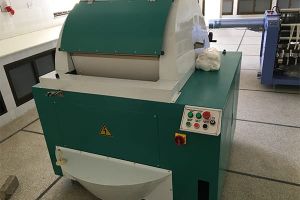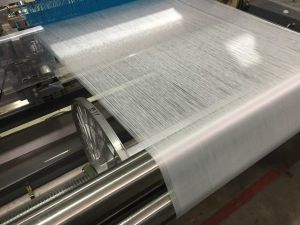


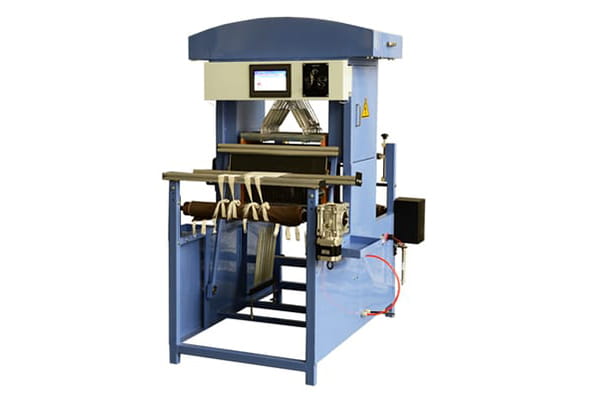
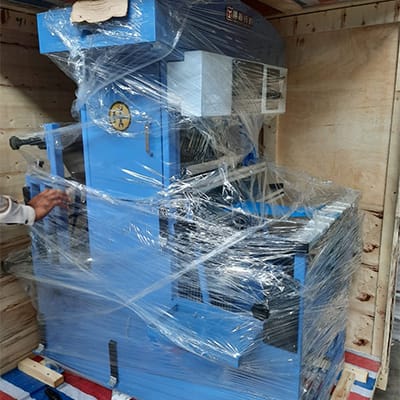

The Semi-Automatic Sample Loom is a compact laboratory weaving machine for producing controlled woven fabric samples before committing material and machine time to a production loom. The reference 20-inch configuration combines PLC-controlled pneumatic shedding with manual weft selection and manual beat-up, giving the operator direct control while automating the heald-frame sequence.
It is intended for weaving laboratories, textile institutes, research centres, fabric developers and mills that need repeatable samples for construction trials, colour-and-weave development, yarn evaluation and pre-production review.
Marjan Polymer Industries supplies semi-auto sample loom configurations in Pakistan with application review, utility planning, installation support and operator training. The final model, working width, take-up arrangement, heald-frame count, accessories and acceptance criteria are confirmed in the commercial quotation.
Purpose and Applications
- Developing woven fabric samples before production-loom trials
- Evaluating weave structures, yarn combinations and colour arrangements
- Preparing teaching and research samples in textile institutes and laboratories
- Supporting sampling departments in weaving mills and product-development centres
- Producing short experimental lengths for visual, dimensional and physical assessment
- Testing cotton, wool, silk, jute, synthetic-fibre and blended-yarn constructions, subject to yarn and loom compatibility
- Documenting repeatable pattern sequences through PLC-controlled shedding
A sample loom is a development machine rather than a substitute for a production loom. Achievable fabric construction and sample output depend on yarn properties, reed and heald selection, warp preparation, operator method and the ordered machine configuration.
Technical Specifications
| Parameter | Reference 20-inch configuration |
|---|---|
| Machine type | Semi-automatic laboratory sample loom |
| Reference working width | 20-inch reed width (approximately 508 mm) |
| Shedding system | Pneumatic heald-frame lifting under PLC control |
| Heald frames | 16 standard; 20-frame option available subject to selected build |
| Pattern control | PLC touch-screen control |
| Pattern storage | Up to 6 pattern cards, with up to 1,000 lines per pattern card on the reference controller |
| Computer communication | PC-to-PLC communication interface available on the reference controller |
| Weft colour selection | Manual |
| Beat-up | Manual |
| Take-up | Manual as standard; automatic take-up available on an alternative configuration |
| Compressed-air pressure | 0.45–0.80 MPa |
| Maximum reference air consumption | Up to 200 L/min |
| Electrical supply | Single-phase 220 V, 50 Hz |
| Reference overall dimensions | 1,300 × 980 × 1,510 mm (L × W × H) |
| Approximate machine mass | Approximately 180–200 kg, depending on configuration |
| Frame construction | Integrally welded rectangular steel-tube structure with protective finished surface |
How the Semi-Automatic Weaving System Works
The operator prepares the warp, enters or transfers the required heald-frame sequence and sets the loom for the planned sample. During weaving, the PLC commands the pneumatic shedding mechanism while the operator controls weft insertion, beat-up and other manual functions required by the selected configuration.
This division of functions provides programmable repeatability without removing the operator control needed during laboratory sampling. Pneumatic shedding also avoids the traditional peg-type lifting arrangement used on some manual sample looms and supports stable, lower-noise frame movement when the air supply and machine are correctly maintained.
Available Configurations and Options
| Selection item | Available configuration approach |
|---|---|
| Working width | 20-inch reference configuration; alternative laboratory widths may be reviewed against the required fabric sample |
| Heald-frame capacity | 16-frame standard arrangement or 20-frame option |
| Take-up | Manual or automatic configuration |
| Reed and heald selection | Selected for the intended yarn count, warp density and sample construction |
| Pattern transfer | Controller and PC-interface scope confirmed with the selected control package |
| Power supply | Reference supply is single-phase 220 V, 50 Hz; site compatibility is checked before order confirmation |
| Commissioning scope | Remote guidance or on-site installation and training, subject to project location and quotation |
MPI reviews the intended fabric, yarn range, weave complexity, sample width, available compressed air, electrical supply and operator requirements before finalizing the machine configuration.
Site and Utility Requirements
- Stable, level floor with adequate machine, operator and maintenance clearance
- Single-phase electrical supply matching the confirmed machine nameplate
- Clean, dry compressed air within the specified pressure range
- Air-delivery capacity sized for the stated maximum reference consumption and pressure losses
- Suitable isolation, earthing and over-current protection provided by the customer’s qualified electrician
- Controlled laboratory or sampling-area conditions appropriate for the yarn and fabric under evaluation
- Safe access for unloading, positioning, commissioning and future maintenance
Utility values must be checked against the final machine nameplate and supplier documentation. The user is responsible for compliant site wiring, compressed-air treatment and local safety provisions unless these items are specifically included in the supply contract.
Fabric and Yarn Applications
The semi-auto sample loom can support development work with cotton, wool, silk, jute, man-made fibres and blends when the selected reed, healds, warp preparation and operating settings are suitable. Typical work includes plain and twill structures, colour-and-weave trials and more complex frame-controlled patterns within the installed heald-frame capacity.
Compatibility should be confirmed before purchase for fragile yarns, very coarse or high-twist yarns, technical fibres, dense constructions or unusual warp-tension requirements. MPI can review representative yarn data and the intended fabric construction when defining the loom configuration.
Installation, Commissioning and Training
The commissioning scope can include machine inspection after delivery, positioning guidance, electrical and pneumatic checks, controller setup, dry-cycle testing, sample-weaving trials and basic operator instruction. Exact responsibilities are listed in the quotation.
Operator training normally covers safe start-up and shutdown, pattern entry, heald-frame sequence checks, warp and weft preparation, pneumatic-system checks, sample operation, routine cleaning and first-line troubleshooting. Production acceptance should be based on an agreed yarn and sample construction where a performance demonstration is included.
Operating Safety and Maintenance
The loom must be operated by trained personnel. Keep hands, tools and loose clothing clear of moving heald frames, beat-up parts, take-up components and yarn paths. Isolate electrical power and release pneumatic pressure before adjustment, cleaning or maintenance that requires access to moving mechanisms.
- Inspect guards, emergency controls, hoses, fittings and electrical connections before operation
- Use clean, regulated and appropriately treated compressed air
- Keep the machine free from lint and yarn waste
- Follow the supplied lubrication and inspection schedule
- Do not alter PLC, pneumatic or electrical settings outside the approved operating range
- Use the final manufacturer manual and site risk assessment as the governing safety documents
Professional Supply in Pakistan
Marjan Polymer Industries supplies laboratory and pilot-scale textile machinery for universities, textile institutes, weaving mills, research organizations and industrial product-development teams in Pakistan. Support can include configuration review, commercial sourcing, import coordination, installation planning, commissioning and operator training according to the agreed project scope.
Customers in Lahore, Karachi, Faisalabad, Islamabad and other industrial locations can contact MPI with the required working width, fabric type, yarn range, heald-frame count, take-up preference, utilities and delivery location for a project-specific proposal.
Quotation, Scope and Delivery
Pricing depends on working width, heald-frame capacity, manual or automatic take-up, controller and software package, reed and accessory requirements, freight, installation scope and delivery location. For an accurate quotation, provide the intended fabrics, yarn specifications, sample dimensions, available utilities and required commissioning support.
Availability, manufacturing lead time, warranty, included accessories, spare parts and acceptance criteria are confirmed in writing for each order. Website information supports preliminary selection and does not replace the approved quotation, machine datasheet or supply contract.
Frequently Asked Questions
What is a semi-automatic sample loom?
It is a compact weaving machine used to produce development samples. In this configuration, the PLC controls pneumatic heald-frame shedding while functions such as weft selection and beat-up remain operator controlled.
What is the working width of the reference machine?
The reference configuration has a 20-inch reed width, approximately 508 mm. Alternative laboratory widths can be reviewed when the required fabric sample is defined.
How many heald frames are available?
The standard configuration uses 16 heald frames. A 20-frame option is available subject to the selected machine build and controller.
Which operations are automatic and which are manual?
Shedding is PLC controlled and pneumatically actuated. Weft colour selection and beat-up are manual. Take-up may be manual or automatic depending on the ordered configuration.
What compressed-air supply is required?
The reference requirement is 0.45–0.80 MPa with maximum air consumption up to 200 L/min. Final requirements must be confirmed from the supplied machine documentation.
Can it weave different yarn and fabric types?
It can support development work with cotton, wool, silk, jute, man-made fibres and blends when the reed, healds, warp preparation and settings suit the material. Unusual or technical yarns should be reviewed before ordering.
Is automatic take-up available?
Yes. The reference product family is available with manual or automatic take-up configurations. The chosen arrangement is specified in the quotation.
Is the semi-auto sample loom available in Pakistan?
Yes. Marjan Polymer Industries can supply configured semi-auto sample loom systems in Pakistan, subject to the selected specification, commercial terms and delivery location.
Are installation and training included?
Installation, commissioning and operator training can be included. The exact site responsibilities, duration and deliverables are stated in the commercial proposal.
How is the machine price determined?
Price depends on width, heald-frame capacity, take-up arrangement, controller, accessories, freight and service scope. MPI prepares a quotation after reviewing the technical requirement and delivery location.