

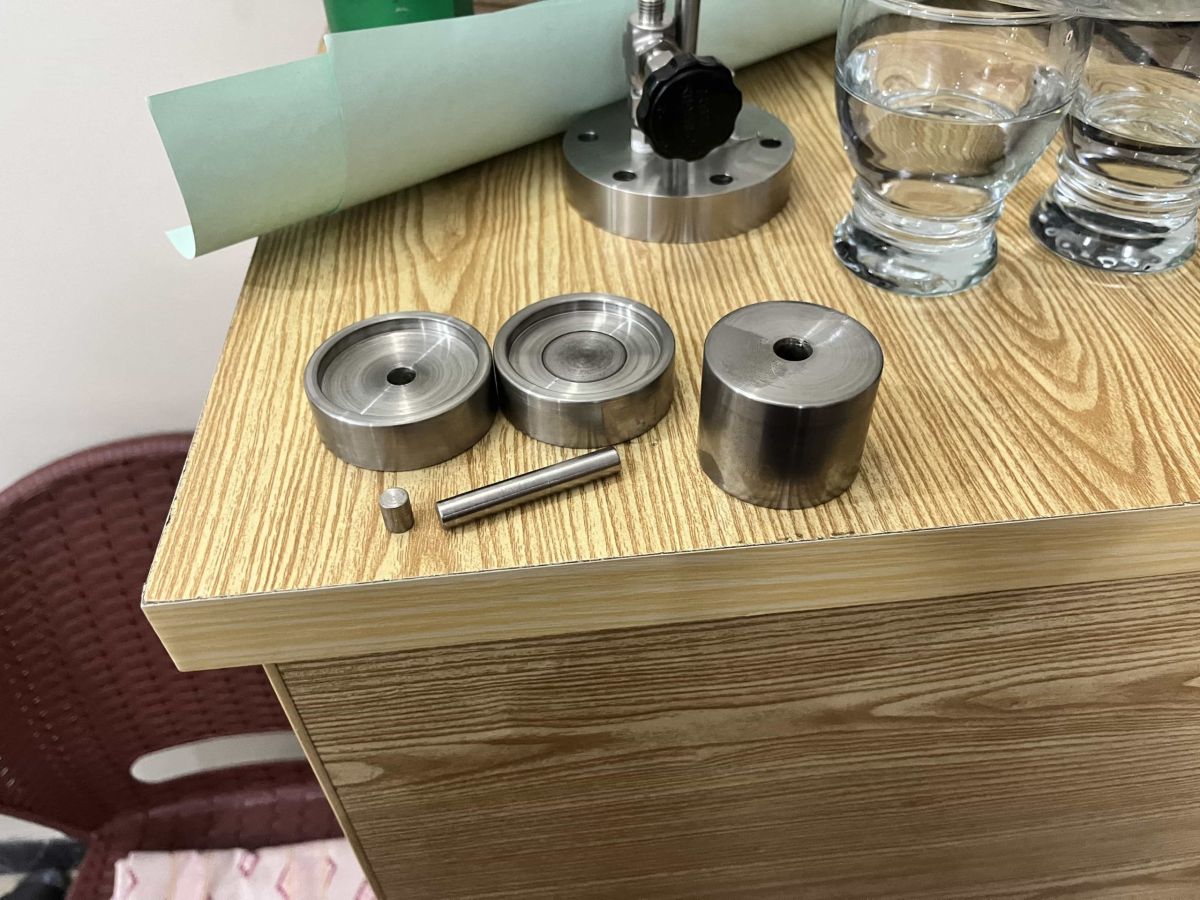
Marjan Polymer Industries supplies and configures KBr Pellet Die systems in Pakistan for preparing compact, optically suitable pellets used in Fourier-transform infrared (FTIR) transmission analysis. The die assembly receives a finely prepared sample-and-alkali-halide mixture, applies a controlled uniaxial load through a compatible press and supports clean pellet extraction for repeatable laboratory work.
Selection is based on pellet diameter, required load, press daylight and platen size, vacuum arrangement, sample chemistry, tooling material, extraction method and the holder used in the FTIR instrument. MPI confirms the contractual specification against the laboratory workflow rather than treating one nominal die as universal.
KBr Pellet Formation for FTIR
Potassium bromide is widely used because a dry, finely ground KBr mixture can form an infrared-transparent disc under pressure. For a conventional 13 mm method, a representative laboratory procedure may use approximately 200–250 mg of alkali halide with a small sample fraction and a load near 8 tonnes under vacuum; the correct preparation must follow the laboratory method, material safety information and instrument requirements.
Moisture, particle size, contamination, excessive concentration, trapped air and uncontrolled load can all reduce transparency or distort a spectrum. The die is therefore one part of a complete preparation process that also includes drying, weighing, grinding, mixing, pressing, handling and background control.
Available KBr Pellet Die Configurations
| Configuration | Typical Use | Available Design Approach |
|---|---|---|
| Compact small-pellet die | Low sample consumption and compact FTIR holders | Small disc diameter with matching punch set and extraction tooling |
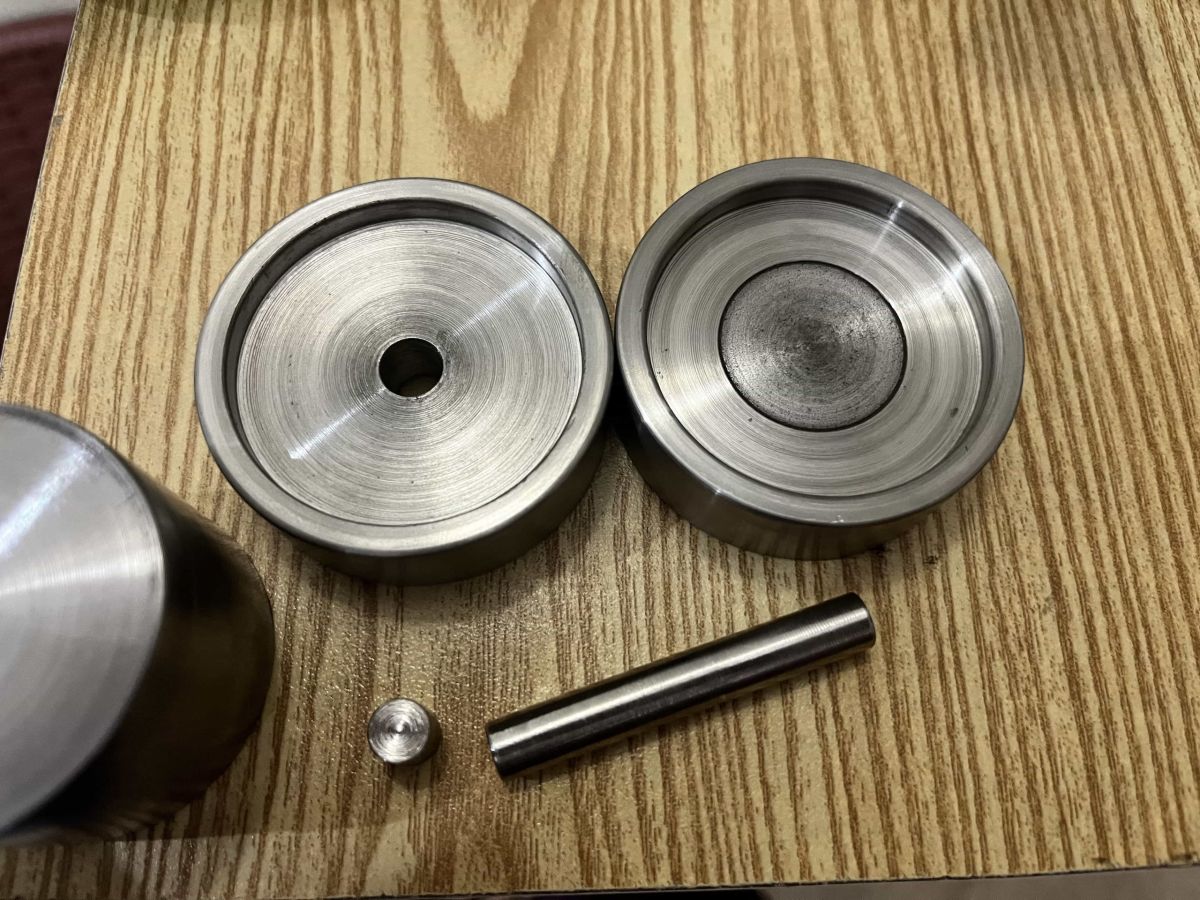
| 13 mm evacuable die | Routine FTIR transmission pellet preparation | Precision bore, upper and lower anvils, vacuum connection and extractor |
| Large-diameter pellet die | Special analytical or material-preparation methods | Diameter and rated load selected as an engineered set |
| Non-evacuable die | Methods that do not require vacuum during compaction | Simplified body with compatible press and extraction arrangement |
| Custom press-interface die | Existing laboratory presses or non-standard holders | Interface dimensions confirmed from drawings and sample hardware |
Laboratory and Industrial Applications
- FTIR transmission analysis of dry solid and powder samples
- Polymer, resin, coating, adhesive and composite characterization
- Pharmaceutical raw-material identification and quality-control methods
- Chemical, mineral, pigment, ceramic and academic research laboratories
- Teaching laboratories for spectroscopy and sample preparation
- Method development using KBr, KCl or another approved matrix
- Preparation of reference and comparison pellets under controlled procedures
- Custom compacted-disc work where the material and die are technically compatible
Reference Diameter and Load Matrix
The following figures are recognized industry reference values for comparable pellet-die systems; they are not a universal instruction for every die. The marked rating on the supplied tooling and the approved operating procedure always govern.
| Nominal Pellet Diameter | Representative Typical Load | Representative Maximum Limit |
|---|---|---|
| 7 mm | Selected for compact mini-press systems | Model-specific; commonly paired with presses around 2 tonnes |
| 10 mm | Approximately 3 tonnes | Approximately 5 tonnes |
| 13 mm | Approximately 7 tonnes | Approximately 10 tonnes |
| 20 mm | Approximately 18 tonnes | Approximately 25 tonnes |
| 32 mm | Approximately 25 tonnes | Approximately 50 tonnes |
| 40 mm | Approximately 25 tonnes | Approximately 80 tonnes |
Specification control: load capacity changes sharply with diameter, material, geometry and tooling grade. Never apply a reference value to unmarked tooling. The signed quotation, approved drawing, datasheet and nameplate define the supplied die.
Configurable Technical Scope
| Parameter | Available Selection | Defined From |
|---|---|---|
| Pellet diameter | Small, 10 mm, 13 mm and larger engineered sizes | FTIR sample holder, method and available sample mass |
| Rated load | Matched to die diameter and press capacity | Required compaction pressure and safety factor |
| Vacuum arrangement | Evacuable body or non-vacuum configuration | Pellet transparency, porosity and laboratory procedure |
| Tooling material | Hardened, polished and corrosion-conscious options | Sample chemistry, cleaning method and service life |
| Press interface | Bench hydraulic, manual or compatible powered press | Platen diameter, daylight, stroke and centring |
| Extraction | Extractor ring, support base or dedicated ejection fixture | Pellet fragility, diameter and operator method |
| Accessories | Storage case, spare seals, vacuum hose and maintenance set | Laboratory workflow and procurement scope |
| Documentation | Drawing, parts list, inspection record and operating guidance | Project quality and validation requirements |
Die Assembly and Component Scope
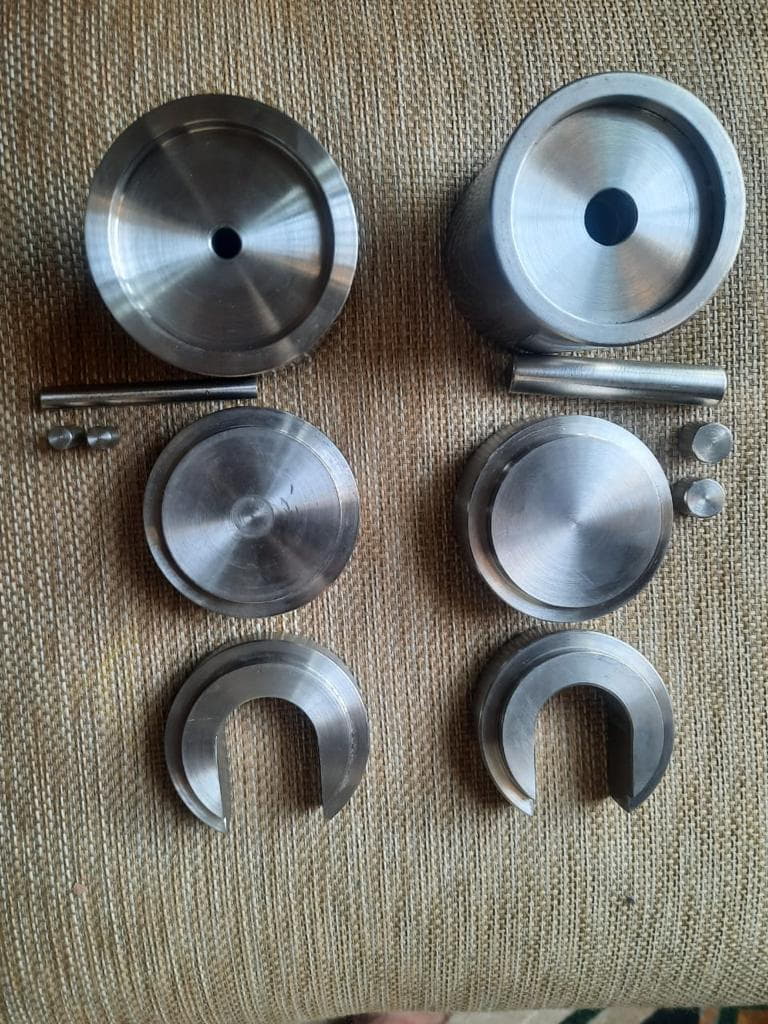
A typical evacuable assembly includes a precision cylinder body, base, upper and lower polished anvils or plungers, pellet-forming bore, sealing components, vacuum connection and an extraction arrangement. Exact component names and geometry vary by diameter and manufacturer.
All load-bearing parts must remain a matched set. Substituting a punch, base or extractor from another diameter or an unverified source can create misalignment, seizure, pellet damage or a serious overload hazard.
Pellet Diameter Selection
Diameter is chosen from the FTIR holder, beam aperture, required optical path, available sample mass and press capacity. A 13 mm disc is common for routine transmission work, while smaller pellets can reduce sample consumption and larger tooling may serve specialized methods.
Larger diameter does not simply mean a better pellet. It requires substantially more force for the same compaction pressure and increases the importance of alignment, body strength and safe extraction.
Hydraulic Press Compatibility
The press must provide sufficient rated load, controlled loading, adequate daylight and parallel platens. The die must sit centrally on clean, flat load surfaces without improvised spacers that can tilt or concentrate force.
MPI checks maximum press force, platen diameter, vertical clearance, gauge resolution, load-release control and whether vacuum must remain connected during the dwell. A die’s maximum rating must never be exceeded even when the press can generate more force.
Vacuum-Assisted Pellet Preparation
An evacuable die allows air and moisture vapour to be reduced while the powder consolidates. This can help minimize trapped voids and produce a clearer, stronger pellet when the validated method requires vacuum.
Vacuum performance depends on dry powder, sound seals, clean mating faces, suitable hose and sufficient evacuation time. A vacuum port is not a substitute for drying hygroscopic KBr or maintaining good laboratory humidity control.
Tooling Material and Surface Finish
Pellet contact faces require a smooth, clean finish so the disc releases without deep marks. Load-bearing material, heat treatment and surface finish are selected for the rated force and anticipated chemistry; the approved drawing states the contractual material and hardness where required.
Corrosive, reactive or abrasive samples must be disclosed before selection. A nominal stainless description alone does not establish compatibility with every solvent, salt or cleaning agent.
Powder Preparation and Mixing
Use spectroscopic-grade matrix material appropriate to the method. KBr is hygroscopic, so it should be stored dry and prepared using clean tools. Representative guidance for 13 mm work uses finely pulverized material, often 200 mesh or finer, followed by drying before mixing.
Sample concentration is method-dependent. Approximately 0.1–1.0% sample in KBr is a common starting range for many transmission measurements, but absorption strength varies and the validated method must determine the final ratio.
Controlled Loading and Dwell
Load should be increased smoothly and centrally to avoid shock, powder migration and tooling damage. A comparable die manual may recommend holding the selected load for roughly 10–15 seconds before releasing load and vacuum; other methods can require a different dwell.
The operator should record matrix lot, sample ratio, drying condition, vacuum, load, dwell and pellet appearance when reproducibility matters. Force displayed by a press is not automatically the same as pressure inside the pellet.
Pellet Extraction and Handling
After pressure is fully released, the die is removed using the documented sequence and the pellet is supported during ejection. An extractor ring or dedicated fixture allows the compact to move out of the bore without prying against polished surfaces.
KBr pellets are moisture-sensitive and can be fragile. Handle them with clean tools, avoid fingerprints, transfer promptly to the holder and store only as allowed by the laboratory method.
Pellet Quality and Troubleshooting
| Observation | Possible Cause | Check |
|---|---|---|
| Cloudy or opaque pellet | Moisture, coarse particles, trapped air or insufficient compaction | Drying, grinding, vacuum integrity, selected load and dwell |
| Cracked pellet | Uneven loading, fast release, poor extraction or unsuitable mixture | Centring, release rate, extractor use and sample concentration |
| Pellet sticks in bore | Contamination, damaged finish or incompatible sample | Cleaning, surface inspection and material compatibility |
| Variable spectrum | Changing thickness, concentration, moisture or preparation history | Weighing, recipe, records and replicate preparation |
| Visible edge damage | Misalignment or incorrect extraction support | Press platens, die assembly and ejection sequence |
Optional Accessories and Spares
- Compatible hydraulic or manual laboratory press
- Vacuum pump, hose, fittings and approved seals
- Extraction ring, support base and ejection fixture
- Spare anvils, plungers or seals supplied as matched parts
- Mortar, pestle and controlled sample-preparation accessories
- Pellet holders matched to the FTIR instrument
- Protective storage case and clean handling tools
- Inspection and maintenance kit defined for the tooling material
Cleaning and Cross-Contamination Control
Remove residue after each preparation using a method compatible with both the sample and tooling. Use lint-free materials and avoid hard implements that can scratch the bore or optical faces. Dry every component fully before reassembly.
Laboratories handling potent, hazardous or trace-level materials should define dedicated tooling, cleaning verification and waste controls. MPI can document removable parts and recommended routine care, but the laboratory owns method-specific decontamination validation.
Inspection and Preventive Maintenance
Before use, check the body, punches, base, threads, seals, vacuum connection and extraction tools for wear, corrosion, scoring or deformation. Verify that components slide as intended without forcing them.
Withdraw damaged tooling from service. Load ratings depend on sound geometry and material condition; polishing away damage or machining a component without engineering approval can reduce strength and invalidate the rated configuration.
Operator Safety
- Use trained personnel, eye protection and laboratory controls appropriate to the sample.
- Confirm die and press ratings before loading and never exceed the lower limit.
- Centre the assembly and keep hands clear of platens and ejection paths.
- Release hydraulic load and vacuum completely before disassembly.
- Do not press explosive, unstable, highly reactive or unknown materials.
- Use guarding where required by the press design and local risk assessment.
- Follow sample SDS, vacuum-pump instructions and laboratory waste procedures.
Quality Documentation and Verification
Available project records can include an approved dimensional drawing, material declaration, rated-load statement, parts list, inspection report and operating guidance. Calibration or third-party certification is quoted only where specifically required and available.
Incoming verification should check component count, identification, bore condition, critical dimensions, press fit and extraction sequence before analytical use. Method suitability is then established with laboratory reference materials and replicate pellets.
Information Required for Selection
| Input | Why It Matters |
|---|---|
| Target pellet diameter and holder | Defines bore, disc dimensions and instrument interface |
| Press make, model and rated load | Confirms force, clearance, platens and operating compatibility |
| Matrix and sample types | Supports material, cleaning and safety review |
| Vacuum requirement | Defines port, seals, pump connection and workflow |
| Expected daily throughput | Guides durability, spare parts and operator arrangement |
| Documentation requirement | Defines drawings, inspection and validation deliverables |
| Delivery location in Pakistan | Supports logistics, training and after-sales planning |
Supply and Support in Pakistan
MPI supports laboratories in Lahore, Karachi, Faisalabad, Islamabad, Rawalpindi and other industrial and academic centres across Pakistan. Scope can include die selection, compatible press review, documentation, delivery, user orientation and replacement-part planning.
Availability, origin, material grade, dimensional tolerance and delivery schedule are confirmed in the quotation. Application suitability is approved against the customer’s sample, FTIR method and existing equipment.
Commissioning and Training
Where included, orientation covers component identification, safe press setup, vacuum connection, loading sequence, pressure release, extraction, cleaning and storage. Training does not replace the laboratory’s spectroscopy method or safety management.
A trial using a benign reference mixture is recommended before valuable or hazardous samples are introduced. Acceptance criteria should address pellet integrity and repeatability, not appearance alone.
Important Method Limitations
The KBr method is not appropriate for every sample. Moisture-sensitive matrices, hydrochloride salts, highly absorbing samples or materials that react under pressure may require KCl, CsI, ATR, diffuse reflectance or another validated technique. Method choice belongs to a qualified analyst.
Product photographs and reference figures illustrate a configuration category. Final dimensions, load limits, accessories and performance commitments are those stated in the signed MPI quotation and approved technical documents.
Why Specify the Die as a Complete System
Reliable pellets depend on the interaction of bore finish, punch alignment, rated load, press control, vacuum, extraction and sample preparation. Procuring these elements as a defined system reduces uncertainty and makes training, maintenance and replacement-part control clearer.
MPI combines local application discussion with a documented, configurable supply scope so Pakistani laboratories can match tooling to their actual FTIR workflow instead of selecting by diameter alone.
Frequently Asked Questions
What is a KBr pellet die used for?
It compacts a dry mixture of potassium bromide and a small amount of sample into a disc used for FTIR transmission analysis. The exact preparation method depends on the sample and instrument.
Is 13 mm the standard pellet diameter?
Thirteen millimetres is widely used for routine FTIR pellets, but holders and methods may use smaller or larger discs. MPI confirms the diameter against the instrument holder and press.
How much load is required for a 13 mm KBr pellet?
A representative industry value is about 7–8 tonnes, with some comparable 13 mm dies rated to a 10-tonne maximum. The supplied die rating and validated method always govern.
Do I need a vacuum connection?
Vacuum can help remove trapped air and moisture vapour during compaction and is common for high-quality transparent pellets. Some methods and compact presses use non-evacuable arrangements.
Can the die be used with KCl or CsI?
Potentially, when the tooling material, analytical method and safety assessment are compatible. These matrices have different handling and spectral considerations, so approval is required.
Can MPI match my existing hydraulic press?
Yes. Provide the press model, maximum load, platen diameter, daylight and photographs or drawings so the interface and safe load range can be reviewed.
Why does a KBr pellet become cloudy?
Common causes include moisture, coarse particles, contamination, trapped air, insufficient or uneven compaction and poor vacuum. The complete preparation record should be checked.
Are larger pellet dies interchangeable with higher loads?
No. Larger diameters generally require much greater force and every die has its own rating. Components and load values must not be interchanged without engineering approval.
What information is needed for a quotation?
Share pellet diameter, FTIR holder, press details, sample and matrix types, vacuum requirement, daily throughput, accessory scope and delivery location in Pakistan.
Does MPI provide installation and operator guidance?
Delivery support, compatible press review and operator orientation can be included in the quoted scope. Analytical-method validation remains the laboratory’s responsibility.