
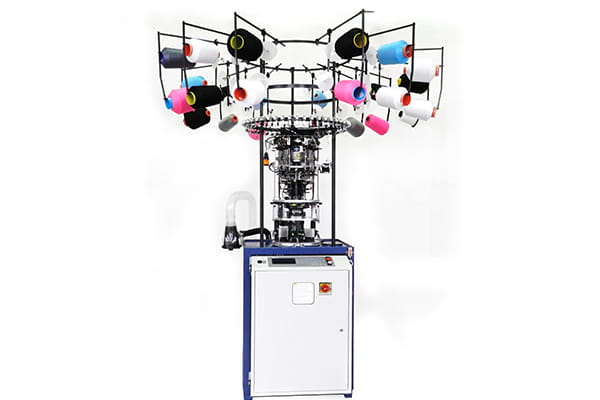
Marjan Polymer Industries supplies and configures computerized 3D Jacquard sock knitting machines in Pakistan for hosiery manufacturers developing patterned, fashion, sports and application-specific socks. The system is selected around the required sock range, cylinder diameter, gauge, needle count, yarn package, colour programme, knit structure, heel and toe method, output target and factory utilities.
This is not presented as one universal specification. A machine for fine dress socks, multicolour Jacquard articles, terry sports socks or technical hosiery can require different needles, sinkers, feeders, selection hardware and finishing equipment. MPI therefore converts the buyer’s product brief into an agreed machine configuration before quotation.
Built for Pattern-Led Hosiery Production
A 3D Jacquard sock knitting machine combines circular knitting, electronic needle-by-needle selection and programmable yarn control to create repeatable patterns and engineered surface effects. Depending on the selected model and knitting package, it can produce plain, mesh, tuck, float, plated, terry, relief and multicolour Jacquard structures.
The objective is controlled article production: repeatable stitch density, accurate motif placement, stable size, dependable heel and toe formation and a practical changeover between saved designs. Final capability always depends on the approved machine model, cylinder, needle set, yarn, pattern complexity and operating speed.
Available Sock Knitting Machine Configurations
| Configuration | Typical Production Use | Selection Approach |
|---|---|---|
| Single-cylinder computerized machine | Plain, patterned, terry and selected 3D or Jacquard socks | Configured by diameter, gauge, needle count, feeds and knitting package |
| 3D Jacquard pattern machine | Relief effects, multicolour motifs, engineered fashion and branded socks | Electronic needle selection, pattern software and yarn-control hardware matched to the article |
| Plain and terry production machine | Sports, casual, school, workwear and general hosiery | Plain, full-terry or selective-terry package with required elastic and plating options |
| Double-cylinder links machine | Rib, links-links and selected Jacquard constructions | Quoted separately where a double-cylinder architecture is technically required |
| Special-purpose hosiery system | Medical, compression, technical-yarn or unusual article development | Application review covering yarn feeders, elastic control, take-down, quality and validation needs |
Sock Types and Market Applications
- Men’s, women’s and children’s fashion socks
- Sports, performance and cushioned terry socks
- School, uniform, casual and formal hosiery
- Logo, brand, character and multicolour promotional socks
- Ankle, crew, quarter, knee-high and project-specific lengths
- Mesh, ventilation-zone and engineered stretch articles
- Selected medical, wellness and technical hosiery when the required construction is defined
- Sample development and flexible short-run production
Medical or compression performance must not be assumed from a standard machine. Those products require a validated article specification, suitable elastic feeding, tension control, testing and applicable regulatory review.
Reference 3D Jacquard Architecture
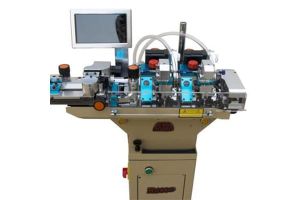
The existing reference concept is a full-electronic, single-cylinder, four-feed 3D Jacquard platform using a brushless main drive, onboard electronic control, electro-pneumatic yarn fingers and needle-by-needle selection. The recorded arrangement includes 18 yarn fingers, eight actuator groups, programmable stitch adjustment, electronic size control for multiple saved sizes and rapid machine resetting.
| Reference Element | Recorded / Available Arrangement | Engineering Note |
|---|---|---|
| Knitting architecture | Full-electronic single-cylinder system | Final cylinder and knitting package are selected for the required sock family |
| Feeds | Four-feed reference arrangement | Usable colours and structures depend on feeder allocation and article design |
| Needle selection | Needle-by-needle electronic selection through multiple actuator groups | Supports programmable Jacquard and structure control |
| Yarn handling | Electro-pneumatic yarn fingers with positive elastic-yarn control option | Yarn count, friction and elasticity must be confirmed by trial |
| Main drive | Brushless motor | Speed is article-dependent and should be validated at acceptance |
| Article control | Onboard computerized programme and electronic size control | Pattern software, storage and connectivity vary with the selected controller |
| Stitch setting | Programmable step-motor adjustment | Supports controlled density changes through the article |
| Fault supervision | Function checks and configurable yarn or needle monitoring | Exact sensors are listed in the final technical offer |
Specification control: the reference data describes the machine concept currently associated with this product page. Contractual values, options, speed, power, dimensions and output are issued only in the approved quotation and datasheet.
Configurable Technical Scope
| Parameter | Available Selection | Defined From |
|---|---|---|
| Cylinder diameter | Model-dependent hosiery diameters, commonly selected around the intended article size | Sock circumference, gauge and target size range |
| Gauge and needle count | Multiple model-specific combinations | Yarn count, fabric fineness, design resolution and strength |
| Knitting structure | Plain, mesh, tuck, float, plating, terry and selected Jacquard or 3D effects | Approved sample and structure programme |
| Colour capability | Feeder- and course-dependent multicolour arrangements | Pattern file, ground yarns and feeder plan |
| Elastic control | Laid-in, plated or positive-feed options where supported | Welt, compression profile and yarn behaviour |
| Toe workflow | Open toe for separate linking or compatible automatic toe-closing option | Quality target, labour plan and selected machine model |
| Monitoring | Yarn-break, knot, needle and production-data options | Quality risk and factory reporting requirements |
| Electrical supply | Configured to the approved machine and site supply | Factory voltage, frequency, protection and earthing |
Cylinder, Gauge and Needle-Count Selection
Cylinder diameter, gauge and needle count determine the practical article window. A finer gauge and higher needle count can improve pattern definition for suitable yarns, while heavier yarns and terry constructions require a compatible knitting setup. These parameters cannot be selected independently.
For quotation, the buyer should provide sock sizes, yarn counts and compositions, target weight, required structures and representative designs. MPI then checks them against the machine’s available cylinder and needle combinations. Change cylinders or gauge only where the selected platform is designed and supplied for that change.
Electronic Needle Selection and Pattern Control
Electronic selection assigns knitting, tuck, miss or related actions needle by needle according to the machine architecture. This enables repeating logos, geometric motifs, true-argyle-type constructions and selected relief effects without mechanical pattern drums.
Pattern resolution is governed by the number of active needles and courses. A design that looks clear on a screen may require colour reduction, float control or motif adjustment before it knits reliably. MPI can support pattern preparation, sample trials and operator training within the agreed project scope.
Feeds, Yarn Fingers and Colour Management
The number of feeds is not the same as the number of colours that can appear anywhere in an article. Each course uses a defined feeder and yarn-finger plan, while ground, elastic and pattern yarns compete for available positions. The approved article programme must therefore be checked against the selected hardware.
Electro-pneumatic yarn fingers, positive feeders, storage feeders, elastic feeders, yarn sensors and tension devices can be configured where supported. Clean yarn paths and repeatable tension are especially important for multicolour Jacquard, fine counts and elastomeric yarns.
Heel, Toe, Welt and Size Formation
Heel and toe formation may use electronically controlled reciprocation, pickers and droppers, or model-specific selection systems. Welt options, elastic insertion, toe closing and sock turning also vary between machine families.
Electronic stitch control can change density through the leg, ankle, heel, foot and toe to maintain shape and size. Final programmes are proven using the customer’s yarn and approved article, because yarn recovery and thermal behaviour affect finished dimensions.
Knit Structures and 3D Effects
- Plain knit and plated structures
- Mesh, tuck and float-stitch pattern areas
- Multicolour Jacquard motifs and logos
- Relief, embossed and selected 3D effects where the machine package supports them
- Full or selective terry for cushioning zones
- Elastic welts, mock rib and application-specific cuffs
- Left-and-right placement and size-dependent pattern variants
Every claimed structure is subject to the final machine package and a representative sample test. MPI will not treat a generic catalogue image as proof that every yarn and pattern can run at production speed.
Yarn Compatibility and Trial Requirements
Common hosiery yarn families include cotton blends, polyester, nylon, acrylic, wool blends, covered elastane and project-specific technical yarns. Compatibility depends on yarn count, twist, friction, hairiness, package build, elasticity and moisture behaviour.
The customer should provide production yarn or technically equivalent trial material before final acceptance. Difficult yarns may require dedicated feeders, tensioners, ceramic guides, air preparation or reduced speed. Trial results should record stitch setting, speed, break rate, dimensions and visual quality.
Production Quality and Repeatability
Reliable output is measured by good socks, not nominal revolutions per minute. Article complexity, number of colours, heel and toe cycles, terry zones, yarn breaks and operator practices all affect pairs per shift.
Acceptance criteria can include dimensional consistency, pattern registration, stitch density, visible faults, yarn consumption, machine stops and a timed production trial. The agreed sample, yarn and environmental conditions should be recorded so later performance comparisons remain meaningful.
Controller, Article Storage and Factory Data
The computerized controller manages article sequence, stitch settings, actuator commands, fault messages and stored size or pattern variants. Available interfaces can include a colour display, removable media, Ethernet or manufacturer-specific design and production software.
Where required, quotation can cover article backup, operator access, alarm history, production counters and connection to compatible knitting-room data systems. Cybersecurity, network access and software licensing boundaries must be agreed before factory integration.
Utilities and Installation Footprint
| Utility / Site Item | Requirement |
|---|---|
| Electrical power | Stable voltage and frequency matched to the supplied machine, with approved protection and earthing |
| Compressed air | Clean, dry air at the pressure and flow stated by the selected model |
| Suction | Individual or central suction arrangement sized for lint, yarn waste and the number of machines |
| Environment | Clean, ventilated knitting area with controlled lint and practical temperature and humidity management |
| Floor and access | Level floor, installation clearance, safe operator access and a verified transport route |
| IT connection | Optional network point where approved software or production-data collection is included |
Ancillary Equipment and Production-Line Scope
A complete sock-production project may require yarn creels, compressors, suction fans, toe-linking or automatic toe-closing equipment, boarding machines, steam or heat-setting equipment, inspection tables, metal detection, labelling and packing systems. These items are quoted separately unless explicitly included.
MPI can define the supply boundary as machine only, installed knitting cell or a broader production line. The quotation identifies included accessories, recommended spares, consumables, tooling, manuals and services so there is no ambiguity at handover.
Safety, Documentation and Compliance
Machine guarding, emergency stops, interlocks, electrical protection, compressed-air safety, lint control and operator procedures must be reviewed for the selected installation. Applicable manufacturer declarations and certificates are supplied only when included with the selected equipment.
Available documentation can include the approved datasheet, layout, utility schedule, operating manual, maintenance schedule, electrical information, spare-parts list, inspection records and acceptance protocol. The buyer remains responsible for site risk assessment, local legal compliance and safe operating procedures.
Supply and Technical Support in Pakistan
MPI provides a local commercial and engineering point of contact for customers in Lahore, Faisalabad, Karachi and other textile centres across Pakistan. The project can include requirement review, machine selection, import coordination, installation supervision, commissioning, operator training and after-sales technical support.
Local support does not replace correct spares planning. Recommended needles, sinkers, cutters, seals, belts, sensors and electronic service parts should be agreed according to the planned machine quantity and operating hours.
Information Required for a Quotation
- Sock types, sizes, target markets and representative photos or samples
- Yarn composition, count, package and elastomer details
- Required plain, terry, mesh, Jacquard, logo or 3D structures
- Target colours per course and representative pattern files
- Required cylinder, gauge or needle count if already specified
- Target good pairs per shift and planned operating hours
- Toe-closing, boarding, inspection and packing scope
- Factory voltage, frequency, compressed air and suction availability
- Required software, data connection, documentation and acceptance tests
- Installation city, delivery schedule and operator-training requirement
Sock Knitting Machine Price in Pakistan
Price depends on machine architecture, cylinder and gauge, needle count, feeds, pattern and terry package, toe-closing method, yarn-control devices, software, accessories, freight, duties, installation and support. A low headline price cannot be compared fairly with an installed and production-ready scope.
MPI issues a project quotation after reviewing the intended articles and utilities. The offer identifies the machine configuration, inclusions, exclusions, delivery basis, payment terms, warranty boundary and optional equipment.
Installation, Training and Limited Warranty
Services can include pre-installation utility review, positioning, connection checks, commissioning, reference-article trials and operator or maintenance training. Training covers safe startup, article loading, yarn threading, fault response, cleaning, lubrication and routine checks for the supplied configuration.
Warranty terms are stated in the commercial offer and normally cover eligible manufacturing defects for the agreed period. Needles, sinkers, cutters, belts and other consumables, normal wear, incorrect utilities, unauthorized changes, misuse, impact damage and external electrical faults are excluded unless the contract states otherwise.
Frequently Asked Questions
What is a 3D Jacquard Sock Knitting Machine?
It is a computerized circular hosiery machine that uses electronic needle selection and programmed yarn control to produce patterned socks and, with the correct hardware, selected relief or three-dimensional effects.
Can the machine produce plain and terry socks?
Yes, when the selected model includes the required plain and terry knitting package. Full terry, selective terry and plated constructions must be confirmed against the quotation.
How many colours can be knitted in one sock?
The practical colour count depends on feeds, yarn fingers, ground yarns and the number of colours required in each course. MPI confirms the usable arrangement from the customer’s actual pattern.
Which cylinder, gauge and needle count should I choose?
The choice depends on sock size, yarn count, fabric fineness, pattern resolution and target structure. Representative articles and yarn data are required for a reliable recommendation.
Can it knit logos and custom patterns?
Yes. Electronic needle selection supports programmable logos and Jacquard motifs, subject to needle resolution, colour allocation, float control and a successful sample trial.
Is automatic toe closing available?
It can be supplied on compatible machine models. Otherwise socks are produced with an open toe for separate linking. The required workflow must be selected before quotation.
What is the production capacity?
Capacity varies with size, pattern, colours, terry areas, yarn and operating speed. MPI can establish a realistic target through a timed trial on an agreed article rather than quoting a universal pairs-per-day figure.
Which yarns can the machine process?
Common hosiery yarns include cotton blends, polyester, nylon, acrylic, wool blends and covered elastane. Final suitability depends on yarn count and behaviour and should be proven with production material.
Is installation and training available in Pakistan?
Yes. MPI can provide site review, installation supervision, commissioning and operator training in Pakistan when those services are included in the project scope.
What is needed to receive a quotation?
Send sock samples or images, sizes, yarn details, required structures, pattern colours, output target, factory utilities, city and the required toe-closing and finishing scope.
Request a Sock Knitting Machine Proposal
Send MPI your sock range, yarn information, representative designs, target output and factory utility details. We will define a technically suitable 3D Jacquard sock knitting machine configuration and prepare a clear commercial proposal for supply in Pakistan.