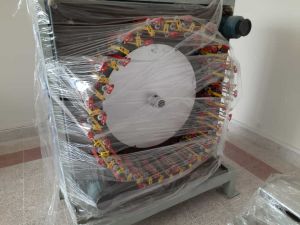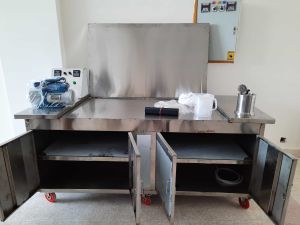

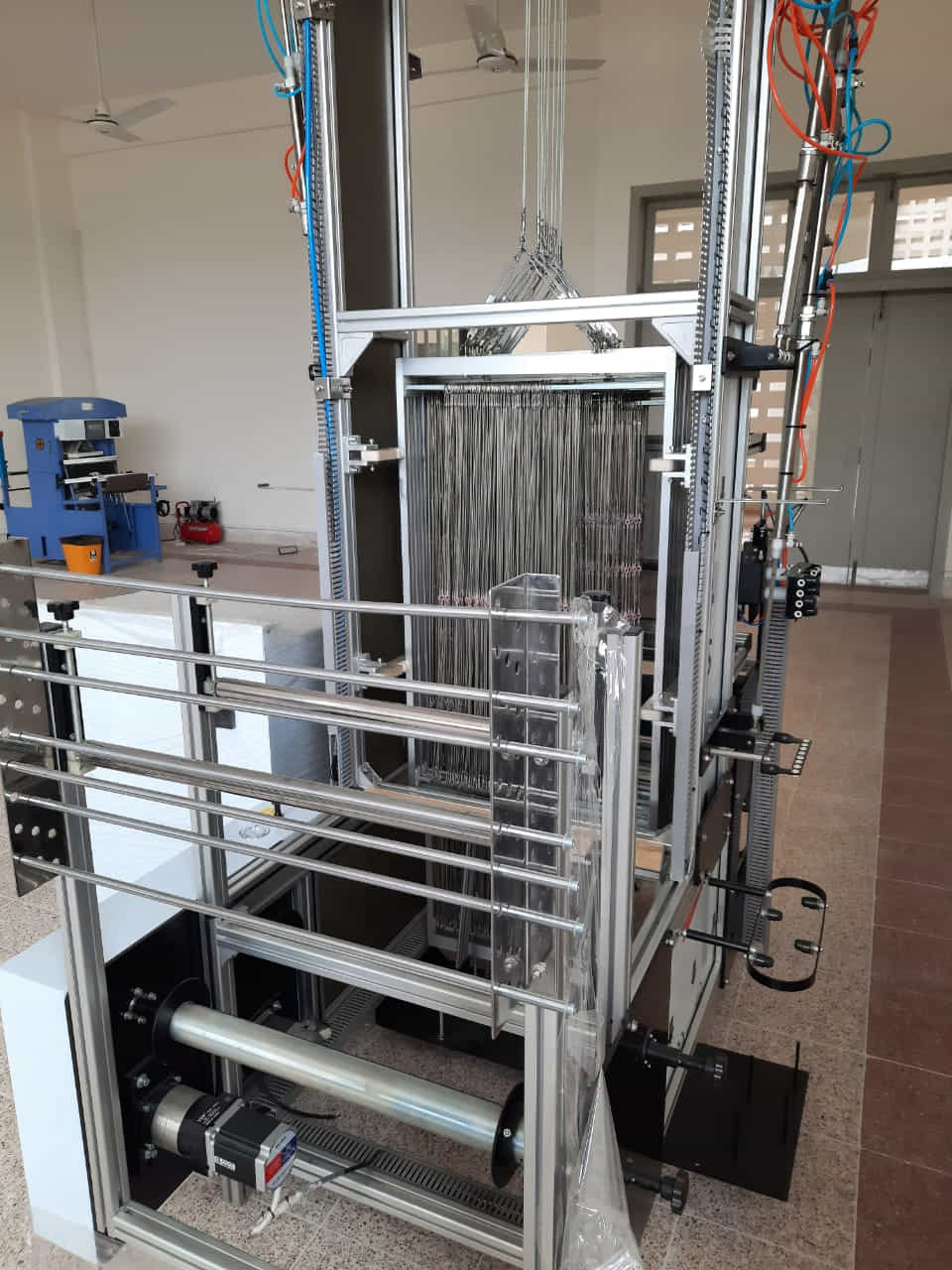
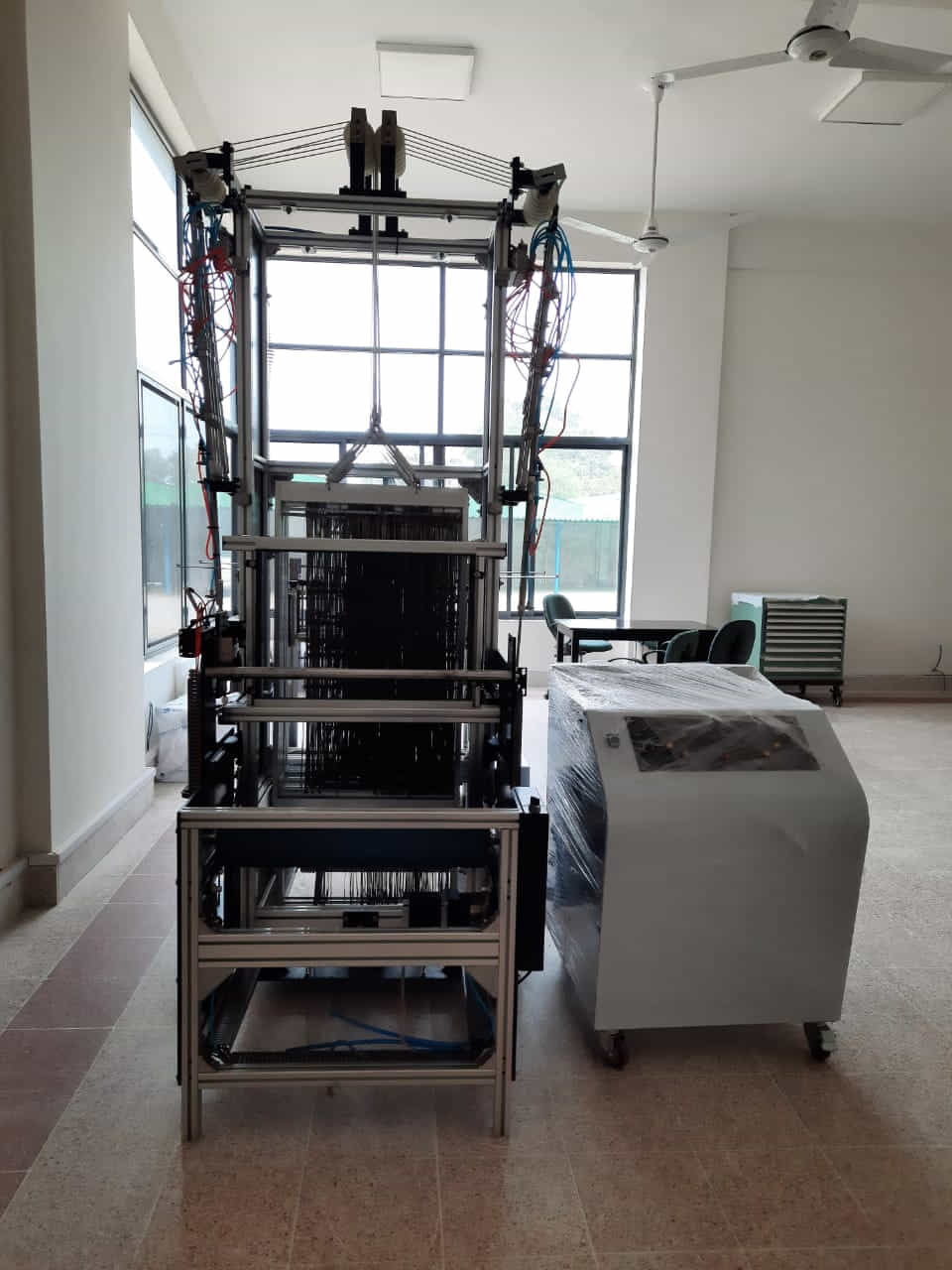
Multiaxial 3D Weaving Machine is an engineered textile platform for developing multilayer and through-thickness reinforced preforms from carbon, glass, aramid and other technical fibres. Marjan Polymer Industries configures the loom, fibre-delivery system, shedding, weft insertion, controls and training scope around the required preform architecture rather than treating every 3D textile application as the same machine.
The reference development configuration uses a 500 mm working width, controlled warp delivery, rigid-rapier weft insertion and programmable shedding. Final layer count, creel capacity, yarn package format, fibre tension, speed and tooling are confirmed against the customer’s material and weave design before manufacture or supply.
What the machine is designed to produce
The platform is intended for research, pilot development and configured production of technical-textile preforms. Depending on the approved machine architecture and tooling, the system can be engineered for:
- Multilayer flat preforms with controlled connection between layers.
- Orthogonal, angle-interlock and layer-to-layer woven architectures.
- Carbon-fibre, glass-fibre, aramid, basalt and selected hybrid-fibre structures.
- Thick reinforcement fabrics and composite preforms for resin-infusion processes.
- Development of tubular, contoured or near-net-shape structures when suitable forming equipment is included.
Not every structure can be produced on one standard setup. The weave architecture, tow size, fibre sensitivity, width and target geometry determine the required shedding, creel, take-up and auxiliary systems.
Reference 500 mm development configuration
| Parameter | Reference configuration |
|---|---|
| Machine category | Configurable multiaxial and multilayer 3D weaving development platform |
| Reference working width | 500 mm |
| Reference fibre-package capacity | Up to approximately 300 positions, subject to creel layout and preform architecture |
| Reference layer arrangement | Up to three coordinated layers in the current development scope; other architectures require engineering review |
| Weft insertion | Rigid rapier, configured for the selected technical fibre |
| Shedding | Programmable dobby in the reference scope; electronic jacquard or specialised harness options may be evaluated |
| Reference operating rate | Up to approximately 30 picks/min, dependent on fibre, width, density and architecture |
| Weft selection | Bidirectional electronic selection in the reference scope |
| Warp let-off | Fixed-length, passive or tension-controlled arrangements selected by application |
| Weft density | Programmable within the approved machine and material window; final range confirmed during engineering |
| Control platform | PLC/HMI and computer-assisted pattern or diagnostic interface, subject to supplied software package |
| Utilities | Electrical and compressed-air requirements confirmed in the technical quotation |
Reference values describe the present development concept and are not universal guarantees. Fibre friction, tow count, architecture, shedding demand, take-up method and preform quality directly affect the achievable operating window.
How 3D weaving creates a composite preform
Conventional fabric primarily interlaces warp and weft in a plane. A 3D woven preform introduces controlled reinforcement through the thickness or connects multiple layers into an integrated textile architecture. Binder or Z-direction yarns can improve interlayer integrity and allow designers to tailor the preform for multidirectional loading.
The weaving machine must coordinate yarn delivery, tension, shedding, insertion and beat-up without excessive fibre abrasion. For brittle or damage-sensitive technical fibres, yarn path geometry, guides, rapier surfaces and tension control are therefore as important as nominal machine speed.
3D weaving and multiaxial fabrics are not identical
“Multiaxial” is used broadly in the composites industry, but multiaxial non-crimp fabric, tailored fibre placement, braiding and true 3D weaving are different manufacturing routes. This product page covers an engineered weaving platform. MPI confirms whether the requested reinforcement is a multilayer woven fabric, an interlock preform, an orthogonal structure or another textile architecture before specifying the machine.
Technical-fibre compatibility
| Fibre family | Engineering considerations |
|---|---|
| Carbon fibre | Tow spreading, low-abrasion guides, controlled tension and fibre-safe insertion surfaces |
| Glass fibre | Package handling, filament protection, dust management and appropriate contact materials |
| Aramid fibre | Stable tension, suitable cutting tools and careful control of fuzz generation |
| Basalt or ceramic fibre | Application-specific abrasion, brittleness and temperature considerations |
| Hybrid systems | Independent yarn delivery and tension strategy for dissimilar fibre families |
Customers should provide the fibre manufacturer, tow or yarn designation, tex or filament count, package dimensions, sizing information and available handling limits. Material compatibility is approved only after review or weaving trials.
Warp creel and tension management
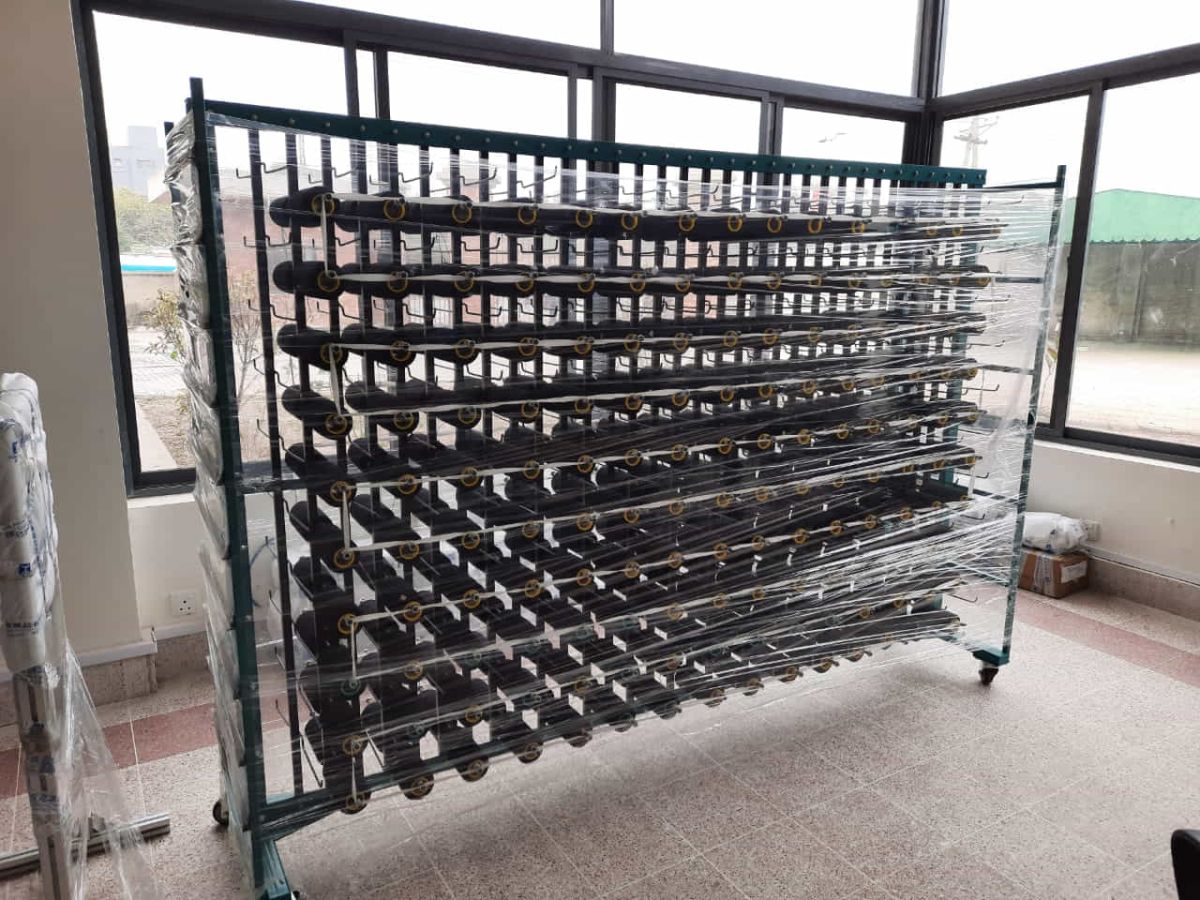
The creel is engineered around package count, available floor space, yarn path length and the required independent-tension zones. Options can include modular package frames, braking or active let-off, break detection, low-friction guides and grouped tension control. A high package count is useful only when the yarn path remains accessible, stable and repeatable.
Shedding, weft insertion and beat-up
Programmable shedding determines which yarn systems move for each pick and therefore controls the intended architecture. A dobby system is suitable for many shaft-based patterns; more complex preforms may require an electronic jacquard or a purpose-designed harness. Rigid-rapier insertion provides positive weft control, while servo or pneumatic beat-up is selected according to fibre sensitivity, density and production rate.
Control software and process repeatability
The control scope can include recipe storage, pattern execution, pick count, speed setting, alarm history, manual setup functions and production diagnostics. Where a separate textile-CAD package is required, file compatibility and licensing are stated in the quotation. Repeatable production depends on controlling both the digital pattern and the physical settings for tension, guides, take-up and fibre packages.
Configurable machine options
- Alternative working widths and machine-frame arrangements.
- Dobby, electronic jacquard or specialised multi-harness shedding.
- Expanded or modular creel systems with independent tension zones.
- Multiple weft-selection channels and application-specific rapiers.
- Low-abrasion ceramic guides and technical-fibre contact components.
- Electronic let-off, take-up and closed-loop tension monitoring.
- Broken-yarn detection, guarded access and interlocked safety circuits.
- Preform contouring, mandrel, forming or post-weave handling equipment.
- Integration with resin-transfer moulding or downstream preform development, when separately scoped.
Composite and technical-textile applications
Potential applications include aerospace and defence preforms, automotive structural reinforcement, industrial composite panels, energy and marine components, impact-resistant structures, thermal-protection research and advanced textile laboratories. Suitability for a safety-critical component depends on the complete material qualification, weaving procedure, resin system and component-validation programme; purchase of a loom alone does not qualify the final part.
Preform-development workflow
- Define the target: supply the part drawing, fibre system, load directions and required preform geometry.
- Select the architecture: agree the warp, weft and through-thickness yarn paths, layer arrangement and density.
- Engineer the machine: specify width, creel, shedding, insertion, take-up, controls and utilities.
- Conduct trials: verify yarn handling, tension, fibre damage, dimensions and repeatability.
- Freeze the recipe: document approved patterns, machine settings, inspection points and operator procedures.
Site, utilities and installation planning
Before dispatch, MPI confirms the machine footprint, access route, foundation or levelling requirements, electrical supply, compressed-air quality, ventilation, fibre-dust control and operator space. The customer remains responsible for a compliant factory environment, utilities, lifting arrangements and local statutory approvals unless explicitly included in the supply contract.
Commissioning, training and documentation
The agreed service scope can include installation supervision, mechanical and electrical checks, dry cycling, material trials, operator training and maintenance orientation. Documentation may include general arrangement drawings, utility schedule, operating instructions, preventive-maintenance plan, electrical information and a recommended spare-parts list. Acceptance criteria are agreed before the machine is released for production.
Safety, maintenance and fibre care
Guards, emergency stops, interlocks and safe access must be validated for the final configuration. Routine maintenance focuses on rapier alignment, guides, heddles, bearings, pneumatic components, tension devices, take-up and control-system diagnostics. Carbon and glass fibre debris can be abrasive or electrically conductive, so housekeeping and dust-management procedures must be defined for the customer’s material.
Supply and support in Pakistan
Marjan Polymer Industries supplies and engineers multiaxial 3D weaving solutions for universities, composite-development centres and industrial manufacturers in Pakistan. Support can include requirement analysis, machine configuration, sourcing or fabrication coordination, installation planning, training and after-sales assistance. International enquiries can also be evaluated against the required technical and commercial scope.
Information required for a technical quotation
- Target preform drawing, width, thickness and required architecture.
- Fibre type, tow size or yarn count, sizing and package dimensions.
- Number of warp systems, layers, binder yarns and creel positions.
- Required pick density, trial rate, annual output and quality criteria.
- Preferred shedding and weft-selection requirements.
- Available electrical supply, compressed air, floor space and installation location.
- Required software, tooling, commissioning, training and warranty scope.
Frequently asked questions
What is a multiaxial 3D weaving machine?
It is an engineered weaving platform used to produce multilayer or through-thickness reinforced textile preforms. Its yarn-delivery, shedding and insertion systems are configured for the required architecture and fibre.
Can the machine weave carbon fibre?
Yes, when the creel, guides, tension devices, shedding and insertion components are configured for the specified carbon-fibre tow. Material trials are recommended before the final operating window is approved.
What is the working width of the reference machine?
The reference development configuration uses a 500 mm working width. Alternative widths require separate mechanical and textile-engineering review.
How many layers can it weave?
The current reference scope describes up to three coordinated layers. More complex layer counts or through-thickness architectures may require a different harness, creel, frame and control configuration.
Is every multiaxial fabric a 3D woven fabric?
No. Multiaxial non-crimp fabrics, braids, tailored fibre placement and 3D woven interlock structures are different textile processes. MPI confirms the intended architecture before proposing the machine.
Can it produce orthogonal or angle-interlock preforms?
These structures can be evaluated, but capability depends on the shedding plan, harness count, yarn systems, take-up and target geometry. The approved architecture is stated in the quotation.
What operating speed can be expected?
The reference rate is up to approximately 30 picks per minute. Actual speed depends on fibre sensitivity, working width, density, layer architecture and required preform quality.
Are pattern software and controls included?
The supplied PLC, HMI and pattern-software scope is listed in the quotation. Separate textile-CAD licensing or custom pattern-development services are included only when expressly stated.
Is the machine available in Pakistan?
Yes. Marjan Polymer Industries can supply a configured multiaxial 3D weaving machine in Pakistan with application review, installation planning and training according to the agreed scope.
Are installation and operator training available?
Yes. Installation supervision, commissioning, material trials and operator training can be included in the technical and commercial proposal.
Request a 3D weaving machine proposal
Contact Marjan Polymer Industries with your fibre data, preform drawing, working width, weave architecture and factory location. MPI will review the application and prepare a suitable technical proposal.