
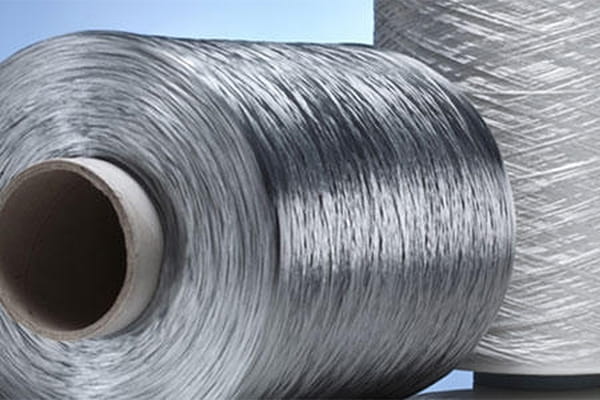
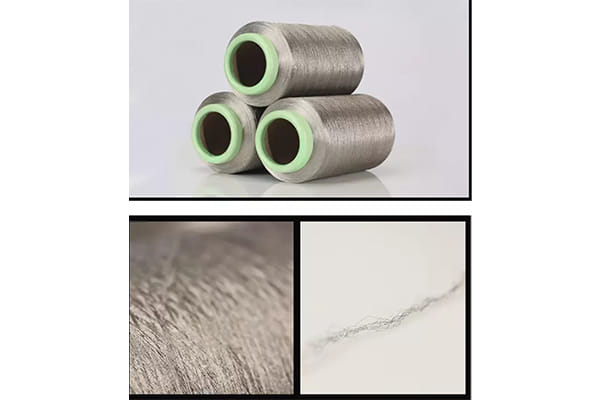
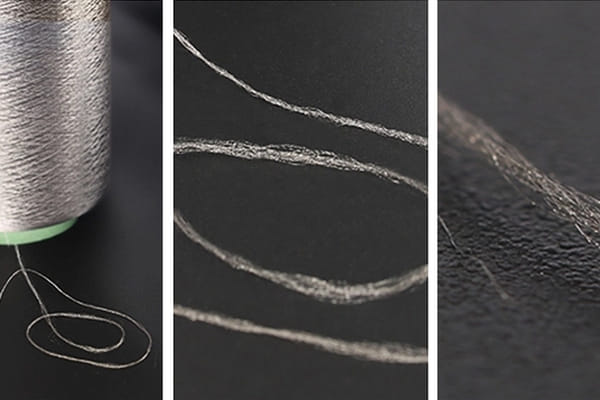
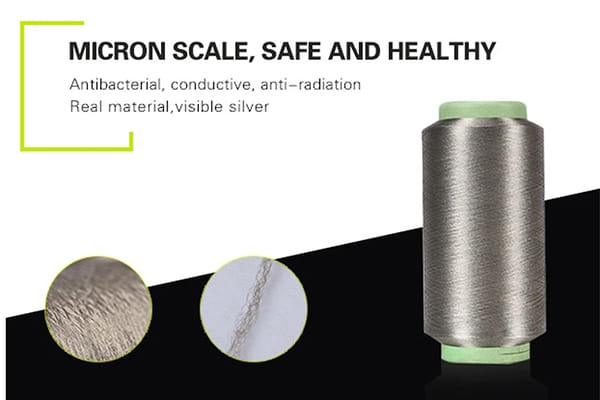
Plasma-Coated Silver Yarn is a flexible functional textile yarn in which a controlled layer of pure silver is deposited directly onto a filament substrate. It combines textile processability with electrical conductivity for smart textiles, sensors, heating elements, antistatic structures and electromagnetic-interference control. Marjan Polymer Industries supplies application-matched grades in Pakistan and supports specification, sampling and textile integration.
Product Construction
Textile Core
Multifilament polymer yarn provides flexibility, strength and compatibility with knitting, weaving, braiding, embroidery or sewing processes.
Direct Silver Layer
A controlled plasma process deposits silver without a separate adhesive layer, supporting uniform coverage and stable electrical response along the yarn.
Application Grade
Yarn count, twist, filament construction, resistance, package and downstream processing are selected against the intended textile circuit or functional fabric.
Reference Supply Grade
The following values describe the reference configuration previously specified for this product. They are not universal values for every silver-coated yarn. Final purchase documents should identify the approved grade, tolerance, test method and current certificate or inspection report.
| Parameter | Reference value |
|---|---|
| Raw yarn count | 476 ± 6 dtex |
| Silver-coated yarn count | 605 ± 10 dtex |
| Filament count | 48 filaments |
| Yield | Minimum 16,500 m/kg |
| Linear electrical resistance | 5–10 Ω/cm, subject to stated conditioning and test method |
| Twist options | S 600 or Z 480 turns/m for the reference construction |
| Elongation at break | 25 ± 6% |
| Tenacity | 50 cN/tex ± 10% |
Configurable Supply Parameters
- Base polymer and filament construction
- Raw and plated yarn count in dtex or denier
- Monofilament, multifilament or twisted construction
- Target linear resistance and acceptance tolerance
- S- or Z-twist and twist level
- Tensile strength and elongation requirement
- Silver mass, coverage and surface requirement
- Cone size, net package weight and winding format
- Sampling length and development quantity
- Required compliance, traceability and test documentation
Availability and achievable values depend on yarn construction, coating route and order quantity. MPI confirms the offered grade against the enquiry rather than treating catalogue ranges as guaranteed values.
Electrical and Textile Performance
Linear resistance is the primary yarn-level electrical parameter. It should be reported with units, gauge length, conditioning, electrode contact and test method. Resistance in a knitted or woven structure can change with loop geometry, pick density, contact pressure, strain, joints and environmental conditions.
Conductive Paths
Suitable for flexible interconnects, electrodes, switches and signal paths where the circuit design remains within the yarn’s verified current and temperature limits.
Resistive Heating
Heating output depends on resistance, length, voltage, current, insulation and heat dissipation. A controlled prototype and temperature-limited power system are essential.
Shielding & Static Control
EMI shielding and static-dissipation performance are properties of the complete fabric or assembly and must be measured on the finished construction.
Processing Compatibility
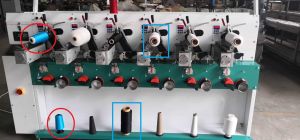
Depending on the selected grade, the yarn can be woven, knitted, braided, embroidered, sewn or integrated as an inlay. Trial settings should minimise unnecessary abrasion, excessive guide tension, sharp yarn-path contact and unstable winding.
- Use smooth, clean guides and verify tension at production speed.
- Choose needle, carrier and stitch density against yarn count and construction.
- Validate electrical continuity after every high-strain or joining operation.
- Keep conductive paths separated and insulated where short-circuit risk exists.
- Approve a production trial before committing to bulk textile conversion.
Applications
Smart Textiles
Flexible connections, touch interfaces, textile switches, pressure or strain-sensor structures and data-garment prototypes.
Heated Textiles
Controlled low-voltage heating panels and demonstrators after electrical, thermal and wash-durability validation.
EMI Structures
Woven, knitted or braided conductive networks for shielding research and engineered enclosures.
Antistatic Textiles
Static-dissipative yarn paths in garments, covers, filters and industrial textile assemblies.
Research & Prototyping
Textile electrodes, actuators, flexible circuitry and university or industrial development work.
Specialist Products
Functional socks, gloves, bands, tapes and composite textile structures subject to product-specific testing and regulatory review.
Durability, Care and Storage
Silver surfaces can be affected by sulfur compounds, chlorine, aggressive detergents, high abrasion and unsuitable chemical processing. Store sealed, dry and protected from contamination. Washability must be qualified on the final textile using the intended detergent, temperature, cycle count and drying method.
Quality and Verification
- Yarn count, package identification and visual coating inspection
- Linear resistance testing at defined spacing and conditioning
- Tensile strength and elongation verification where specified
- Continuity checks before and after textile processing
- Prototype wash, flex, abrasion and environmental testing when applicable
- Finished-fabric electrical, thermal, shielding or static tests against the project requirement
Supply for Pakistan
MPI supports textile mills, hosiery manufacturers, technical-textile developers, universities and industrial R&D teams across Pakistan. Enquiries can cover sample quantities, development cones, application trials and project-based commercial supply, subject to confirmed grade and availability.
Information Required for a Quotation
- End application and textile process
- Required yarn count and substrate
- Target resistance with units and test method
- Twist, filament and package preference
- Prototype or annual quantity
- Durability and wash protocol
- Compliance or certificate requirements
- Delivery location and required schedule
Frequently Asked Questions
What is plasma-coated silver yarn?
It is a textile yarn with silver deposited directly onto a filament substrate through a controlled plasma-coating process. The resulting yarn remains flexible while providing an electrically conductive surface.
Is it the same as decorative metallic yarn?
No. Decorative metallic yarn is selected mainly for appearance. Plasma-coated silver yarn is specified by functional parameters such as linear resistance, yarn count, mechanical behaviour and coating durability.
What resistance is available?
Resistance depends on the selected grade and is stated with units and test conditions. The reference configuration on this page is 5–10 Ω/cm; alternative grades must be confirmed against the application.
Can the yarn be knitted or woven?
Yes, suitable grades can be knitted, woven, braided, embroidered, sewn or laid in as an inlay. A processing trial is recommended to set guide finish, tension, needle and speed.
Can it be used for heated textiles?
It can form a resistive heating path, but voltage, current, length, insulation, temperature control and failure protection must be engineered and tested in the final assembly.
How is EMI shielding performance evaluated in a finished textile?
Shielding effectiveness depends on yarn resistance, stitch or weave density, layer construction, seams, frequency range and grounding. A representative textile sample should be tested to the project’s required method before production approval.
Is it washable?
Wash durability varies by grade and textile construction. The final product should be tested using the intended detergent, temperature, cycle count and drying procedure, avoiding chlorine and aggressive chemistry unless specifically approved.
Is it suitable for medical or skin-contact products?
Only when the exact yarn grade and finished product meet the required biocompatibility, safety and regulatory requirements. Conductivity or silver content alone does not establish medical suitability.
Can MPI supply samples in Pakistan?
Sample or development quantities may be arranged subject to grade availability. Provide the target resistance, yarn count, textile process and intended application for correct selection.
What should I send for a quotation?
Send the application, yarn construction, target resistance and units, package format, durability requirements, quantity, destination and required documentation. MPI will confirm the feasible supply specification.
Discuss Your Conductive Textile Requirement
Share your electrical target, textile process and application environment. MPI will help define a practical plasma-coated silver yarn specification for development or commercial supply in Pakistan.