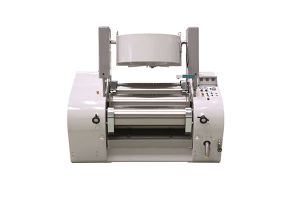
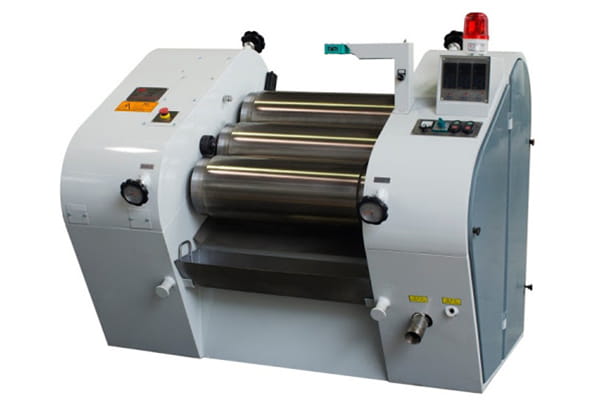
Three Roll Mill is MPI’s configurable precision dispersion and refining machine for viscous and highly viscous pastes. In Pakistan the same equipment is commonly searched as a triple roll mill, three roller mill or three roll mill machine.
Laboratory, pilot and production configurations are engineered from the formulation, viscosity, starting agglomerate size, target fineness, temperature window, throughput and cleaning standard. Final performance and acceptance criteria are issued only in the approved MPI project data sheet.
Process Purpose
The mill uses three horizontally arranged rolls with controlled speed differences and two adjustable working gaps. Material is fed into the first nip, transferred as a film through the second nip and removed from the faster apron roll by a scraper. The resulting shear disperses agglomerates and improves homogeneity without treating the machine as a general dry grinder.
Typical Applications
- Printing, packaging, security and conductive inks
- Paints, coatings, pigment concentrates and colour pastes
- Adhesives, sealants, silicone and filled resin systems
- Metal, ceramic, electronic and battery-related pastes after qualification
- Greases, lubricating compounds and functional pastes
- Cosmetics, creams and personal-care formulations with suitable hygienic design
- Carbon, graphene and nanomaterial dispersions under an approved handling plan
- Laboratory formulation development, scale-up and quality-control work
Machine Assemblies
| Assembly | Function | Selection basis |
|---|---|---|
| Feed roll | Receives the premix and meters it into the first nip | Viscosity, feed behaviour, roll surface and process rate |
| Centre roll | Creates controlled shear across both working gaps | Roll geometry, speed ratio, load and thermal duty |
| Apron roll | Carries the refined product film to discharge | Transfer behaviour, film stability and scraper interface |
| Gap-setting system | Controls separation or line force at each nip | Repeatability, sensitivity, scale and operating method |
| Drive and transmission | Maintains the selected roll speeds and differential | Viscosity, starting load, roll size and duty cycle |
| Thermal circuit | Heats or cools rolls to manage product temperature | Shear heat, viscosity window and site utilities |
| Scraper and discharge | Removes the film cleanly from the apron roll | Product rheology, blade material, finish and cleaning |
| Guards and controls | Protect hazardous zones and supervise operation | Risk assessment, automation and site standard |
Configurable Engineering Range
Fineness and throughput are formulation-dependent. Roll diameter or motor rating alone cannot predict the result; MPI confirms the process window from representative material data and agreed trials where required.
| Parameter | Available project direction |
|---|---|
| Scale | Benchtop/laboratory, pilot and industrial production mill |
| Working size | Application-selected roll diameter and face width |
| Roll material | Hardened or finished steel and suitable ceramic options |
| Speed system | Fixed or variable speed with application-selected ratios |
| Gap/force control | Manual, hydraulic or electronic project configuration |
| Thermal control | Internal roll circulation for approved heating or cooling duty |
| Feed method | Manual, hopper-assisted or integrated feed arrangement |
| Discharge | Scraper blade, collection tray and downstream interface options |
| Controls | Conventional controls or PLC/HMI with recipes and monitoring |
| Cleaning | Product-specific access, tools, materials and validated procedure |
Roll Speed and Shear Strategy
The feed, centre and apron rolls operate at different surface speeds so material is drawn through two consecutive shear zones. Speed ratio, total speed, gap, temperature and number of passes are developed together. Excessive shear or temperature can damage sensitive ingredients, while insufficient energy may leave agglomerates unresolved.
Gap, Force and Parallelism Control
Product quality depends on stable, parallel working gaps under load. Depending on scale, MPI can configure mechanical adjustment, hydraulic positioning or electronic gap/force monitoring. Zero reference, repeatable settings and controlled approach procedures support reliable changeover and prevent accidental roll contact.
Roll Material and Surface Selection
Roll metallurgy, hardness, coating, ceramic grade and surface finish are selected for abrasion, corrosion, contamination sensitivity, heat transfer and cleanability. Aggressive pigments, ceramic powders, conductive fillers or regulated products require a dedicated material-contact review.
Temperature Management
Shear converts mechanical energy into heat and may reduce viscosity during processing. Internal roll circuits can heat during startup or remove heat during dispersion. Sensors, rotary unions and the external circulation unit are selected for the operating temperature, heat load and permitted fluid.
Feed, Transfer and Scraper Design
The premix must remain in the working zone without spilling, starving or trapping excessive air. Side guides, hopper arrangements and transfer behaviour are reviewed from rheology. Scraper geometry, blade material, pressure and mounting must remove a uniform film without damaging the apron roll.
Process Development and Pass Strategy
- Premix powders and liquids to achieve safe, wet feed consistency
- Establish a conservative initial gap and temperature condition
- Reduce gaps in planned stages while monitoring load and product temperature
- Evaluate fineness, dispersion, colour strength, conductivity or other agreed quality metric
- Record speed, gap or force, temperature, passes, rate and cleaning observations
- Translate the proven window into an operating recipe and acceptance test
Material Suitability
The Three Roll Mill is intended for pumpable or feedable viscous products that benefit from controlled wet dispersion. Dry powders, free-flowing granules, large hard contaminants or explosive dusts require another process or dedicated engineering. Solvent, food, cosmetic, pharmaceutical or hazardous formulations need separate materials, ventilation, hygiene and compliance review.
Safety and Operator Protection
Working nips and rotating rolls present serious hazards. MPI defines nip guards or barriers, emergency stops, safe stopping, overload protection, drive guarding, controlled cleaning/reverse modes and lockout provisions through project risk assessment. Operating, cleaning and maintenance procedures are part of the safety system.
Controls and Process Records
Available controls may monitor roll speed, gap or force, drive load, temperature, timers and alarms. PLC/HMI options can provide recipes, trends, access levels and production records. The required architecture follows the customer’s quality system and plant communication standard.
Utilities and Site Requirements
| Interface | Information MPI confirms |
|---|---|
| Electrical supply | Voltage, frequency, connected load, protection and control standard |
| Thermal utility | Water or approved fluid temperature, pressure, flow and return |
| Ventilation | Heat, vapour, solvent or dust-control requirements |
| Foundation | Floor loading, levelling, vibration control and anchoring |
| Handling | Feed containers, product collection, lifting and cleaning access |
| Environment | Hazardous-area, hygiene, corrosion and ambient conditions |
Integration Options
The mill can be coordinated with premixers, vacuum mixers, dosing equipment, transfer systems, collection vessels, filtration, filling or downstream testing. Layout and battery limits are defined before manufacture so material flow, operator access and cleaning remain practical.
Quality and Acceptance Planning
Acceptance criteria may include mechanical checks, roll runout and parallelism verification, safety tests, temperature-control checks and agreed material trials. Product performance is evaluated using defined feed, operating parameters, sampling method and quality test rather than an unsupported universal fineness claim.
Supply Scope and Documentation
MPI’s scope may include machine engineering, controls, thermal unit, feed and discharge accessories, manuals, drawings, recommended spares, factory testing, installation supervision, commissioning and operator training. Exclusions and customer responsibilities are stated in the technical offer.
Support Across Pakistan
MPI configures Three Roll Mill projects for local formulations, utilities, operator practices and service access. Support can cover Lahore, Karachi, Faisalabad, Islamabad, Rawalpindi and industrial locations across Pakistan under the agreed project scope.
Information Required for a Firm Proposal
- Complete formulation and ingredient safety information
- Viscosity or rheology at the intended process temperature
- Starting agglomerate condition and target quality test
- Batch size, target throughput and operating schedule
- Temperature limits, solvent content and ventilation needs
- Abrasion, corrosion, contamination and hygiene requirements
- Preferred automation, recording and acceptance procedure
- Representative sample availability for trials when required
Frequently Asked Questions
What is a three roll mill used for?
A three roll mill applies controlled shear in two successive roll gaps to disperse agglomerates, homogenise ingredients and refine viscous pastes such as inks, coatings, adhesives, sealants, cosmetics and functional materials.
Is a three roll mill the same as a two roll mill?
No. A three roll mill is primarily a precision paste-dispersion and refining machine with feed, centre and apron rolls. A two roll mill is generally an open mixing and sheeting machine for rubber and selected polymers.
Why do the three rolls run at different speeds?
The speed differential creates shear and transfers material from the feed nip through the second nip to the apron roll, where a scraper removes the processed film.
Can MPI supply laboratory and production sizes?
Yes. Working width, roll diameter, drive, gap control, cooling, feed arrangement and controls can be configured for laboratory development, pilot work or production after the formulation is reviewed.
Can the roll gap be controlled precisely?
Manual, hydraulic or electronic gap or force-control arrangements may be engineered according to scale and repeatability requirements. The achievable fineness also depends on formulation, agglomerate strength and pass strategy.
Which roll materials are available?
Hardened or chrome-finished steel and suitable ceramic roll options may be considered. Selection depends on abrasion, corrosion, contamination, cleaning and temperature requirements.
Can roll temperature be controlled?
Yes. Internal roll heating or cooling circuits can be configured to manage viscosity, shear heating and product temperature, subject to the approved thermal system and material limits.
Is one pass always sufficient?
Not necessarily. Some formulations require staged gap reduction, multiple passes or upstream premixing. MPI develops the pass strategy from viscosity, starting agglomerate size and target dispersion.
What safety features are included?
Typical safeguards include nip protection, emergency stops, overload protection, guarded drives, controlled cleaning modes and isolation provisions, finalised through the project risk assessment.
Does MPI provide commissioning in Pakistan?
MPI can provide installation supervision, commissioning, operator training, process guidance, documentation and after-sales support across Pakistan under the agreed supply scope.
Request a Three Roll Mill Proposal
Send MPI your formulation, viscosity, target dispersion, batch or throughput, temperature limits and quality criteria. MPI will prepare a project-specific Three Roll Mill proposal for Pakistan.